



A good Mediterranean salad does not need theatrics. It needs ripe tomatoes that give up a little juice when you cut them, cucumbers with a cold snap in the middle, olive oil that tastes green and peppery, and herbs so fresh they still smell like the cutting board after you’ve walked away from it.
This herbed Mediterranean salad is the sort of bowl that feels old because it is old in the best way. It belongs to kitchens where nothing is measured with a stopwatch, where the red onion gets sliced thinner than you think, and where the dressing is tasted three times before it ever hits the lettuce. That’s the part people miss when they try to make a “simple” salad. Simple does not mean flat. It means each ingredient has to earn its spot.
What makes this version worth making is the balance. You get the sweetness of tomatoes, the cool crunch of cucumber, the briny pull of olives, the creamy salt of feta, and a pile of parsley, dill, mint, and basil that keeps the whole thing awake. One forkful should taste bright, salty, herbal, and just a little sharp. If it doesn’t, the bowl needs work.
Why You’ll Love This Salad
-
The herbs are not decoration here: Parsley, dill, mint, and basil do the heavy lifting, so every bite tastes fresh instead of vaguely “green.”
-
The dressing is sharp on purpose: Red wine vinegar and lemon cut through the olive oil and feta, which keeps the salad from feeling heavy or oily.
-
It eats like lunch, not a side note: Chickpeas and feta give the bowl enough substance to stand on its own beside grilled fish, bread, or nothing at all.
-
The texture stays lively: Romaine, cucumber, fennel, and bell pepper keep a clean crunch, while tomatoes and chickpeas soften things just enough.
-
It does not need a stove: No roasting, no sautéing, no waiting for anything to cool. You chop, whisk, toss, and eat.
-
It tastes better with a short rest: Ten minutes on the counter lets the dressing settle into the chickpeas and onions, which is one of those small kitchen tricks that pays off every time.
The Kind of Salad Nonna Would Serve Without Explaining It
There’s a certain type of family salad that never gets written down because nobody thinks it needs writing down. The bowl comes out cold, the vegetables are cut by hand, and the herbs are piled in with a kind of casual confidence that only comes from making the same thing a hundred times. This is that kind of salad.
The flavor profile is old-fashioned in a good way. Not timid. Not fussy. The oregano in the dressing gives you a dry, savory edge, while the lemon keeps the olive oil from sitting too heavy on the tongue. The fennel adds a faint licorice note that you notice more in the aftertaste than in the first bite, and that’s exactly why I like it here. It makes the bowl taste more Mediterranean without shouting about it.
I also like that this salad has a little structure. Some chopped salads turn into a soft heap the second you add dressing. This one doesn’t have to. The romaine and arugula stay upright for a while, the chickpeas hold their shape, and the feta breaks into little salty pockets instead of disappearing. That means you can put it on the table and still have something you want to come back to ten minutes later.
Timing, Yield, and the Best Window to Serve It
Yield: Serves 4 as a side or 2 to 3 as a light main
Prep Time: 25 minutes
Cook Time: 0 minutes
Total Time: 25 minutes, plus 10 minutes of resting time if you want the flavors to settle
Difficulty: Beginner — there’s no heat involved, only careful chopping, a clean dressing, and a light hand with the toss.
Chill/Rest Time: 10 minutes optional, 20 minutes if you want the onion to soften a little more
Best Served: 15 to 30 minutes after tossing, while the greens still have snap and the tomatoes are glossy
The bowl does not need a long sit. A short rest is enough. Any longer than that and the romaine loses its spring, the herbs start to wilt, and the tomatoes begin to flood the bottom with juice. That’s not a disaster, but it changes the whole feel of the dish.
What Goes Into the Bowl
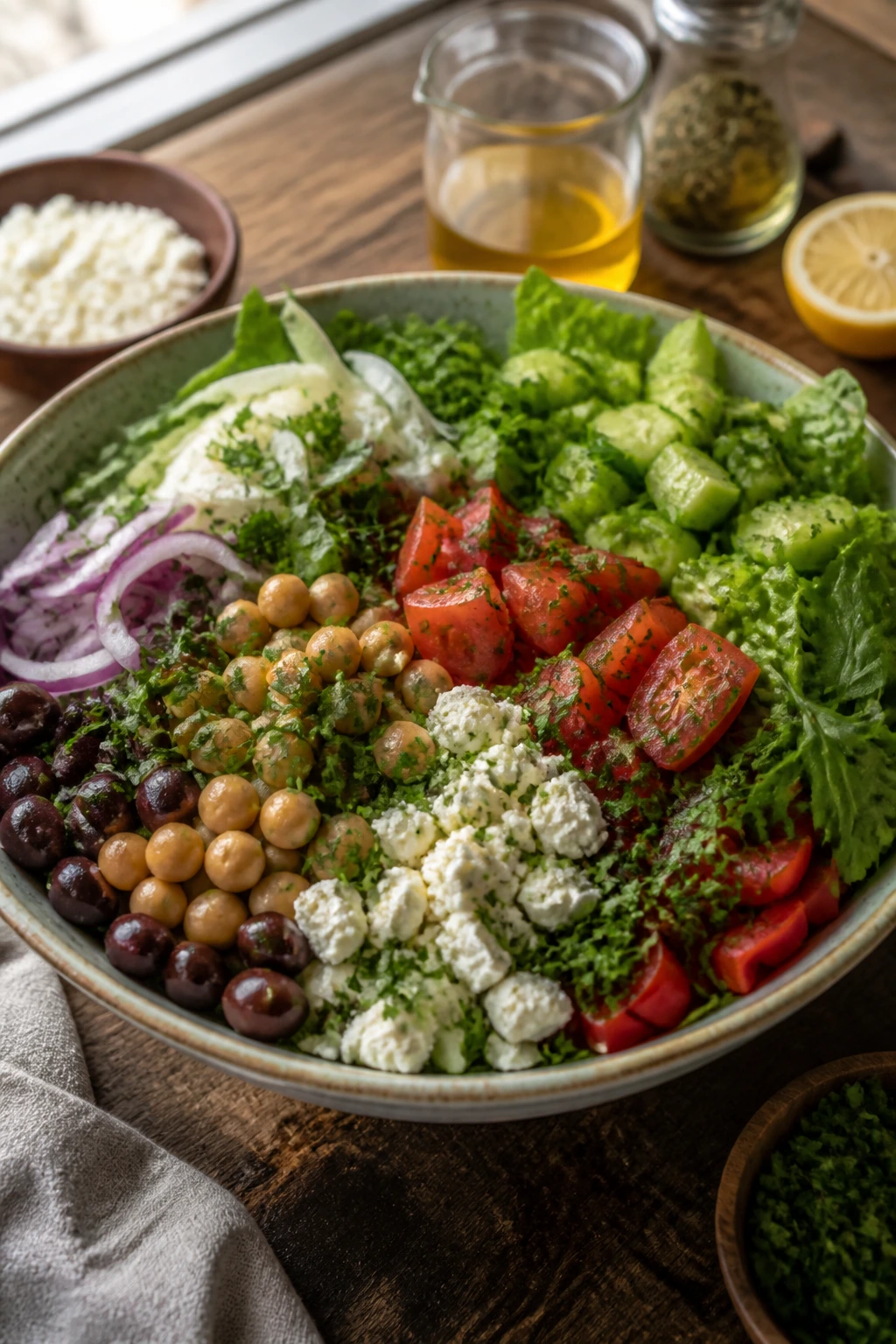
For the Salad
- 3 cups chopped romaine hearts, cut into bite-size pieces
- 2 cups baby arugula
- 3 medium ripe tomatoes, cut into wedges and then into bite-size chunks
- 2 Persian cucumbers, sliced into half-moons
- 1 small fennel bulb, trimmed and shaved very thin
- 1 small red bell pepper, seeded and cut into thin strips
- 1/2 small red onion, sliced paper-thin and rinsed briefly
- 1 cup cooked chickpeas, rinsed and drained
- 1/2 cup Kalamata olives, pitted
- 1/2 cup crumbled feta
- 1/3 cup chopped flat-leaf parsley
- 2 tablespoons chopped dill
- 2 tablespoons chopped mint
- 1 tablespoon torn basil leaves
For the Dressing
- 1/4 cup extra-virgin olive oil
- 2 tablespoons red wine vinegar
- 1 tablespoon fresh lemon juice
- 1 small garlic clove, finely grated or pressed
- 1 teaspoon dried oregano, crushed between your fingers
- 3/4 teaspoon kosher salt, plus more to taste
- 1/4 teaspoon freshly ground black pepper
- 1/2 teaspoon lemon zest, optional
- Pinch of red pepper flakes, optional
For the Finish
- 2 tablespoons toasted pine nuts, optional
- Extra black pepper, for serving
Why Each Ingredient Pulls Its Weight
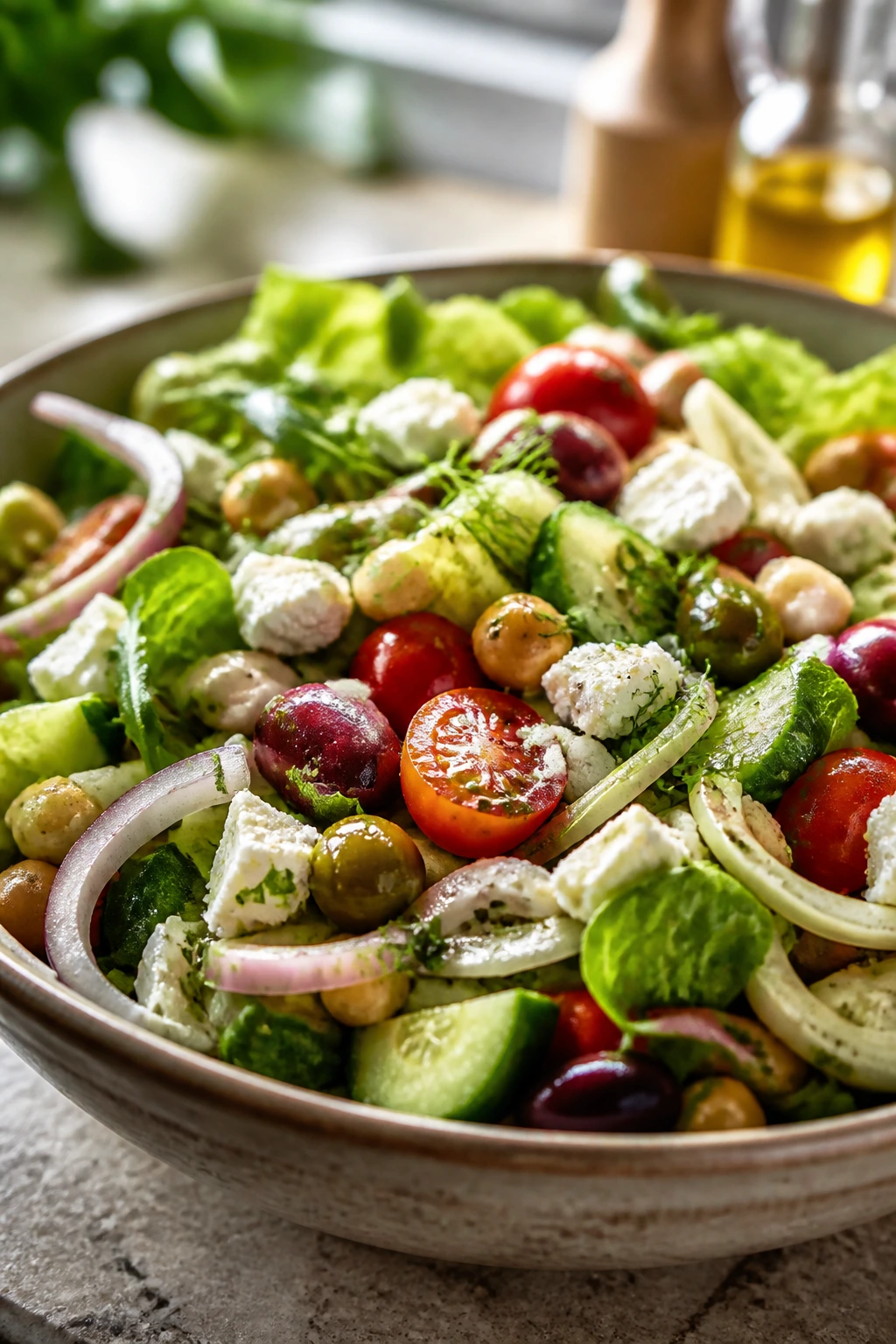
The Greens and Crunchy Vegetables
What to use: 3 cups chopped romaine hearts and 2 cups baby arugula, plus 3 medium tomatoes, 2 Persian cucumbers, 1 small fennel bulb, 1 small red bell pepper, and 1/2 small red onion.
Preparation: Chop the romaine into bite-size pieces, keep the arugula whole, and slice everything else thin enough that it tucks into a forkful without falling out. If the tomatoes are extra juicy, cut them over a bowl and save the juices for the dressing.
Substitutions: Little gem, iceberg, or a soft mix of romaine and endive all work. If fennel isn’t your thing, use celery for crunch and leave the anise note out of the bowl.
Tips: Dry the greens well. Wet lettuce makes the dressing thin and gives you that sad, slick restaurant-salad feeling nobody asked for.
Chickpeas, Olives, and Feta
What to use: 1 cup cooked chickpeas, 1/2 cup Kalamata olives, and 1/2 cup crumbled feta.
Preparation: Rinse and drain canned chickpeas until the water runs clear, then pat them dry so they grip the dressing instead of sliding off it. Pit the olives if needed, and crumble the feta into small pieces rather than one large slab.
Substitutions: Cannellini beans are the most natural swap for chickpeas. If you want a dairy-free bowl, leave out the feta and add a few spoonfuls of chopped avocado or extra olives for richness.
Tips: Salt is already hiding in the olives and feta, so taste before adding more. This is the point where many home cooks overdo it and end up with a sharp, salty bowl that tastes louder than it should.
The Herbs That Make the Salad Feel Alive
What to use: 1/3 cup parsley, 2 tablespoons dill, 2 tablespoons mint, and 1 tablespoon basil.
Preparation: Chop the parsley finely, but keep the dill, mint, and basil a little looser so they don’t vanish into the greens. Tear the basil rather than chopping it if you want it to keep its smell.
Substitutions: If mint feels too cool for you, use more basil. If dill is hard to find, chives give a gentler onion note, though they do not give the same old-world feel.
Tips: Herbs should be dry, not damp. A wet herb pile turns dark and limp fast, and the dressing will slide off the leaves instead of clinging to them.
The Dressing and Finishing Touches
What to use: 1/4 cup olive oil, 2 tablespoons red wine vinegar, 1 tablespoon lemon juice, 1 small garlic clove, 1 teaspoon oregano, kosher salt, black pepper, and optional lemon zest or red pepper flakes.
Preparation: Grate the garlic as finely as you can so it melts into the dressing instead of floating around in little harsh bits. Crush the oregano between your fingers before it goes in; that tiny move wakes up the oils.
Substitutions: White wine vinegar gives a softer edge, while sherry vinegar brings a warmer note. If you prefer less bite, use 1 1/2 tablespoons vinegar and another 1/2 tablespoon lemon juice.
Tips: Taste the dressing before tossing. It should seem a little too sharp on its own. Once it hits the lettuce and chickpeas, the edge softens into balance.
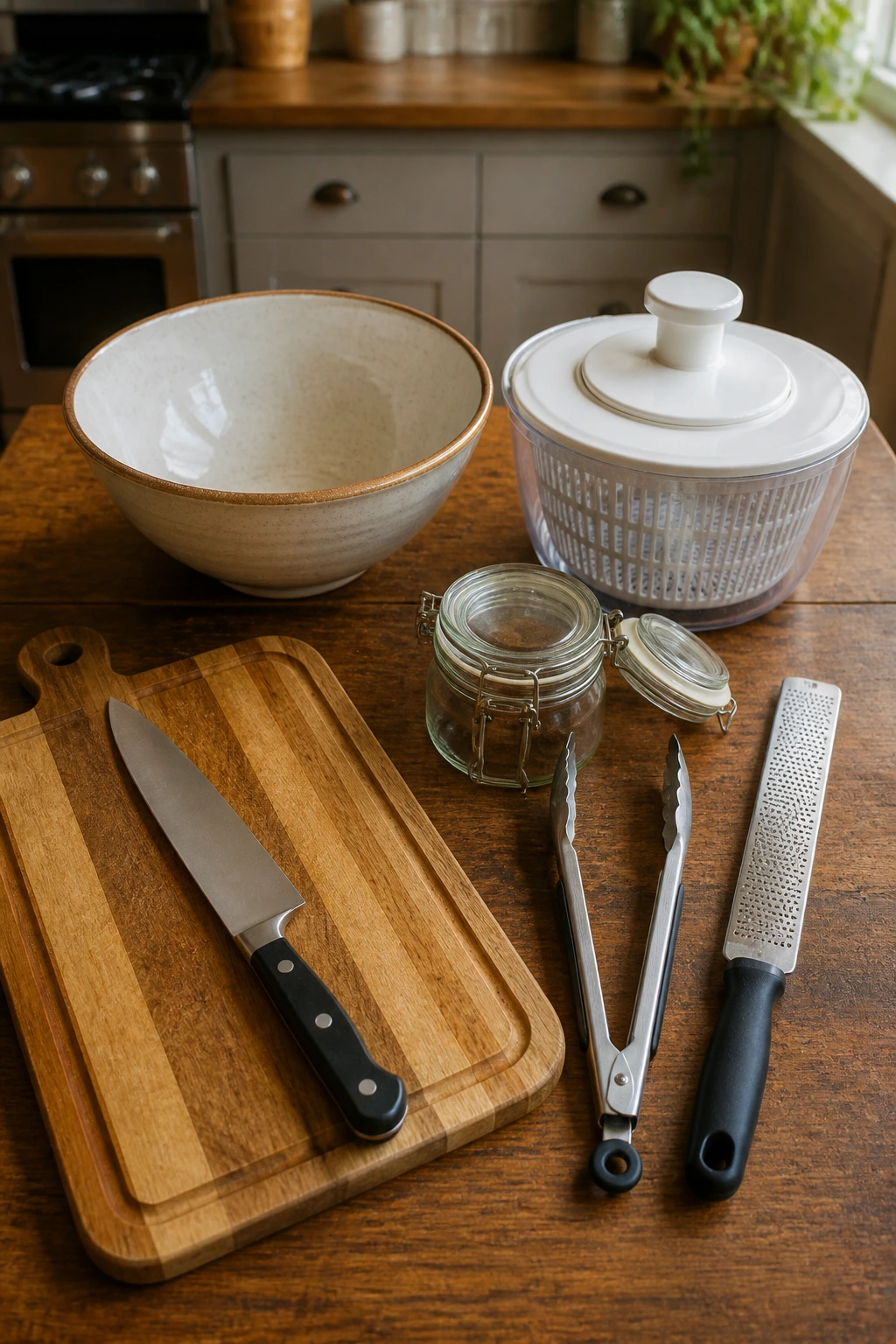
The Tools That Make the Toss Easier
-
Large mixing bowl: A wide bowl gives you room to toss without crushing the vegetables.
-
Sharp chef’s knife: Thin onion slices and clean fennel shavings matter more than people think here.
-
Cutting board: A stable board is worth more than fancy gear; put a folded kitchen towel underneath if it slides.
-
Small bowl or glass jar with a lid: Good for shaking the dressing until it looks lightly emulsified and glossy.
-
Salad tongs or clean hands: Tongs work fine, but hands are gentler if you want to avoid bruising the herbs.
-
Microplane or fine grater: Handy for the garlic and lemon zest.
-
Salad spinner, optional but useful: If you wash your own greens, this saves the whole bowl from excess water.
How to Build the Salad Without Bruising the Herbs
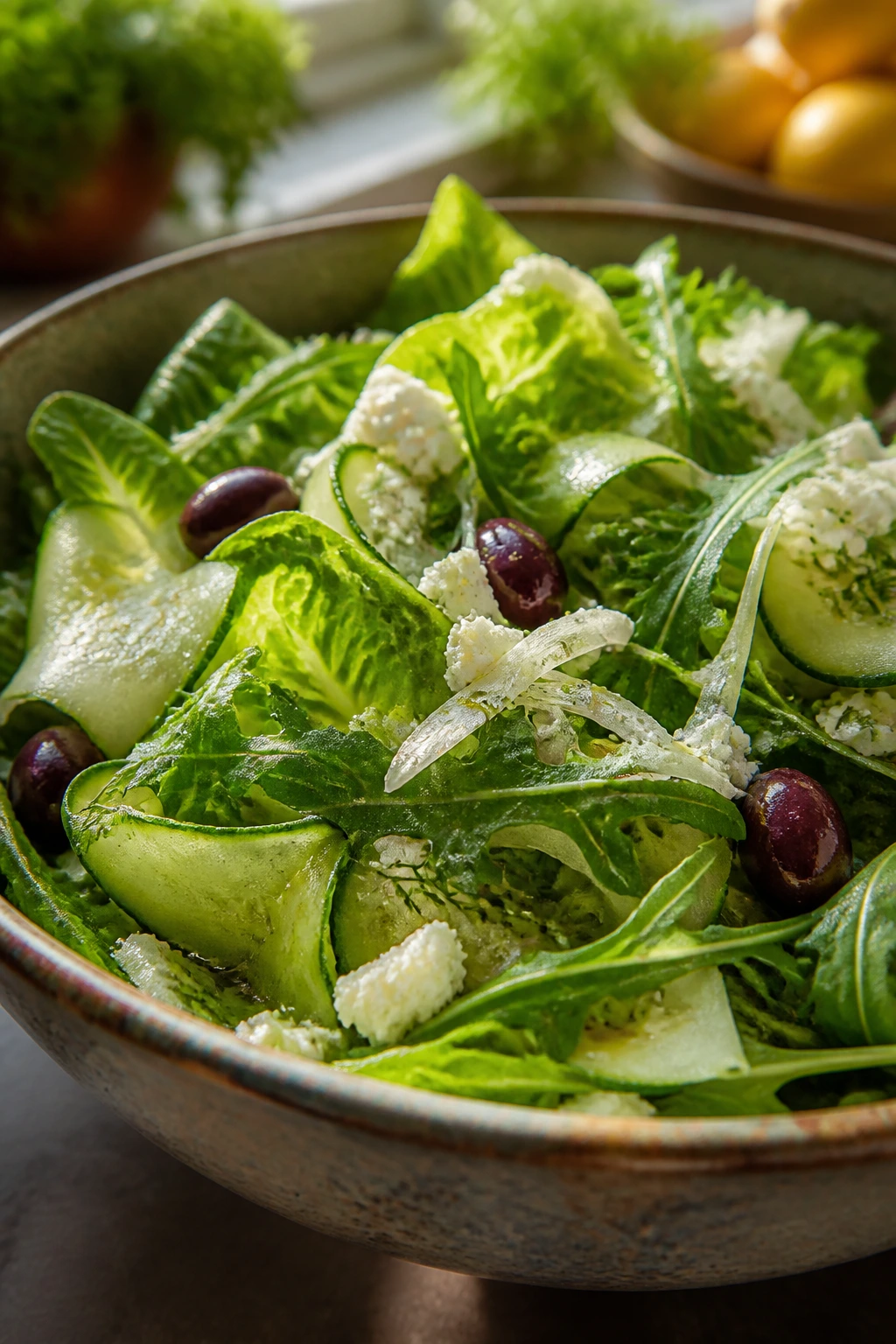
The order matters more than most people expect. Put the dressing together first so it can sit while you chop. That little pause takes the edge off the garlic and lets the oregano wake up in the oil. You are not making a vinaigrette that needs to be shaken to death. You’re giving the flavors a minute to get acquainted.
Start with the greens and the sturdier vegetables. Romaine, arugula, cucumber, fennel, bell pepper, chickpeas, onion, and olives all belong in the bowl before the softer things show up. That way, when you toss, the tomatoes and herbs are the last thing to take the hit.
Then add the feta and herbs with a light hand. Heavy stirring is the enemy here. You want the leaves glossy, not collapsed. If you toss until everything looks uniform, you’ve gone too far. A good herbed salad should still look like a salad when it lands on the table.
How to Build the Salad, Step by Step
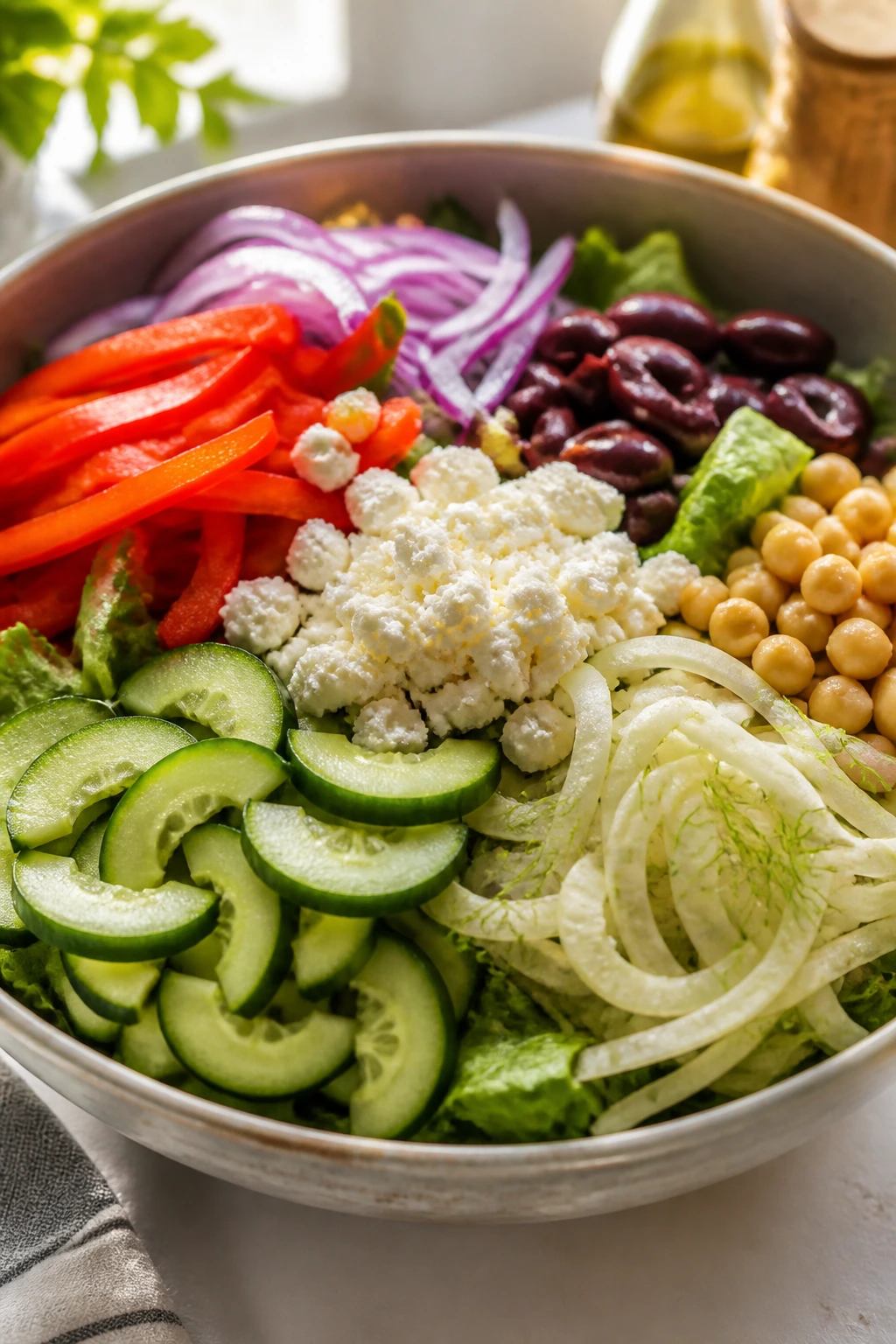
Prep the Vegetables
-
Wash and dry the romaine and arugula thoroughly. Tear or chop the romaine into bite-size pieces and place both greens in a very large bowl.
-
Trim the fennel bulb, cut out the tough core, and shave it very thin with a knife or mandoline. Slice the cucumber into half-moons, the bell pepper into thin strips, and the red onion as thinly as you can manage.
-
Cut the tomatoes into wedges, then into smaller chunks if they are large. If they’re especially juicy, let them drain for 5 minutes in a colander with a pinch of salt. Do not skip the drying step if you want a crisp bowl.
Mix the Dressing
- In a small bowl or jar, whisk together the olive oil, red wine vinegar, lemon juice, grated garlic, oregano, salt, black pepper, and optional lemon zest and red pepper flakes. Taste it. It should be brisk and savory, with enough salt to make the oil taste lively.
Assemble the Salad
-
Add the cucumbers, fennel, bell pepper, onion, chickpeas, olives, and about half the herbs to the bowl with the greens. Spoon in about two-thirds of the dressing and toss gently until everything has a light sheen.
-
Add the tomatoes and feta, then drizzle in more dressing if the bowl looks dry. Toss just once or twice more, only until the tomatoes are distributed and the feta is broken into smaller pieces. Stop before the greens start to wilt.
Finish and Serve
-
Scatter the remaining herbs and the toasted pine nuts over the top. Add a final grind of black pepper and taste one last time. If it needs it, add a pinch more salt or a small squeeze of lemon right before serving.
-
Let the salad sit for 5 to 10 minutes if you want the chickpeas and onion to soften slightly. Serve while the romaine still has crunch and the herbs still smell sharp.
Serving the Salad the Way a Family Table Would
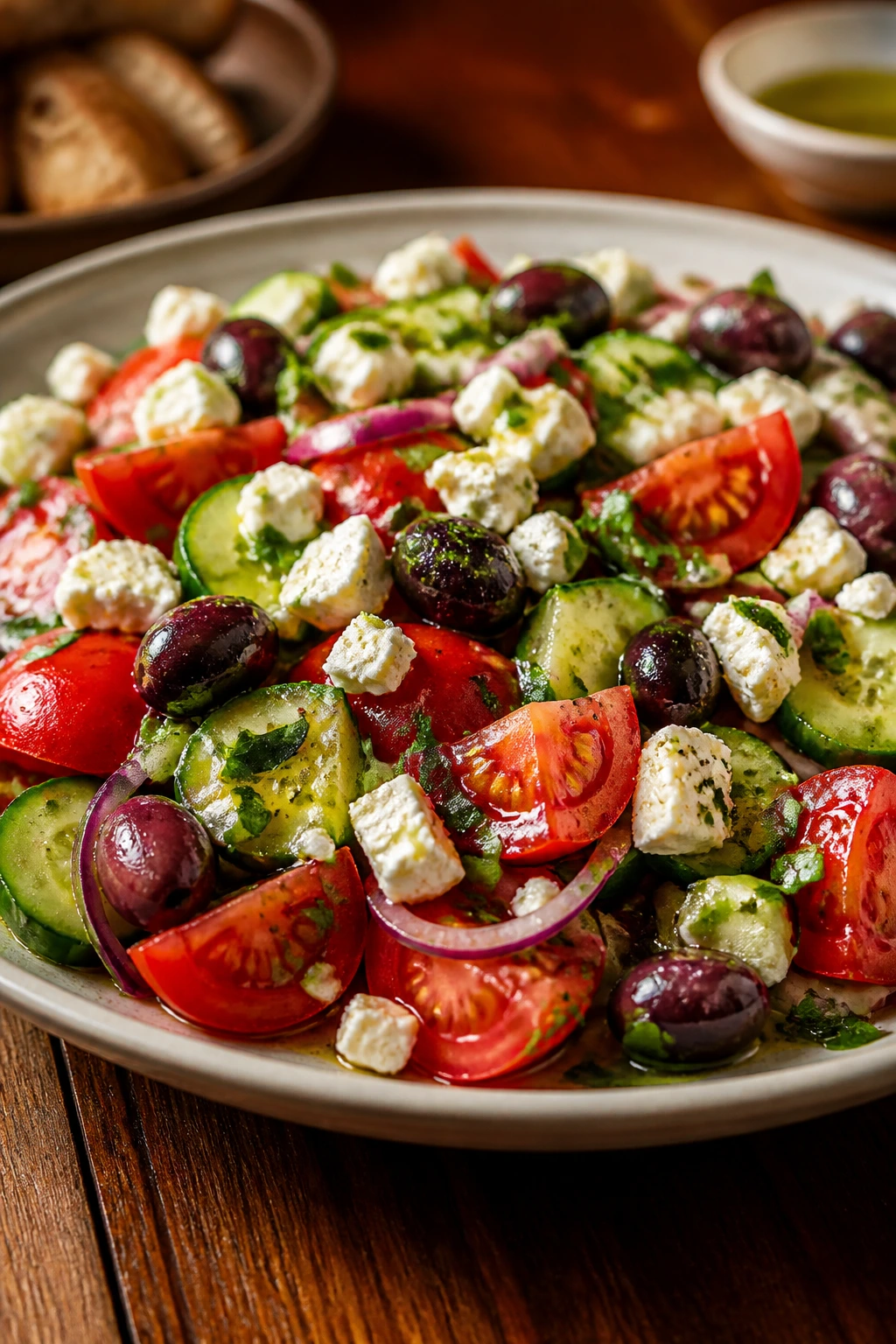
Presentation: Serve it in a wide shallow bowl or on a platter rather than a deep salad bowl. That spread-out look lets the tomatoes, olives, and herbs show up instead of burying themselves under the greens.
Accompaniments: I like this with warm focaccia, grilled fish, roast chicken, or a simple bowl of white beans dressed with olive oil and lemon. It also stands nicely beside grilled zucchini or a pan of baked salmon if you want dinner to feel low effort without tasting lazy.
Portions: As a side, figure on about 1 1/2 cups per person. As a light main, especially with chickpeas and feta, a generous 2 1/2 cups is a fair serving. If you’re feeding a bigger crowd, double the greens first, then scale the dressing up slowly so you do not drown the bowl.
Beverage Pairing: A crisp white wine with a little citrus—Pinot Grigio or Vermentino—keeps the herbs bright. If you want something nonalcoholic, sparkling water with lemon or a cold unsweetened iced tea works without fighting the olive oil.
Practical Tips That Keep the Bowl Bright
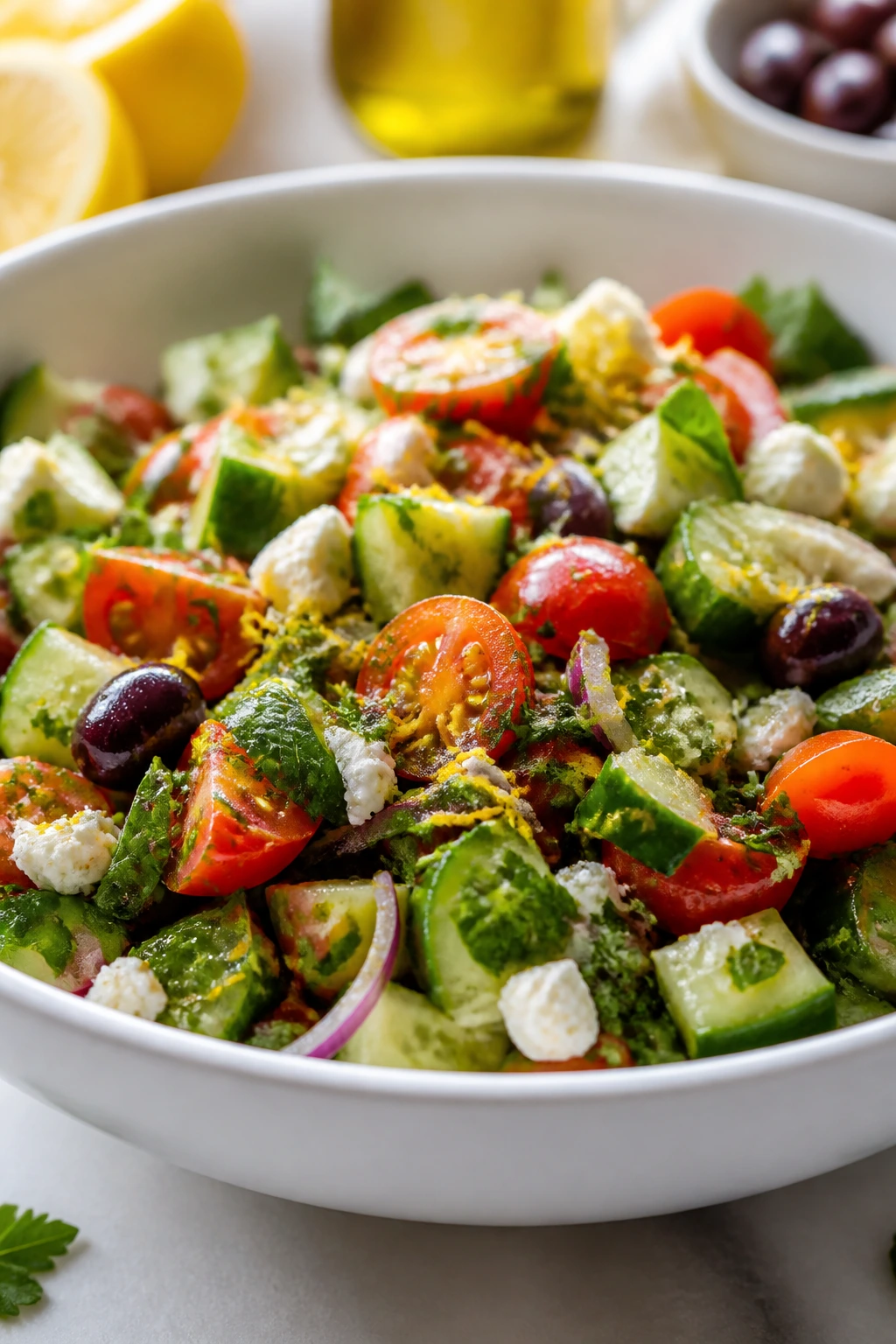
Flavor Enhancement: Use the zest of half a lemon in the dressing or over the top at the end. It adds a bright top note that plain juice can’t give, and you only need a little.
Time-Saver: Rinse the chickpeas, slice the onion, and whisk the dressing up to a day ahead. Keep them separate in the fridge, then chop the tomatoes and herbs when you’re ready to eat.
Texture Trick: Toast the pine nuts in a dry skillet over medium heat for 2 to 3 minutes, shaking the pan often. Pull them off the heat the second you smell them; they go from pale to bitter faster than you’d think.
Cost-Saver: Swap pine nuts for sunflower seeds if the price of pine nuts makes you blink. Toasted sunflower seeds give a similar crunch and hold their own against the dressing.
Balance Move: If the tomatoes are bland, add a pinch more salt directly to them before you toss the bowl. Salt wakes up tomatoes in a way extra oil never will.
The Sloppy Moves That Flatten a Good Salad
-
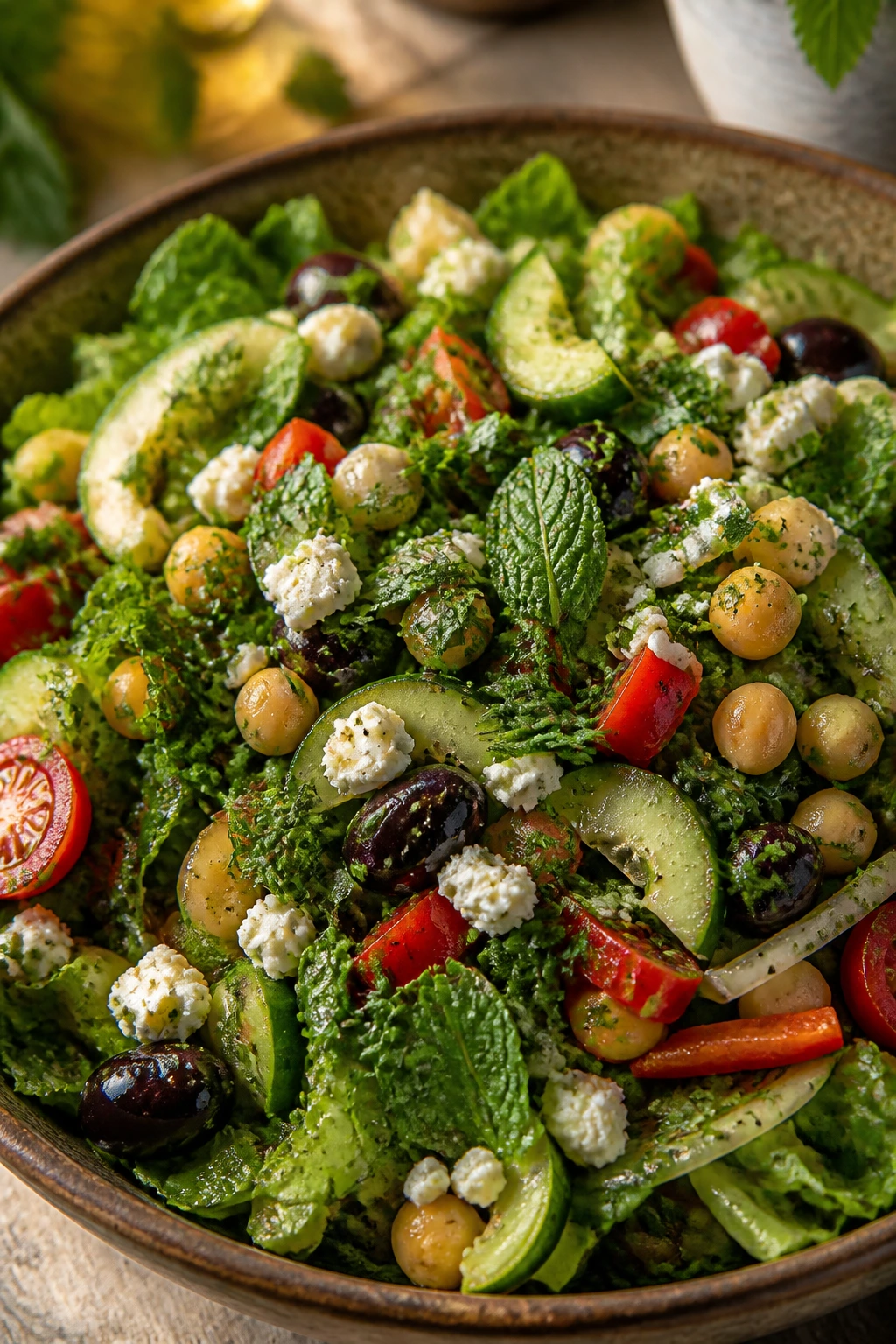
Dressing the greens too early: The romaine goes soft and the arugula slumps. Hold back most of the dressing until the last moment, then add more only if the bowl still looks dry.
-
Using wet herbs: Water clings to parsley and dill, which dilutes the dressing and makes the herbs clump together. Spin or pat them dry until they feel light between your fingers.
-
Cutting the onion too thick: Big onion slices steal the whole bite. Slice paper-thin, then rinse briefly in cold water if you want the edge to soften without losing the flavor.
-
Skipping the taste test on the dressing: A dressing that tastes “fine” in the bowl can read flat once it hits the vegetables. It needs to be a little sharp, a little salty, and a little louder than you think.
-
Adding tomatoes too early: Tomatoes bleed into the greens and make everything watery. Toss them in near the end unless you actively want a juicier, more rustic bowl.
-
Leaving out acid because the olive oil is good: Good olive oil is not a substitute for brightness. Without vinegar or lemon, the salad tastes heavy and muddy, even if every ingredient is fresh.
Ways to Change the Bowl Without Breaking It
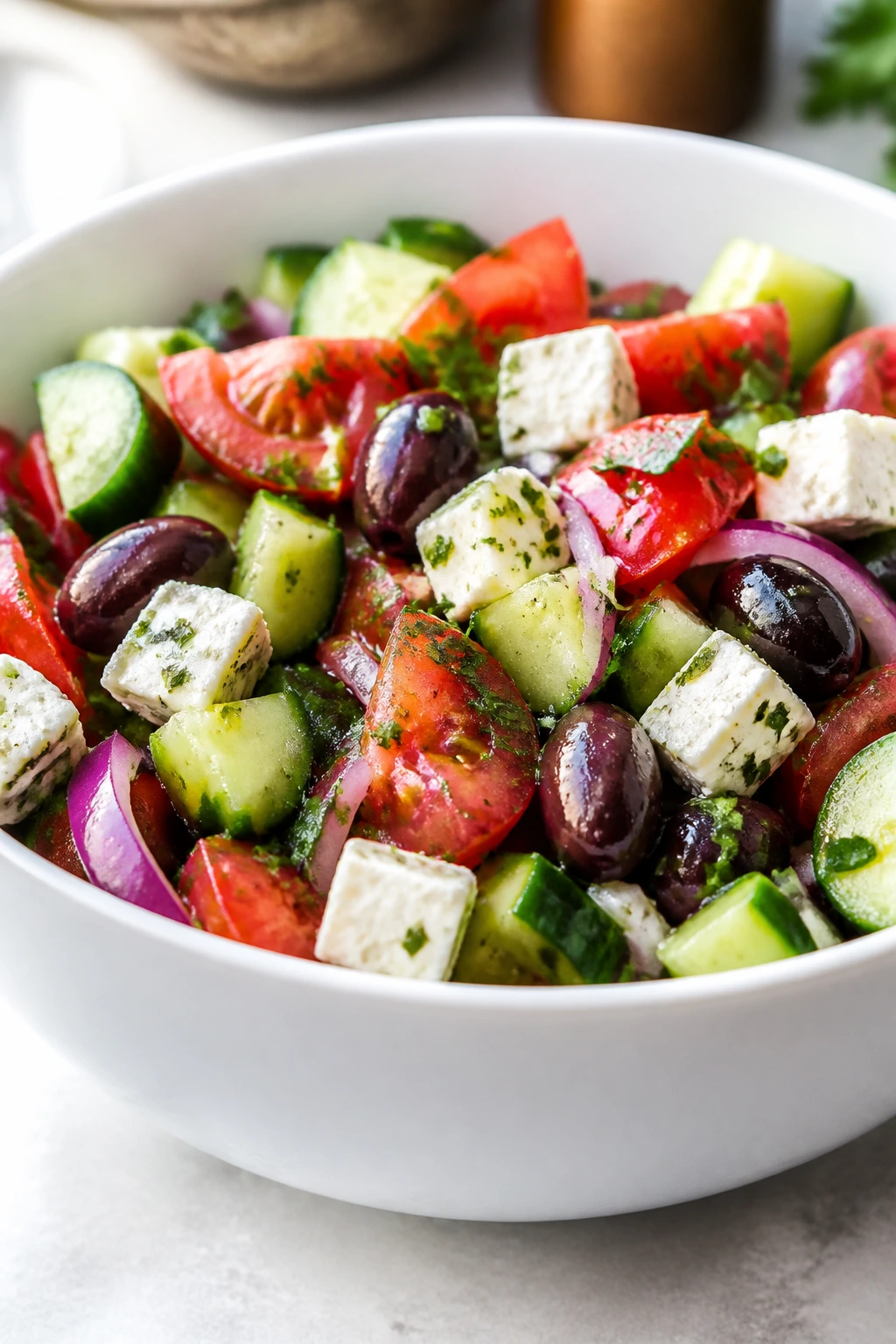
White Bean Kitchen Bowl: Swap the chickpeas for 1 cup of cannellini beans and add a few slivers of celery. The texture turns softer and creamier, and the whole salad feels more like an Italian lunch plate than a chopped side.
Tuna Pantry Bowl: Fold in one small can of good tuna packed in olive oil, drained lightly. It makes the salad substantial enough for a real lunch and works especially well if you add a few capers to the dressing.
Grilled Vegetable Version: Replace some of the raw cucumber and fennel with grilled zucchini and charred peppers. This gives you a smokier bowl with fewer sharp edges, which I like when serving it beside grilled meat or fish.
No-Dairy Mediterranean Bowl: Leave out the feta and add extra olives, toasted seeds, and a few chopped cherry tomatoes. You lose the creamy salt hit, so be a little more generous with lemon and black pepper.
Calabrian Heat Twist: Stir a small spoonful of Calabrian chile paste or a pinch of red pepper flakes into the dressing. It gives the salad a slow burn that sits nicely under the herbs without turning it into a spicy show-off.
Make-Ahead, Fridge Life, and Leftovers
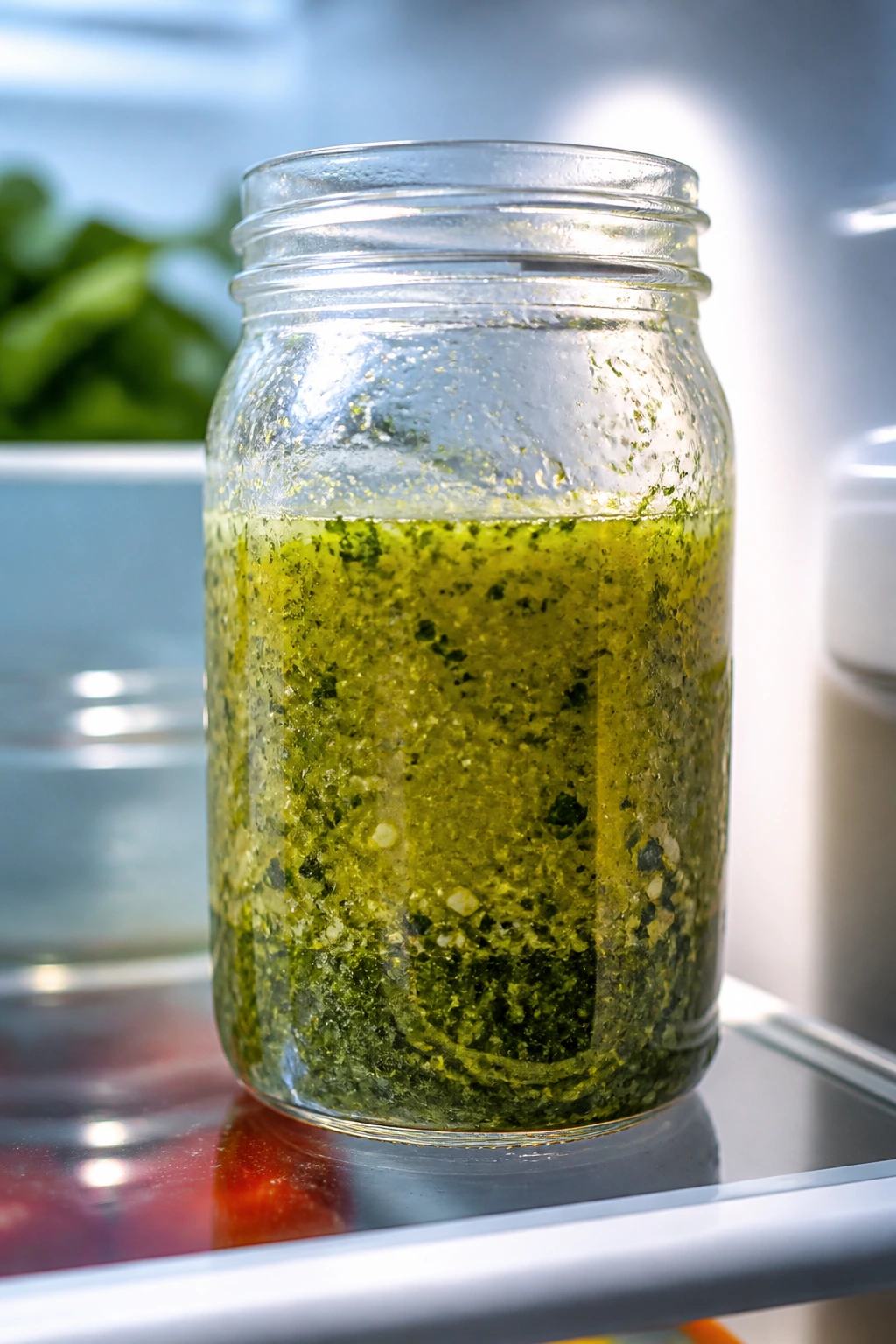
The dressing keeps well for about 5 to 7 days in the fridge in a sealed jar. Olive oil will thicken when chilled, so let the jar sit on the counter for 10 minutes and shake it hard before using. If the garlic flavor feels too sharp after a day, a tiny splash more lemon will wake it back up.
The chopped vegetables hold differently. Cucumbers, fennel, bell pepper, and onion can be cut 1 day ahead and stored separately in airtight containers lined with a paper towel. Romaine and arugula are best washed and dried the day before, then stored in a towel-lined container or salad spinner basket so they stay dry and perky.
Tomatoes are the one ingredient I would not rush. If you cut them too far ahead, they release juice and lose that clean bite you want in a salad like this. You can cut them up to 4 to 6 hours ahead if needed, but keep them drained and separate.
Once the salad is dressed, it’s at its peak for about 30 minutes. Leftovers will keep for 1 day in the fridge, though the romaine softens and the tomatoes get looser. If you know you’ll have leftovers, hold back the feta, pine nuts, and some of the herbs, then add them fresh to the next serving. Freezing is not worth considering here. The texture collapses.
Questions Home Cooks Ask First
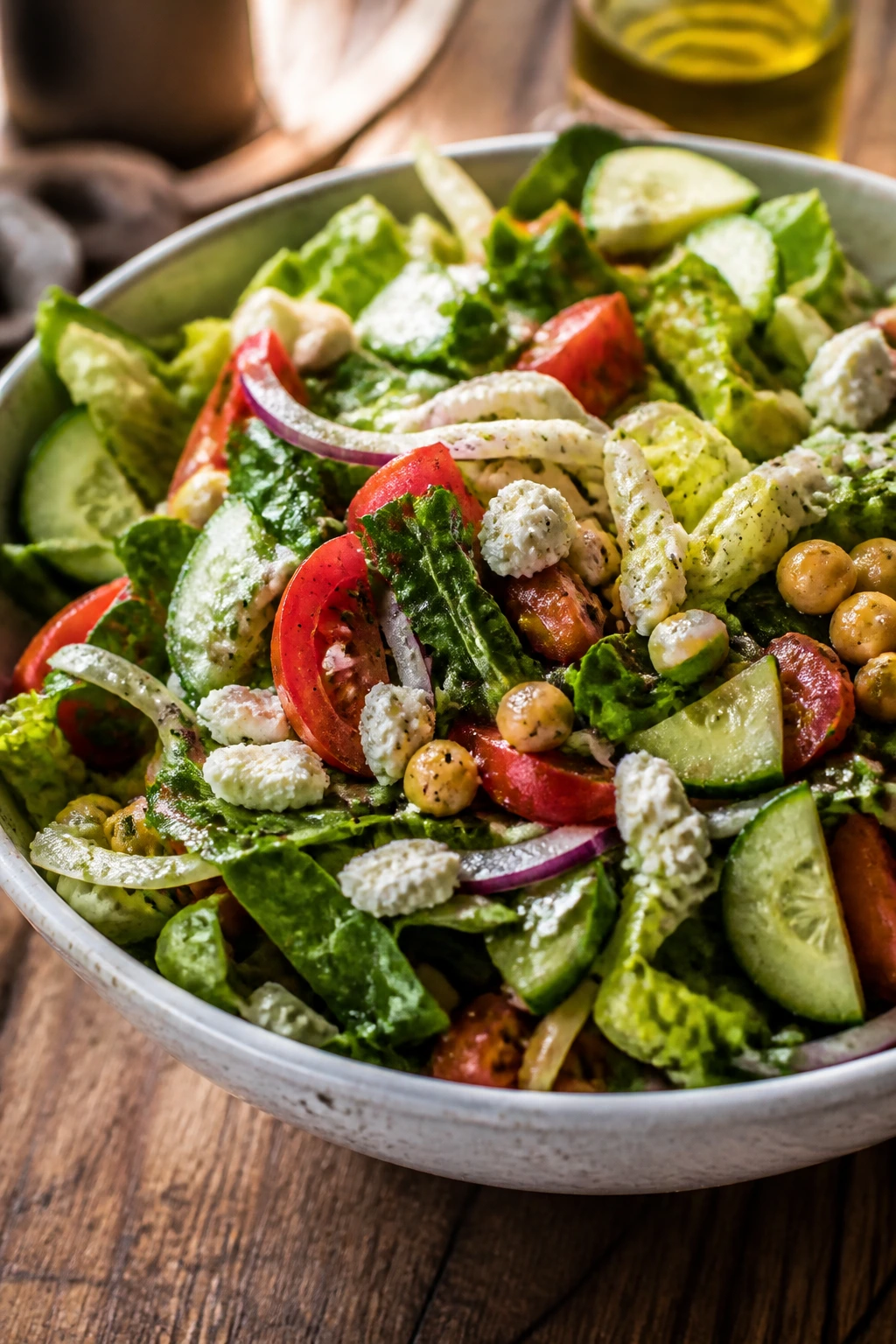
Can I use dried herbs instead of fresh ones?
Fresh herbs are the point of this salad. Dried herbs belong in the dressing in tiny amounts, where they can soften in the oil; they do not belong as a stand-in for parsley, dill, mint, or basil in the bowl itself.
What if I do not like fennel?
Leave it out and add more cucumber or a handful of thinly sliced celery. Fennel brings a clean, faintly sweet anise note, but the salad does not fall apart without it.
Can I make this without feta?
Yes, and it still works. Increase the olives a little, finish with extra black pepper and lemon zest, and consider adding toasted seeds or nuts so the salad keeps some richness.
How do I keep the red onion from taking over?
Slice it thin, then soak the slices in cold water for 10 minutes or toss them with a spoonful of vinegar before adding them to the bowl. That takes the edge off without stripping the flavor.
Is canned chickpeas fine here?
Absolutely. Rinse them until the foam disappears and pat them dry. Dry chickpeas are not a badge of honor in a salad; the only thing that matters is that they taste clean and hold their shape.
Can I make the salad the night before?
Only the components, not the finished bowl. Keep the greens, tomatoes, vegetables, herbs, dressing, feta, and chickpeas separate, then assemble right before serving. A dressed salad can be edible the next day, but it will not have the same snap.
What if the dressing tastes too sharp?
Add 1 to 2 teaspoons more olive oil and a pinch more salt, then taste again. A salad dressing should wake up the vegetables, not sting the tongue. If it tastes flat instead, you need more lemon or vinegar, not more oil.
A Final Bowl Worth Repeating
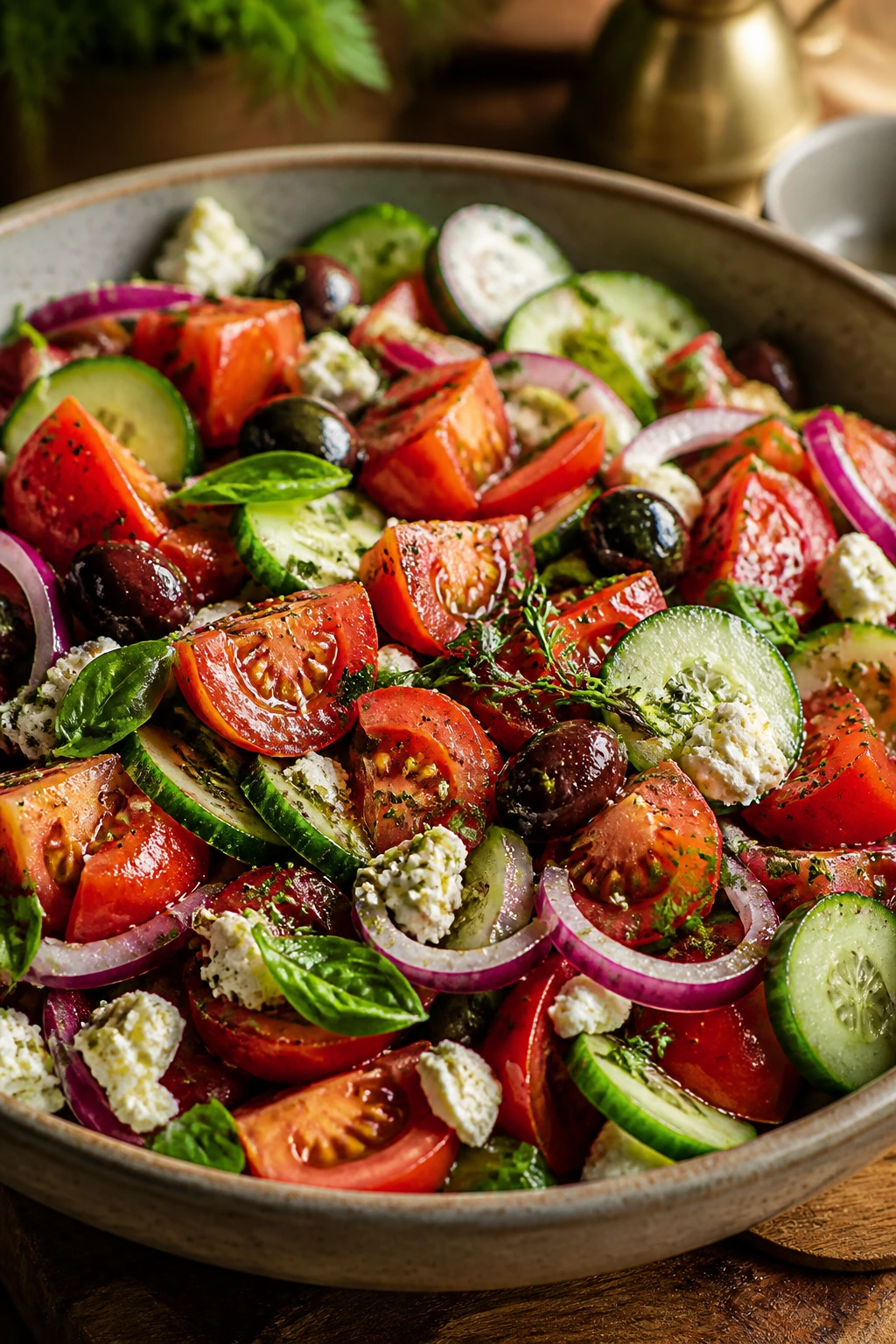
There’s a reason this kind of salad keeps showing up on family tables. It doesn’t ask much from you, but it gives back a lot: crunch, brine, herbs, and that clean finished feeling you get after a meal that actually tastes like the ingredients were respected.
Make it once with the recipe as written, then change the bowl in small ways. More dill if you like a greener, cooler taste. More fennel if you want something sharper. Tuna if lunch needs more heft. The structure stays the same, which is the useful part. After that, the bowl starts to feel like yours.
Herbed Mediterranean Salad Like Nonna Used to Make — Recipe Card
Recipe Name: Herbed Mediterranean Salad Like Nonna Used to Make
Description: A crisp, herb-heavy Mediterranean salad with romaine, arugula, tomatoes, cucumbers, fennel, chickpeas, olives, feta, and a sharp olive oil dressing. It’s bright, salty, and built to taste fresh from the first bite to the last.
Prep Time: 25 minutes
Cook Time: 0 minutes
Total Time: 25 minutes, plus 10 minutes resting time optional
Course: Salad, Side Dish, Light Main
Cuisine: Italian / Mediterranean
Servings: 4 to 6 servings
Calories: About 290 kcal per serving
Ingredients
For the Salad
- 3 cups chopped romaine hearts, cut into bite-size pieces
- 2 cups baby arugula
- 3 medium ripe tomatoes, cut into bite-size chunks
- 2 Persian cucumbers, sliced into half-moons
- 1 small fennel bulb, trimmed and shaved very thin
- 1 small red bell pepper, seeded and cut into thin strips
- 1/2 small red onion, sliced paper-thin and rinsed briefly
- 1 cup cooked chickpeas, rinsed and drained
- 1/2 cup Kalamata olives, pitted
- 1/2 cup crumbled feta
- 1/3 cup chopped flat-leaf parsley
- 2 tablespoons chopped dill
- 2 tablespoons chopped mint
- 1 tablespoon torn basil leaves
For the Dressing
- 1/4 cup extra-virgin olive oil
- 2 tablespoons red wine vinegar
- 1 tablespoon fresh lemon juice
- 1 small garlic clove, finely grated
- 1 teaspoon dried oregano, crushed between your fingers
- 3/4 teaspoon kosher salt
- 1/4 teaspoon freshly ground black pepper
- 1/2 teaspoon lemon zest, optional
- Pinch of red pepper flakes, optional
For the Finish
- 2 tablespoons toasted pine nuts, optional
- Extra black pepper, for serving
Instructions
-
Wash and dry the romaine and arugula thoroughly, then place them in a large bowl.
-
Trim and thinly slice the fennel, cucumber, bell pepper, and red onion. Cut the tomatoes into bite-size pieces and drain them briefly if they’re very juicy.
-
Whisk together the olive oil, red wine vinegar, lemon juice, garlic, oregano, salt, pepper, and optional lemon zest and red pepper flakes.
-
Add the cucumbers, fennel, bell pepper, red onion, chickpeas, olives, and about half the herbs to the greens. Toss with about two-thirds of the dressing.
-
Add the tomatoes and feta, then drizzle in more dressing only as needed. Toss gently until the salad is lightly coated.
-
Top with the remaining herbs, toasted pine nuts, and extra black pepper. Taste and adjust with a pinch more salt or a small squeeze of lemon if needed.
-
Serve within 15 to 30 minutes, while the greens still have crunch.
Notes: Keep the dressing separate if making ahead. Add tomatoes and herbs at the last minute for the brightest texture. Toast the pine nuts for 2 to 3 minutes in a dry skillet if you want extra nuttiness.