



I keep coming back to juicy garlic parmesan chicken for weeknight dinners because it solves the same problem every time: you want something that smells like you tried, tastes rich enough to matter, and gets to the table before the kitchen turns into a negotiation.
The trick is not some fancy trick. It’s a hot skillet, evenly pounded chicken, and a sauce that starts with butter and garlic and ends with parmesan melted into cream so smoothly it clings to the chicken instead of sliding off in a sad puddle. When the garlic turns sweet instead of sharp and the chicken gives way under a fork without shedding a flood of juice, you know you’ve hit the right balance.
A lot of chicken breast recipes miss by a mile because they chase browning so hard that the meat dries out before the center is ready. This one does the opposite. You build flavor in the pan, keep the heat sensible, and let the sauce finish the job. The result is plain enough for a Tuesday and good enough that you’ll keep the ingredients around on purpose.
Why This Garlic Parmesan Chicken Works on Busy Nights
-
Even thickness saves the whole dish: Chicken breasts that are pounded to about 1/2 inch cook fast and stay tender, which is the difference between a juicy cutlet and one that fights the knife.
-
The pan does half the flavor work: Those browned bits left behind after searing dissolve into the broth and cream, so the sauce tastes deeper than the ingredient list looks.
-
Parmesan gives body, not just salt: Finely grated parmesan melts into the sauce and helps it coat the chicken instead of breaking into oily streaks.
-
One skillet means fewer stalls: You’re not juggling a roast pan, a saucepan, and a serving dish while dinner cools on the counter.
-
It plays well with whatever side is already in the house: Rice, noodles, mashed potatoes, roasted broccoli, green beans, even a hunk of crusty bread all make sense here.
-
The method is forgiving if you watch the heat: Garlic wants a quick, gentle sauté. Parmesan wants low heat. Keep those two things in mind and the rest behaves.
Dinner at a Glance
Yield: Serves 4
Prep Time: 15 minutes
Cook Time: 20 minutes
Total Time: 35 minutes
Difficulty: Beginner — the technique is straightforward, but the chicken needs even thickness and the sauce needs a steady hand with the heat.
Best Served: Right away, while the sauce is glossy and the parsley still looks bright.
What Goes in the Skillet
For the Chicken:
- 1 1/2 lbs boneless, skinless chicken breasts, trimmed and split horizontally if thick
- 1 tsp kosher salt
- 1/2 tsp freshly ground black pepper
- 1/2 tsp paprika
- 1/4 cup all-purpose flour
- 1/4 cup finely grated Parmesan cheese
- 2 tbsp olive oil
- 1 tbsp unsalted butter
For the Garlic Parmesan Sauce:
- 2 tbsp unsalted butter
- 5 cloves garlic, minced
- 1 cup low-sodium chicken broth
- 1/2 cup heavy cream
- 1/2 cup finely grated Parmesan cheese from a block
- 1 tsp Dijon mustard
- 1 tsp lemon juice
- 1/4 tsp crushed red pepper flakes, optional
To Finish:
- 2 tbsp chopped fresh parsley
- Lemon wedges, for serving
Why Each Ingredient Pulls Its Weight
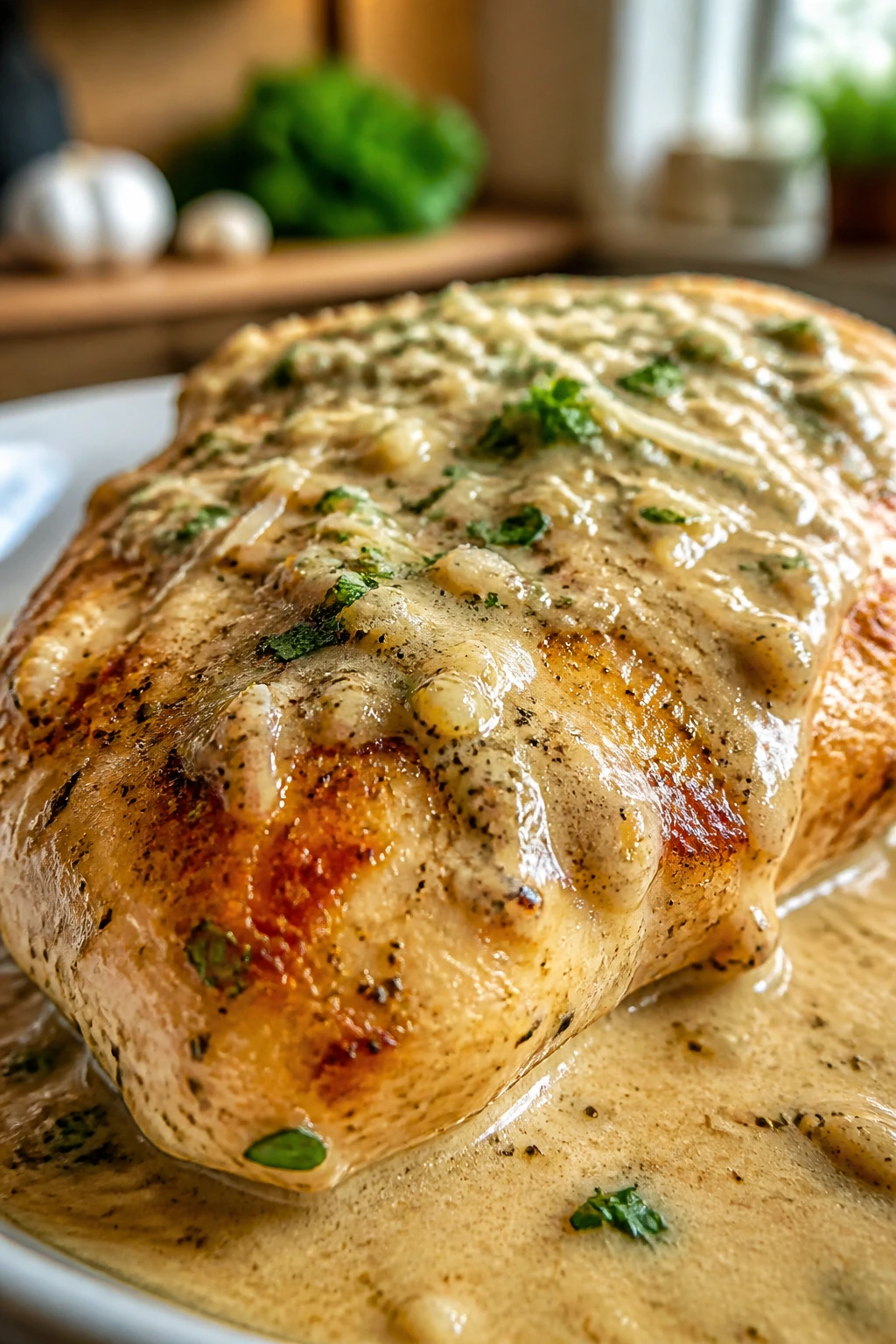
Main Protein: Chicken Breasts That Stay Tender
- What to use: 1 1/2 lbs boneless, skinless chicken breasts, trimmed and split horizontally if the thickest part is over 1 inch.
- Preparation: Pat them dry, then pound them to an even 1/2-inch thickness with a meat mallet or rolling pin. That one move changes everything because the chicken cooks at the same rate across the whole piece.
- Substitutions: Boneless, skinless chicken thighs work well if you want a richer bite; they need a slightly longer simmer, but they’re less likely to dry out. Thin-cut chicken cutlets also work and make the recipe even faster.
- Tips: Salt the chicken before dredging, not after. The salt seasons the meat itself, while the sauce handles the top note.
Coating and Browning: The Light Dredge
- What to use: 1/4 cup all-purpose flour and 1/4 cup finely grated Parmesan cheese.
- Preparation: Mix them on a shallow plate, then coat the chicken lightly and shake off the excess. You want a whisper of coating, not a breading jacket.
- Substitutions: For gluten-free cooking, use 3 tablespoons rice flour or cornstarch in place of the all-purpose flour. Rice flour browns a little better; cornstarch gives a lighter, smoother crust.
- Tips: If the coating looks pasty or thick, you used too much. A thin dusting helps the chicken brown and gives the sauce something to grab.
Sauce and Finish: Where the Garlic Parmesan Flavor Comes From
- What to use: 2 tbsp butter, 5 cloves garlic, 1 cup chicken broth, 1/2 cup heavy cream, 1/2 cup finely grated Parmesan, 1 tsp Dijon mustard, 1 tsp lemon juice, and a pinch of red pepper flakes if you want a little lift.
- Preparation: Mince the garlic finely, grate the cheese from a block, and measure the broth and cream before you turn on the stove. Once the garlic hits the pan, the sauce moves fast.
- Substitutions: Half-and-half can stand in for the heavy cream if that’s what you have, though the sauce will be a little thinner. Vegetable broth works in a pinch, but chicken broth gives the sauce more backbone.
- Tips: Add the parmesan over low heat or off heat. High heat can make the sauce grainy, especially if the cheese is pre-shredded and coated with anti-caking starch.
The Tools I Reach for Here
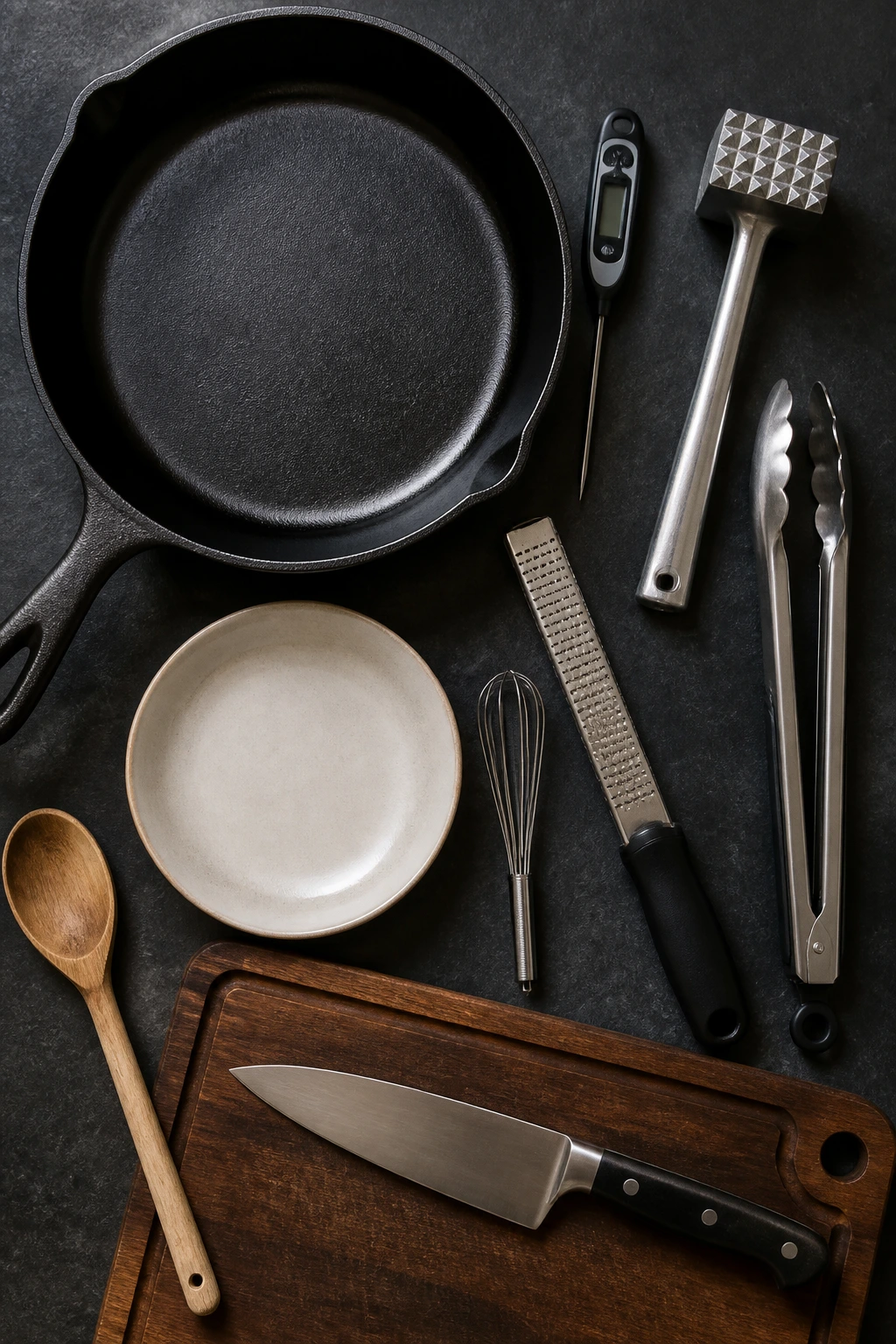
- 12-inch heavy skillet or sauté pan: A wide, heavy pan gives the chicken room to brown instead of steam.
- Instant-read thermometer: This is the cleanest way to stop cooking at 165°F without guessing.
- Meat mallet or rolling pin: Useful for flattening the chicken to even thickness.
- Tongs: Easier than a fork, which can leak juices right out of the meat.
- Microplane or fine grater: Best for parmesan that melts smoothly into the sauce.
- Shallow plate or rimmed dish: Handy for dredging the chicken without flour drifting all over the counter.
- Small whisk: Helps the sauce come together without lumps.
- Wooden spoon or silicone spatula: Good for scraping up the browned bits after searing.
- Cutting board and sharp chef’s knife: Needed for trimming chicken and mincing the garlic cleanly.
How to Cook the Chicken So It Stays Juicy
Prep and Dredge the Chicken
-
Pat and flatten: Pat the chicken breasts dry with paper towels. If any breast is much thicker on one end, slice it horizontally into cutlets or pound it to an even 1/2-inch thickness between two sheets of parchment or plastic wrap.
-
Season the meat: Sprinkle both sides with the kosher salt, black pepper, and paprika. Let it sit while you mix the dredge, about 5 to 10 minutes. That short rest gives the salt time to start working on the surface.
-
Mix the coating: Combine the flour and 1/4 cup parmesan on a shallow plate. Dredge each piece of chicken lightly, then shake off the excess. You want a thin, even coat that looks dusty, not opaque.
Sear and Build the Sauce
-
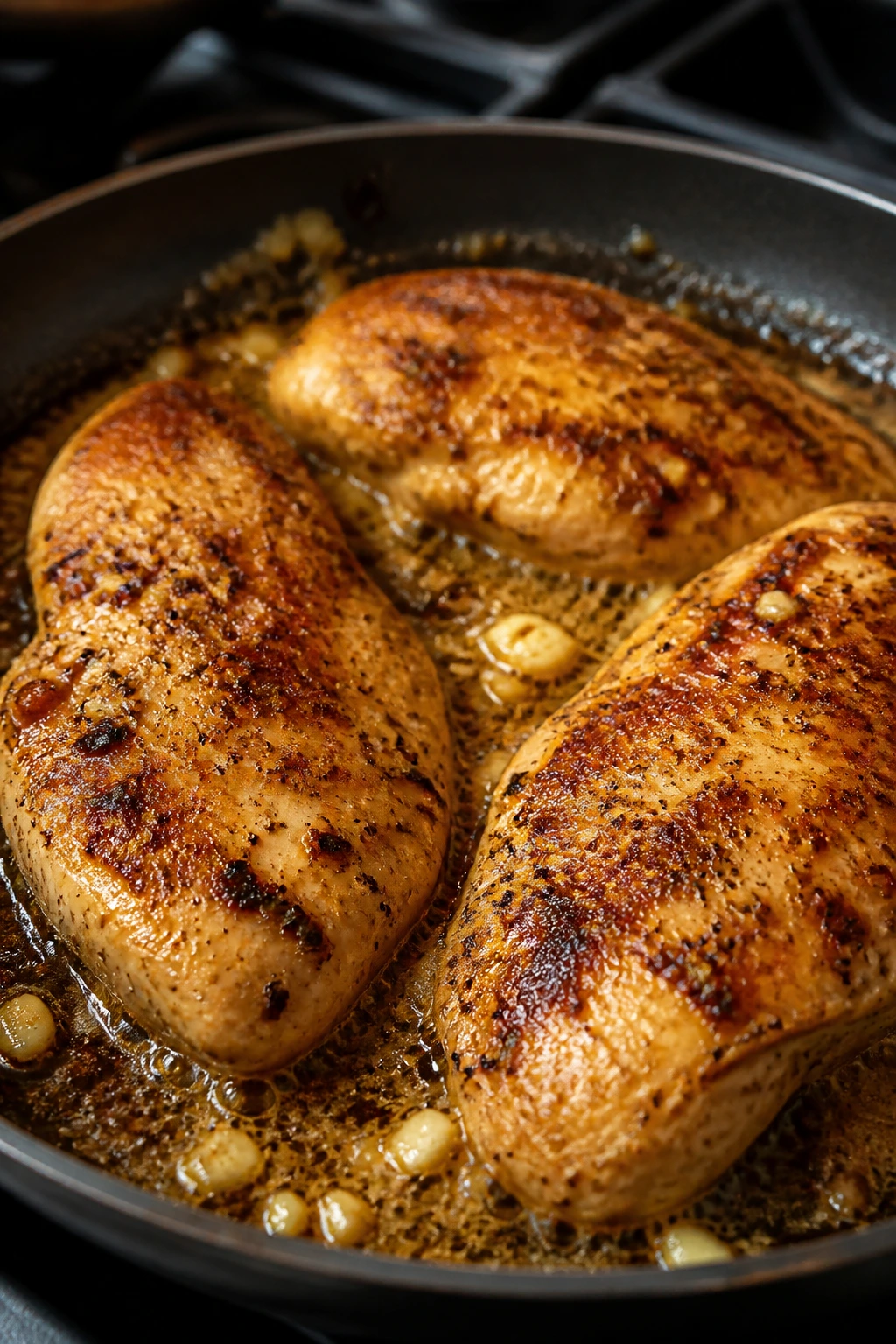
Brown the chicken: Heat the olive oil and 1 tablespoon butter in a 12-inch skillet over medium-high heat until the butter foams and the oil shimmers. Add the chicken in a single layer and cook for 4 minutes on the first side without moving it, then 3 to 4 minutes on the second side. If the chicken is crowded, cook in batches. Transfer the browned pieces to a plate when the center reads about 155 to 160°F.
-
Cook the garlic gently: Reduce the heat to medium. Add the remaining 2 tablespoons butter and the minced garlic, then cook for 30 to 45 seconds, stirring constantly, until the garlic smells sweet and fragrant. If it starts to brown, pull the pan off the heat for a few seconds.
-
Deglaze the pan: Pour in the chicken broth and scrape the bottom of the skillet with a wooden spoon to loosen every browned bit. Let it bubble for about 1 minute so the liquid picks up that flavor.
-
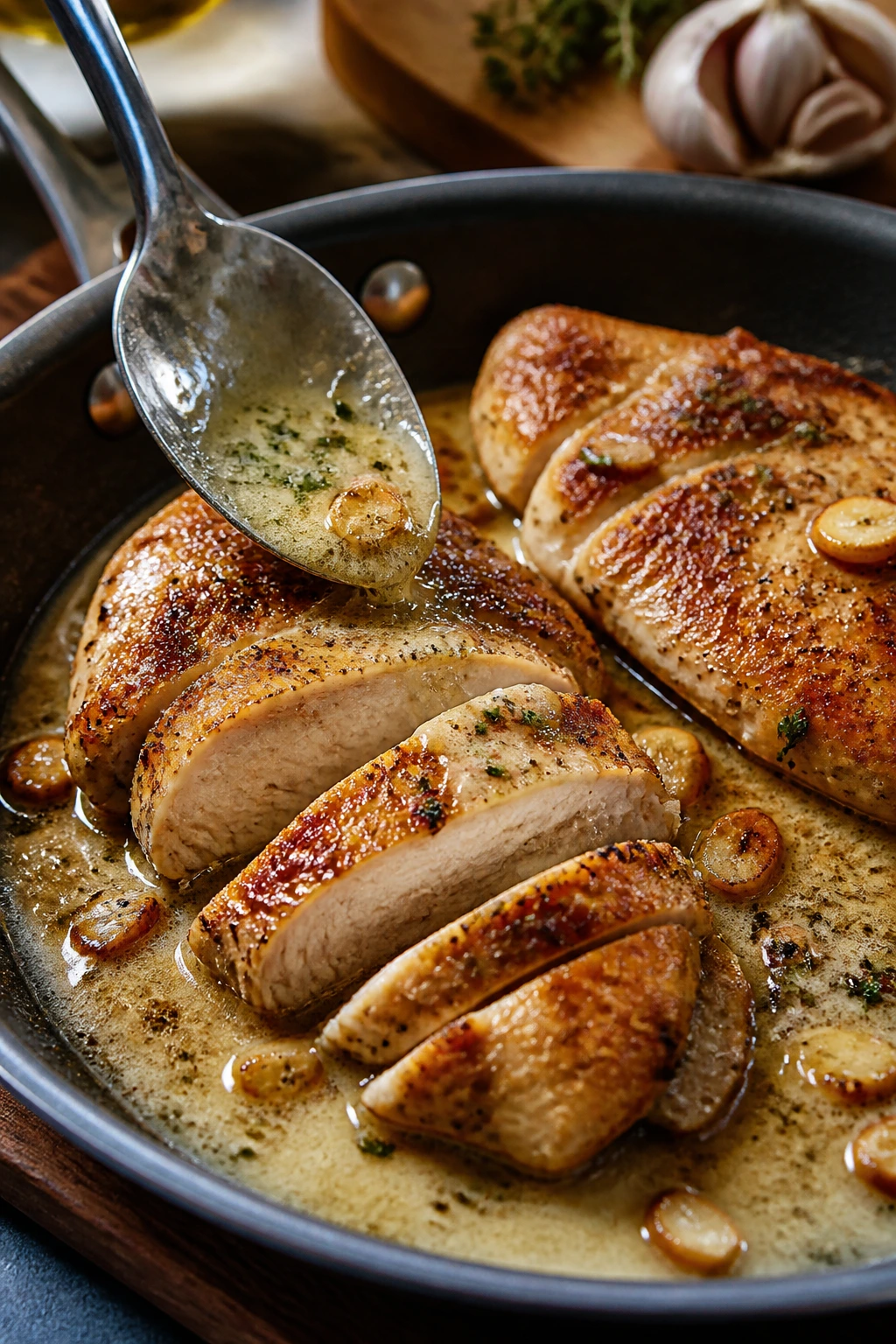
Finish the sauce: Lower the heat to low. Stir in the heavy cream, the remaining 1/2 cup parmesan, Dijon mustard, lemon juice, and red pepper flakes if using. Whisk until the cheese melts and the sauce looks smooth and glossy, 2 to 3 minutes. It should lightly coat the back of a spoon. If it gets too thick, add 1 to 2 tablespoons more broth.
Return and Rest
-
Finish the chicken: Return the chicken and any juices on the plate to the skillet. Spoon sauce over the top and simmer gently for 2 to 4 minutes, until the chicken reaches 165°F at the thickest point. Do not let it boil hard. That’s where juicy chicken starts turning grainy and dry.
-
Garnish and serve: Remove the pan from the heat, scatter the parsley over the top, and let the chicken sit for 2 minutes before serving. That short rest keeps the juices where they belong.
How to Plate It on a Busy Night
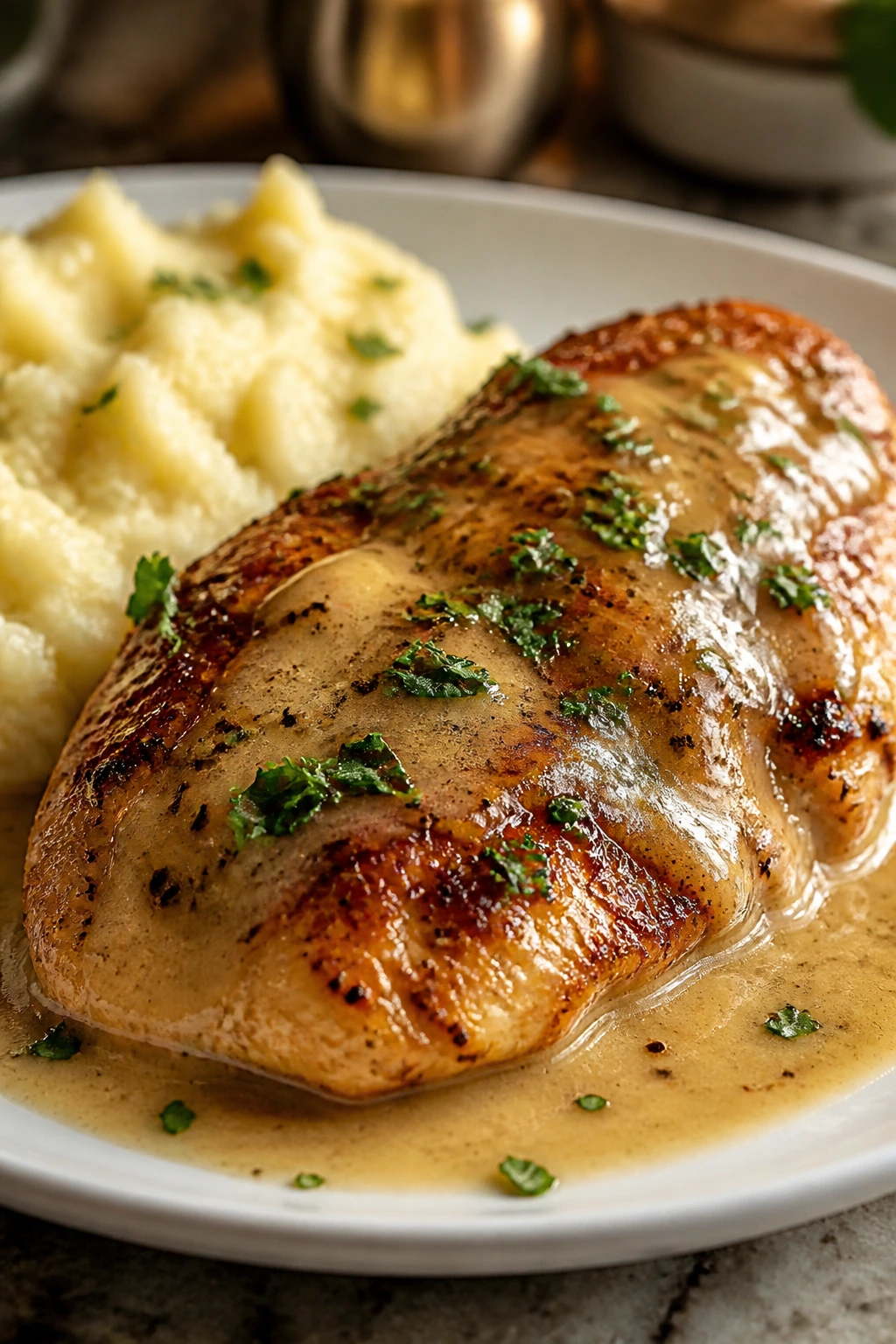
Presentation: Spoon a little sauce on the plate first, then lay the chicken on top and finish with more sauce so the top stays glossy. A few parsley leaves and a light dusting of parmesan make the dish look finished without piling on extra work.
Accompaniments: Mashed potatoes are the obvious move because they soak up the sauce. Buttered egg noodles, rice, roasted broccoli, green beans, or a simple Caesar salad all work too. If there’s a loaf of bread around, warm it for 5 minutes so you can swipe up the pan sauce.
Portions: One 6-ounce cutlet per person is enough for a normal dinner plate. If you’re serving it over pasta or rice, the chicken stretches farther and the sauce can cover 4 generous bowls. For bigger appetites, add one extra cutlet and make another 1/2 cup of broth and 1/4 cup cream.
Beverage Pairing: A crisp Sauvignon Blanc or Pinot Grigio cuts through the cream nicely. If you’re skipping wine, sparkling water with lemon or a cold pilsner keeps the meal from feeling heavy.
Small Changes That Make a Big Difference
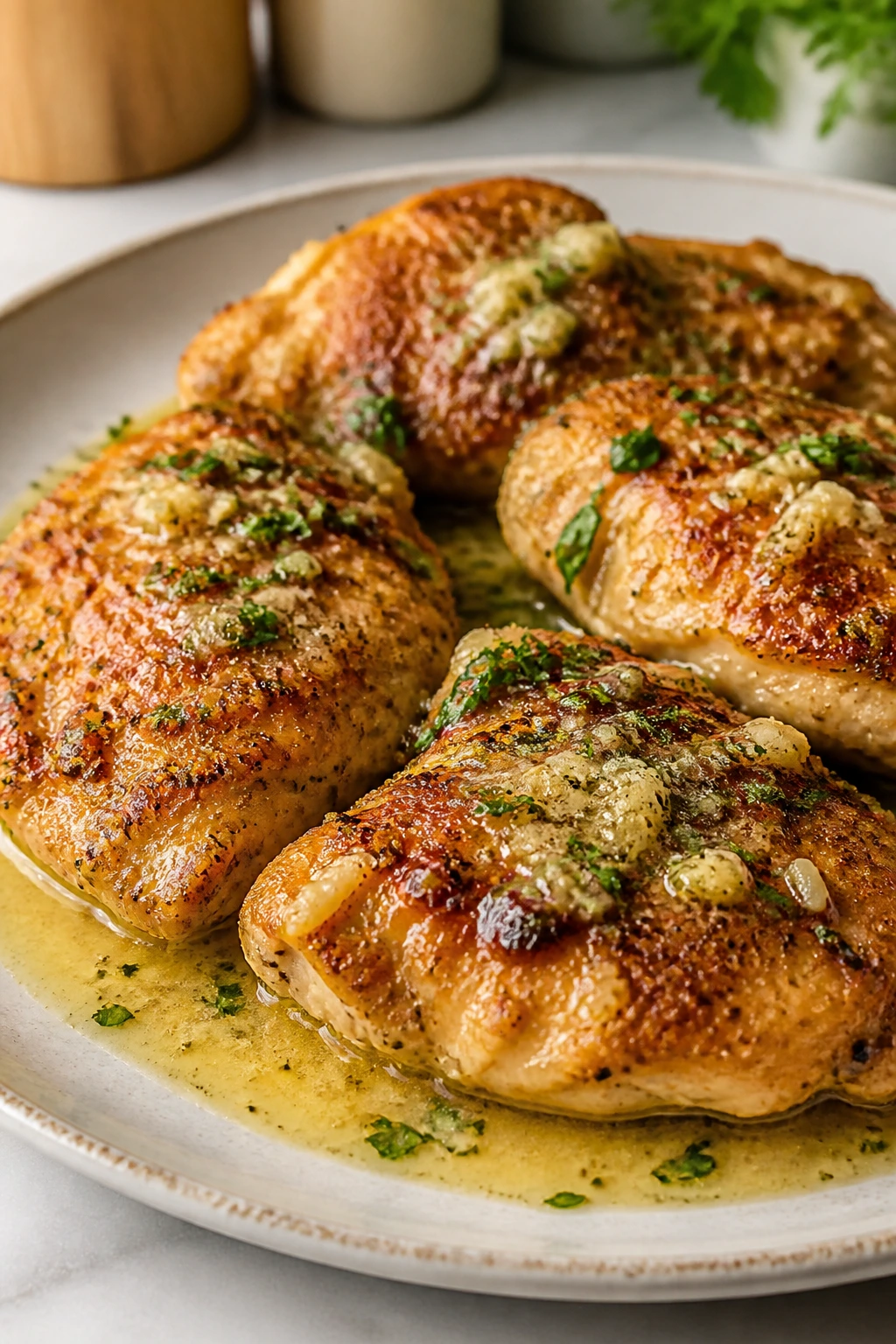
Flavor Enhancement: A teaspoon of lemon zest stirred into the sauce right at the end gives the whole dish a cleaner, brighter finish. It doesn’t turn this into a lemon chicken recipe; it just keeps the cream and parmesan from feeling flat.
Time-Saver: Buy thin-cut chicken breasts if your store carries them, or slice thicker breasts into cutlets before you season. You’ll cut the sear time down by several minutes, and the chicken is less likely to dry out while you wait for the sauce.
Pro Move: Grate the parmesan before the pan gets hot and leave it on the counter in a small bowl. Once the garlic starts releasing its smell, the sauce comes together fast, and you do not want to be wrestling with a block of cheese at that point.
Cost-Saver: A wedge of parmesan usually tastes better and melts better than the bagged shreds, and it often stretches further because you use less of it. The extra minute spent grating pays off in the sauce.
Make-It-Yours: Stir in a handful of baby spinach, thawed peas, or sautéed mushrooms after the cream goes in. Spinach wilts almost instantly, peas stay sweet, and mushrooms make the sauce feel a little more dinner-party than weeknight.
Where People Go Wrong
-
Skipping even thickness: Thick chicken breasts brown on the outside while the center stays underdone, so the cook keeps going and the edges dry out. Slice or pound the meat first. It’s not busywork; it’s insurance.
-
Using heat that’s too high for the garlic: Garlic goes from fragrant to bitter fast. If the butter starts sputtering hard or the garlic turns brown in the pan, the sauce will taste sharp in a bad way. Keep the heat at medium once the chicken is out.
-
Dumping in parmesan on a roaring boil: The cheese can clump or break when the sauce is too hot. Reduce the heat first, then whisk in the cheese slowly until it melts into the cream.
-
Crowding the skillet: If too much chicken sits in the pan at once, it steams instead of sears. The coating gets pale, the browned bits are weak, and the sauce loses depth. Cook in batches if needed.
-
Using pre-shredded parmesan straight from the bag: It can work, but the sauce often feels grainy because the cheese is coated to keep it from clumping in the package. Finely grated parmesan from a block melts smoother and tastes sharper.
-
Pulling the chicken too early or too late: A thermometer takes the guesswork out. At 165°F, the chicken is done. At 175°F after a long simmer, it starts losing the juicy texture that makes this recipe worth making.
Three Smart Variations
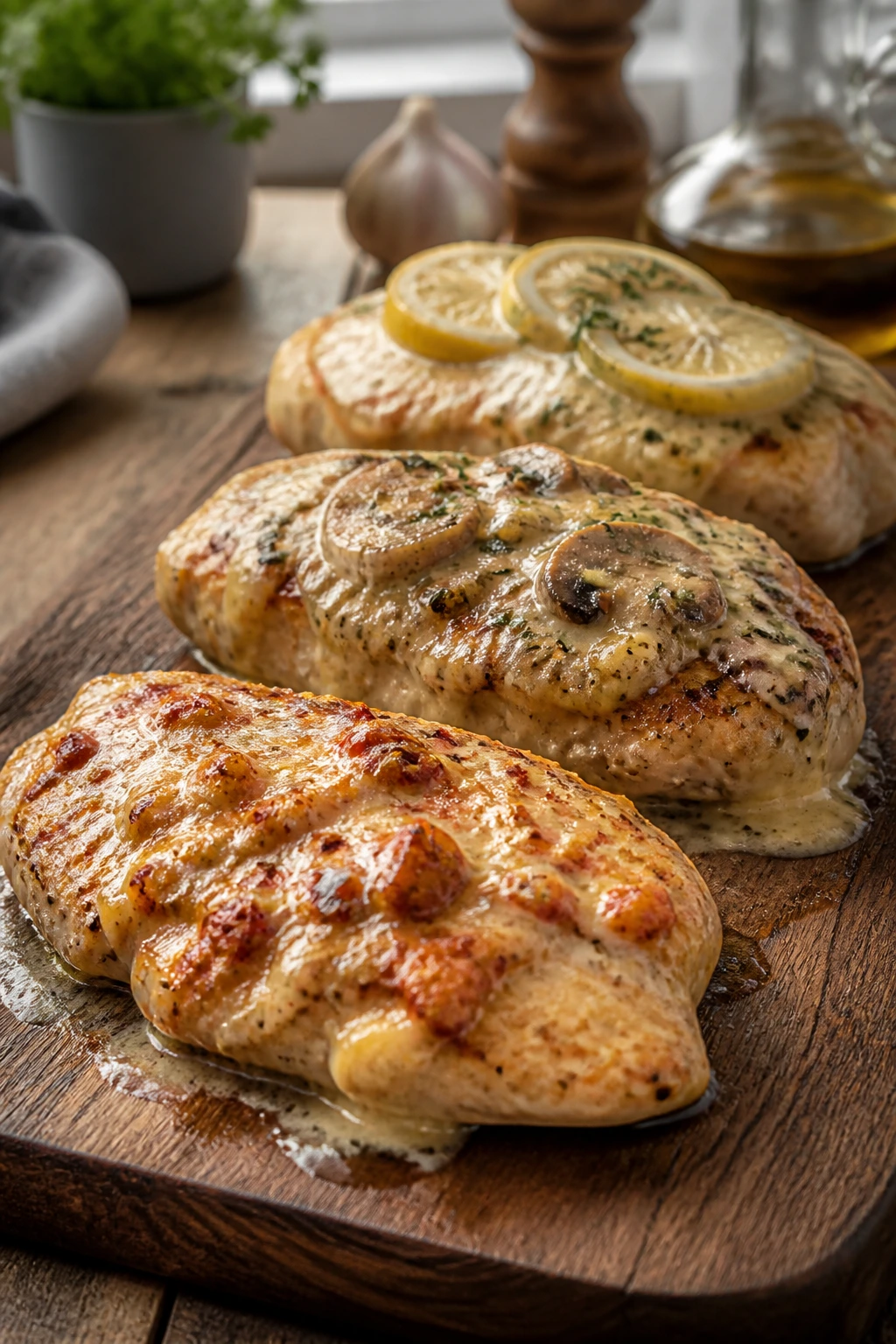
Lemon-Thyme Skillet: Add 1 teaspoon fresh thyme leaves with the garlic and finish the sauce with an extra teaspoon of lemon juice. The thyme gives the sauce a woodsy note that works well with roasted potatoes or asparagus.
Mushroom Parmesan Chicken: Sauté 8 ounces of sliced cremini mushrooms in the skillet after the chicken comes out, before the garlic goes in. Let them cook until their liquid evaporates and the edges turn brown, then build the sauce right on top of them. The mushrooms bring an earthy note and make the sauce feel fuller.
Spicy Red Pepper Version: Add 1/2 teaspoon crushed red pepper flakes, or 1 teaspoon Calabrian chili paste if you want more heat, when the garlic goes in. The spice stays behind the cream instead of taking over the whole pan, which is exactly where it should be.
Gluten-Free Cutlets: Swap the all-purpose flour for 3 tablespoons rice flour or cornstarch in the dredge. Rice flour gives a slightly crisper crust, while cornstarch makes the coating lighter. The sauce itself stays the same, so the switch is easy.
Make-Ahead, Storage, and Reheating Guidance
This chicken is best fresh from the skillet, but leftovers hold up better than a lot of cream sauces. Let it cool for no more than 2 hours at room temperature, then pack it into an airtight container. In the refrigerator, it keeps for 3 to 4 days.
For freezing, cool the chicken and sauce completely, then store them together in a freezer-safe container for up to 2 months. The sauce may separate a little after thawing, especially if the cream was heated hard, but a gentle reheat usually brings it back together. Freeze in single portions if you know you’ll want quick lunches later; they thaw more evenly that way.
Reheat on the stovetop over low heat with a splash of chicken broth, water, or cream — 1 to 2 tablespoons is usually enough for one serving. Cover the skillet and warm slowly until the chicken reaches 165°F again. If you rush this part, the sauce can split and the chicken edges dry out.
The oven works too. Put the chicken in a covered baking dish at 300°F for about 12 to 15 minutes, adding a spoonful of broth before covering. The microwave is the least elegant option, but it gets the job done if you use 50% power in short bursts and stop as soon as the center is hot.
A little make-ahead prep helps. You can season the chicken and grate the parmesan a day ahead, and you can mince the garlic and measure the broth and cream several hours before cooking. I wouldn’t dredge the chicken too far in advance because the flour can get gummy, and once that happens, the crust loses its clean brown edge.
Questions People Ask Before They Start
Can I use chicken thighs instead of breasts?
Yes, and they’re a good choice if you like a little more richness. Boneless, skinless thighs usually need a few extra minutes in the skillet and can be taken to about 175°F for the best texture. They’re forgiving, which makes them a solid swap.
What if I don’t have heavy cream?
Half-and-half works, but the sauce will be thinner and needs a little more care over the heat. If you want to keep the texture close to the original, stir in 1 tablespoon of cream cheese with the half-and-half. It gives the sauce a little more body without making it taste like cream cheese.
How do I keep the parmesan sauce smooth?
Use finely grated parmesan, lower the heat before adding it, and whisk steadily. If the sauce starts looking grainy, pull the pan off the heat and whisk in a tablespoon of broth. The worst thing you can do is keep boiling and hope it sorts itself out.
Can I bake the chicken instead of pan-searing it?
You can, but you’ll lose the browned bits that make the sauce taste deeper. If baking is easier, roast the coated chicken at 425°F until it reaches 165°F, then spoon the sauce over the top after the chicken comes out. It works, just with a flatter flavor.
My chicken turned out dry. What happened?
Most of the time, the chicken was either too thick, cooked too hot, or left on the heat past 165°F. The fix is simple: pound it evenly, keep the sear brisk, and use a thermometer. Chicken breast is not mysterious. It just punishes guesswork.
Can I double the recipe?
Yes, but use a pan wide enough to sear the chicken in batches, then make the sauce in the same skillet. If you crowd the pan while doubling, the chicken steams and you lose the browned flavor. The sauce also needs room to bubble gently instead of sloshing around.
What should I do if the sauce gets too thick?
Add broth 1 tablespoon at a time while the pan is still on low heat. Parmesan thickens the sauce as it sits, so a sauce that looks a little loose in the pan can land on the plate exactly where you want it. If it tightens up after resting, a splash of broth fixes it.
Is this good for meal prep?
It is, with one caveat: reheat it gently. The chicken keeps its texture well enough for lunches, especially if you slice it before storing, but the sauce should not be blasted in a microwave on high. Low heat and a little broth keep it from turning oily or stiff.
Keep It Handy
There’s a reason this kind of dinner gets repeated. The ingredient list stays small, the pan stays on the stove, and the final plate tastes like someone paid attention to the details. That’s really the whole trick here: not more effort, just better timing.
If you remember two things, remember these. Pound the chicken so it cooks evenly, and lower the heat before the parmesan goes in. Do those two things and the dish stops being a gamble.
The next time dinner needs to behave without tasting dull, this is the skillet I’d reach for.
Juicy Garlic Parmesan Chicken for Weeknight Dinners — Recipe Card
- Recipe Name: Juicy Garlic Parmesan Chicken for Weeknight Dinners
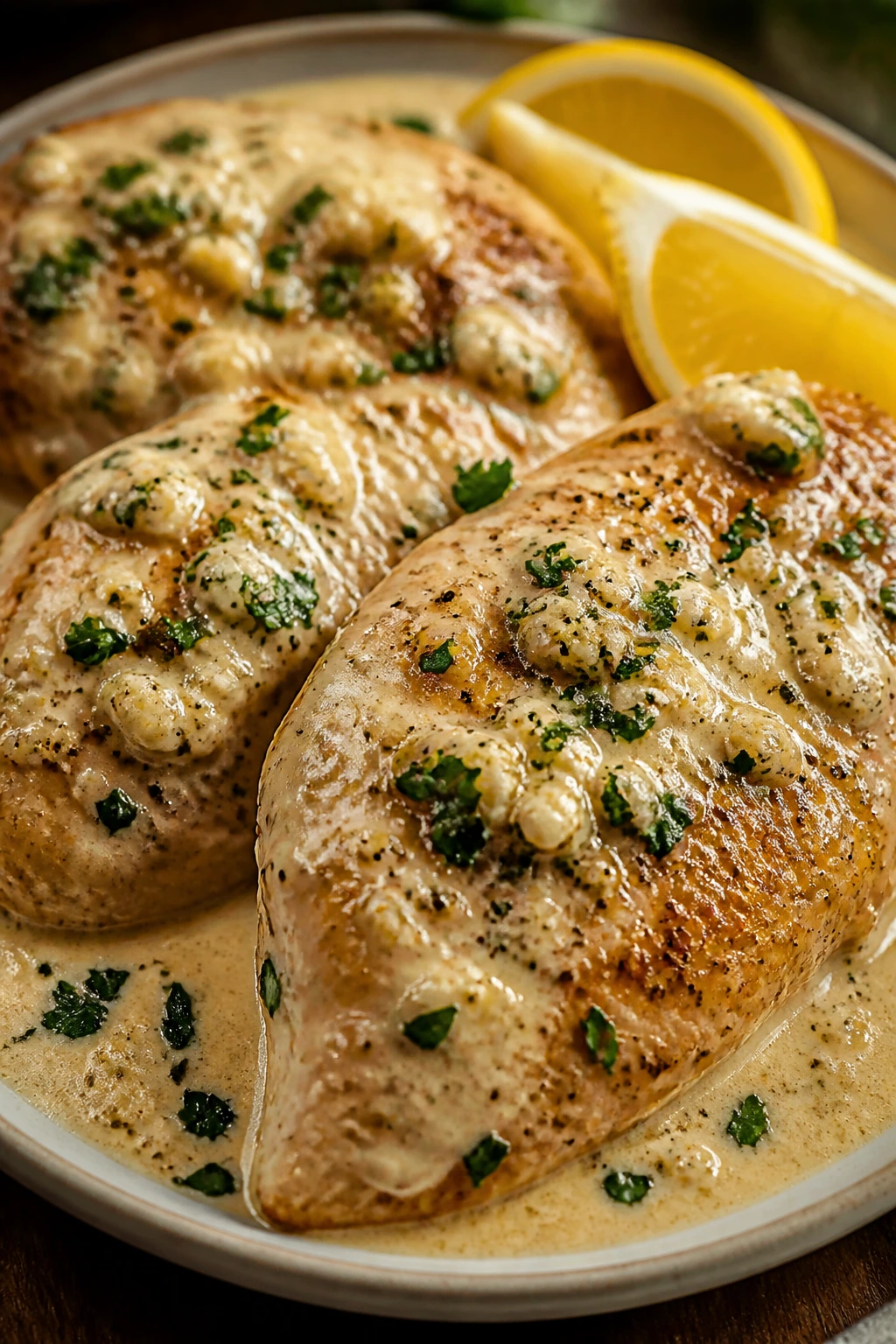
- Description: Tender pan-seared chicken breasts finished in a creamy garlic parmesan sauce with lemon and parsley.
- Prep Time: 15 minutes
- Cook Time: 20 minutes
- Total Time: 35 minutes
- Course: Main Course
- Cuisine: American
- Servings: 4 servings
- Calories: About 480 kcal per serving
Ingredients
For the Chicken:
- 1 1/2 lbs boneless, skinless chicken breasts, trimmed and split horizontally if thick
- 1 tsp kosher salt
- 1/2 tsp freshly ground black pepper
- 1/2 tsp paprika
- 1/4 cup all-purpose flour
- 1/4 cup finely grated Parmesan cheese
- 2 tbsp olive oil
- 1 tbsp unsalted butter
For the Garlic Parmesan Sauce:
- 2 tbsp unsalted butter
- 5 cloves garlic, minced
- 1 cup low-sodium chicken broth
- 1/2 cup heavy cream
- 1/2 cup finely grated Parmesan cheese from a block
- 1 tsp Dijon mustard
- 1 tsp lemon juice
- 1/4 tsp crushed red pepper flakes, optional
To Finish:
- 2 tbsp chopped fresh parsley
- Lemon wedges, for serving
Instructions
- Pat the chicken dry, then slice or pound it to an even 1/2-inch thickness. Season both sides with salt, pepper, and paprika.
- Mix the flour and 1/4 cup parmesan on a shallow plate, then dredge the chicken lightly and shake off excess.
- Heat the olive oil and 1 tablespoon butter in a 12-inch skillet over medium-high heat. Sear the chicken for 4 minutes on the first side and 3 to 4 minutes on the second, then transfer to a plate.
- Lower the heat to medium. Add the remaining 2 tablespoons butter and garlic, and cook for 30 to 45 seconds until fragrant.
- Pour in the chicken broth, scraping the pan to release browned bits. Simmer 1 minute.
- Reduce the heat to low. Stir in the cream, remaining parmesan, Dijon mustard, lemon juice, and red pepper flakes, then whisk until smooth.
- Return the chicken and juices to the skillet. Spoon sauce over the top and simmer gently for 2 to 4 minutes, until the chicken reaches 165°F.
- Sprinkle with parsley and serve with lemon wedges.
Notes: Use finely grated parmesan from a block for the smoothest sauce. Keep the heat low after adding the cheese. Reheat leftovers gently with a splash of broth.