



A dry chicken thigh is usually a timing problem, not a destiny problem.
That’s the part people miss when they talk about juicy one pot chicken for weeknight dinners. The trick is not some magic ingredient or a complicated marinading ritual. It’s heat control, a little browning, and the discipline to stop the cooking at the exact moment the meat is done and the pan sauce still has some life in it. Chicken thighs can stay tender through a gentle simmer. Chicken breasts can, too, but they ask for more babysitting and punish you faster if you wander off to answer a text.
I reach for a one-pot chicken dinner like this when I want something that tastes as though I paid attention, even if the whole thing came together in about forty-five minutes. The orzo catches the chicken drippings. The broth turns glossy with parmesan and butter. Lemon cuts through the richness so the final spoonful doesn’t feel heavy, just warm and complete. That balance matters. Without it, a skillet dinner can slide into either blandness or mush, and nobody wants either on a Tuesday night.
Why This One-Pot Chicken Works So Well on a Busy Night
-
Thighs stay forgiving: Boneless, skinless chicken thighs keep their texture even if the pan simmers for a minute or two longer than planned, which is exactly why I prefer them here.
-
The orzo does double duty: It cooks in the broth instead of in a separate pot, and the starch it releases thickens the sauce into something that coats the spoon instead of pooling at the bottom.
-
Lemon keeps the pan awake: The zest goes in early, the juice goes in at the end, and that split keeps the citrus bright instead of flat.
-
Cleanup stays sane: One wide skillet or Dutch oven gives the chicken room to brown instead of steaming in a crowded pile.
-
Leftovers hold up: The pasta softens a bit after chilling, but a splash of broth in the skillet brings it back without much fuss.
-
The method is flexible: Peas, spinach, mushrooms, herbs, even a spoonful of cream can move in and out of the pan without wrecking the core structure.
What You’ll Need for the Skillet
Yield: Serves 4 to 6
Prep Time: 15 minutes
Cook Time: 30 minutes
Total Time: 45 minutes
Difficulty: Intermediate — the steps are straightforward, but the chicken needs real browning and the simmer needs close attention.
Chill/Rest Time: 5 minutes before serving
Best Served: Warm, straight from the pan, with extra lemon on the table
For the Chicken:
- 2 pounds boneless, skinless chicken thighs, trimmed of loose fat
- 1 1/2 teaspoons kosher salt
- 1 teaspoon black pepper
- 1 teaspoon smoked paprika
- 1 teaspoon garlic powder
- 2 tablespoons olive oil
For the Orzo and Sauce:
- 1 medium yellow onion, finely diced
- 4 cloves garlic, minced
- 1 1/2 cups orzo pasta
- 3 1/2 cups low-sodium chicken broth
- 1/2 cup dry white wine or extra chicken broth
- 1 teaspoon dried oregano
- 1 large lemon, zested and juiced
- 1 cup frozen peas
- 3 cups baby spinach
- 1/2 cup grated parmesan cheese
- 2 tablespoons unsalted butter
- 2 tablespoons chopped fresh parsley
- 1/4 teaspoon red pepper flakes, optional
Why These Ingredients Keep the Chicken Juicy
The chicken thighs do the heavy lifting
What to use: 2 pounds boneless, skinless chicken thighs, trimmed so the edges aren’t full of loose fat that will curl in the pan.
Preparation: Pat them dry with paper towels before seasoning. That dry surface is what gives you a real sear instead of a pale, damp top.
Substitutions: Boneless chicken breasts will work, but they need a shorter simmer and thinner pieces. If you use bone-in thighs, add extra simmer time and keep the lid on a little longer.
Tips: Thighs are more forgiving because they have more fat and connective tissue. That matters in a one-pot dinner, where the chicken sits in the sauce long enough to absorb flavor and still come out tender.
The onion and garlic build the base
What to use: 1 medium yellow onion and 4 cloves garlic, plus dried oregano and a pinch of red pepper flakes if you like a little heat.
Preparation: Dice the onion finely so it softens quickly. Mince the garlic, but don’t grind it into a paste; you want bits that perfume the sauce, not bitter flecks that scorch in the pan.
Substitutions: Shallots give a sweeter flavor, and a small leek can stand in for part of the onion. If you’re out of oregano, thyme or an Italian herb blend fits the same lane.
Tips: Garlic burns fast once the pan is hot. Keep it in the pan for only about 30 seconds before the liquid goes in, and you’ll get sweetness instead of bitterness.
Orzo is the starch that behaves
What to use: 1 1/2 cups orzo pasta.
Preparation: No pre-cooking. The point is to let it simmer right in the broth so it picks up the chicken flavor and thickens the sauce as it cooks.
Substitutions: Small rice-shaped pasta is the closest swap. If you want to use rice instead, the liquid and cooking time change enough that it becomes a different recipe, so don’t swap casually.
Tips: Toasting the orzo for a minute before the broth goes in gives it a lightly nutty edge and keeps it from tasting like boiled filler.
Broth, wine, lemon, butter, and parmesan finish the sauce
What to use: 3 1/2 cups low-sodium chicken broth, 1/2 cup dry white wine or extra broth, 1 large lemon, 2 tablespoons butter, and 1/2 cup grated parmesan.
Preparation: Zest the lemon before juicing it. Grate the parmesan finely so it melts into the sauce instead of sitting in little gritty drifts.
Substitutions: If you skip wine, add the extra broth and a squeeze more lemon at the end. Pecorino Romano can replace parmesan if you want a saltier finish.
Tips: Low-sodium broth gives you room to season properly at the end. Salted broth plus parmesan can tip the dish into harshness fast.
Peas, spinach, and parsley keep the pot from feeling heavy
What to use: 1 cup frozen peas, 3 cups baby spinach, and 2 tablespoons chopped fresh parsley.
Preparation: Keep the peas frozen until the last few minutes. Tear or roughly chop the spinach if the leaves are large, but baby spinach can go straight in.
Substitutions: Broccolini florets, sliced zucchini, or chopped kale all work, though kale needs more time and a splash more broth.
Tips: Add the greens after the chicken and orzo are cooked. If they go in too early, they lose color and taste tired.
The Pan, Spoon, and Thermometer That Make This Easier
You do not need a drawer full of gadgets for this. You need the right few tools, and you need them close by before the stove gets hot.
12-inch deep skillet or 5- to 6-quart Dutch oven: This gives the chicken space to brown and enough depth for the broth and orzo. A shallow pan works in a pinch, but the lid and liquid are easier to manage in something with sides.
Tongs: These make it easier to turn the thighs without scraping the crust off the pan. A fork works, but it also tends to pierce the meat and leak juice.
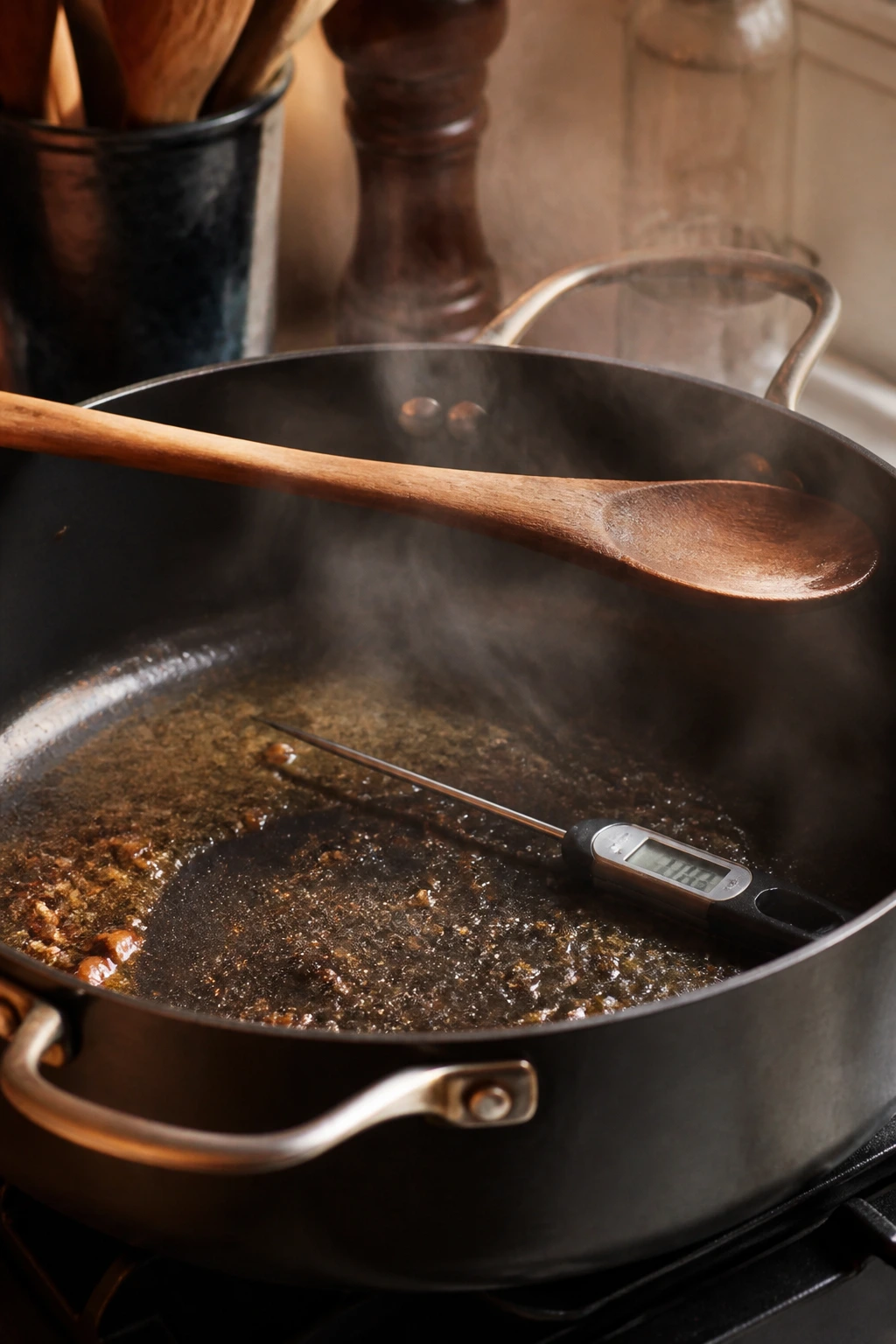
Wooden spoon or heatproof spatula: You’ll need it to scrape up the browned bits from the bottom of the pan after the wine goes in. Those bits are not a mess. They are dinner.
Instant-read thermometer: I keep one in the drawer for chicken and fish, and this recipe is exactly why. A thigh can look done before it actually is, and the thermometer removes the guesswork.
Microplane or fine grater: Best for the lemon zest and parmesan. Large shreds of cheese don’t melt as neatly here.
Paper towels: Dry chicken browns better. No drama, just physics.
Searing the Chicken the Right Way
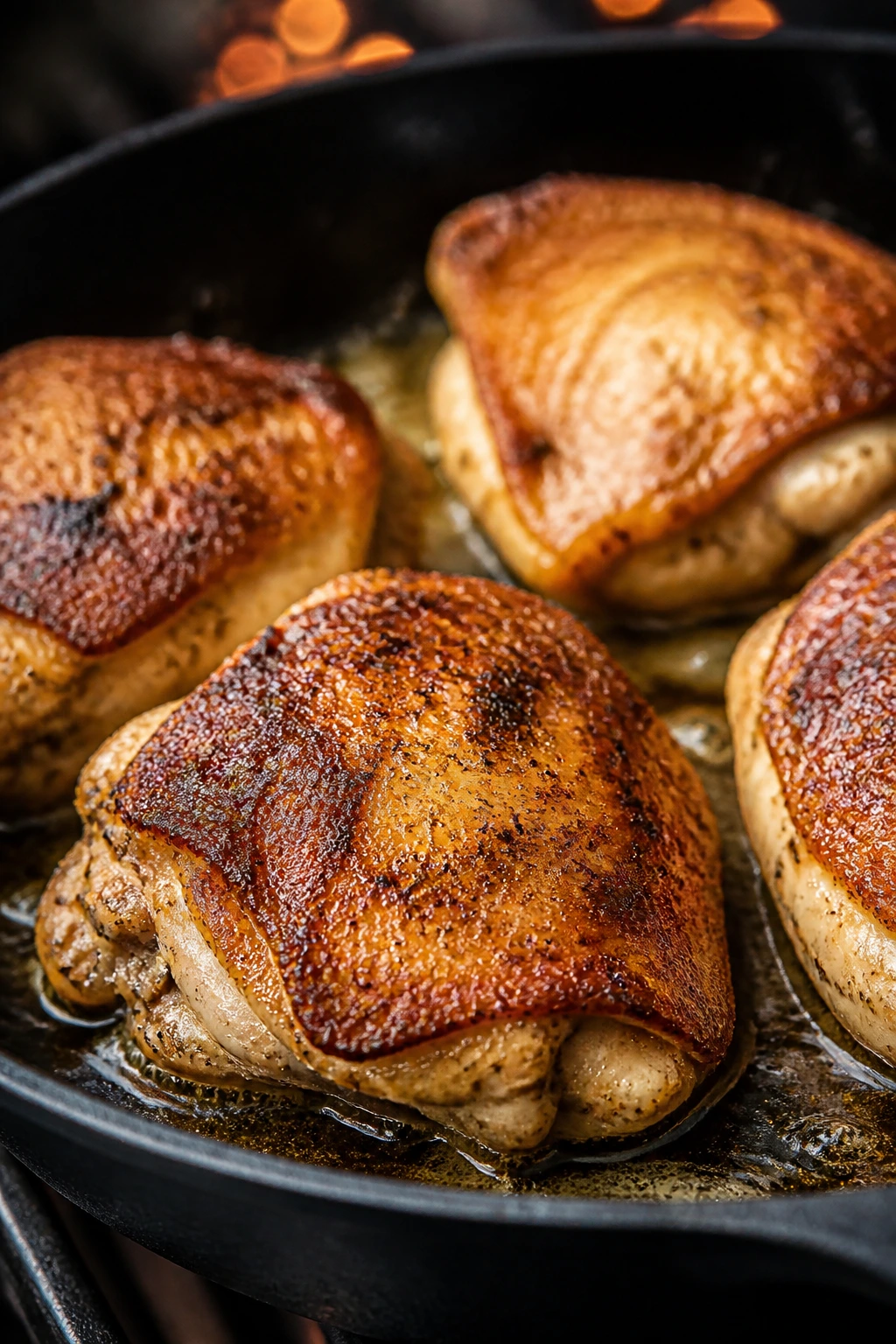
Dry the thighs first
Take the chicken thighs out of the package and pat them dry on both sides with paper towels. Season them with the salt, pepper, smoked paprika, and garlic powder. The surface should look lightly coated, not caked.
That dryness matters more than people think. Wet chicken hits a hot pan and steams before it browns, and browned chicken carries a deeper flavor into the broth. You want a bronzed crust, not a pale one.
Get the pan hot before the chicken goes in
Set your skillet or Dutch oven over medium-high heat and add the olive oil. When the oil shimmers and moves easily across the pan, lay in the thighs in a single layer.
Hear that sizzle? Good. If you hear only a soft hiss, the pan isn’t hot enough yet.
Let the first side brown without fussing
Sear the chicken for 4 to 5 minutes on the first side, until the bottom looks deep golden brown and releases from the pan without sticking. Turn it and sear the second side for another 3 to 4 minutes.
Do not chase full doneness here. You’re building color, not finishing the chicken. The thighs should still be undercooked in the middle when you move them to a plate.
Hold onto the juices
Transfer the chicken to a plate and let the juices collect there. Those juices go back into the pot later, and if they’re sitting on a cutting board or wiped away, you’ve thrown away flavor for no reason.
Toasting the Orzo and Building the Sauce
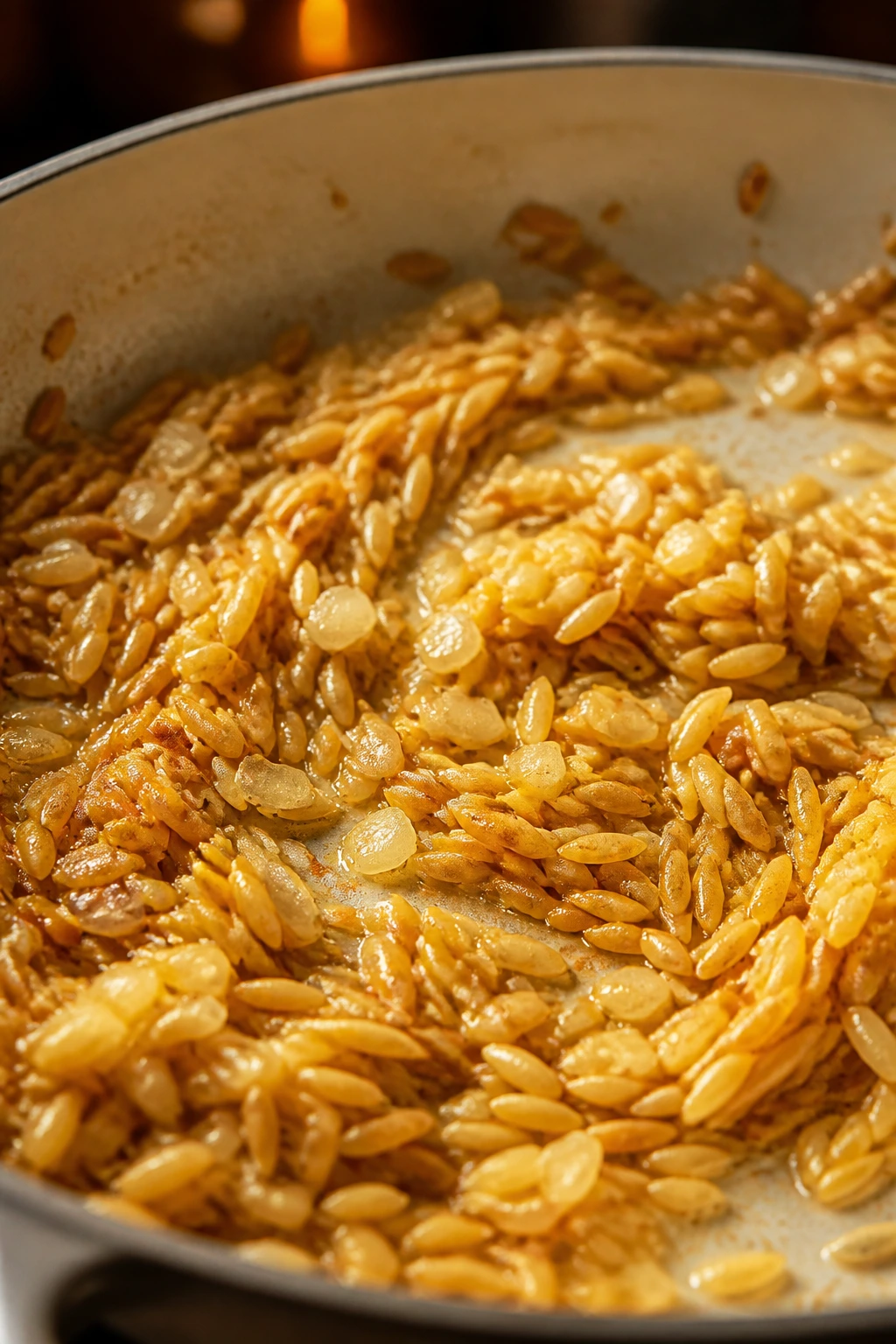
Start with the onion, then the garlic
Lower the heat to medium. Add the diced onion and cook for about 3 to 4 minutes, stirring now and then, until it turns translucent and the edges soften. Add the garlic and oregano and cook for 30 seconds more, just until the garlic smells sweet.
If the pan looks a little dry, that’s fine. The onions will pick up the browned chicken bits, and that’s where the good taste is hiding.
Toast the pasta in the fat and drippings
Stir in the orzo and let it cook for 1 to 2 minutes. It should start to look slightly opaque at the edges and smell a little nutty.
This step is small, but I like it a lot. Untoasted orzo can taste a bit flat. Toasted orzo tastes like it belongs in the pan.
Deglaze with wine or broth
Pour in the white wine and scrape the bottom of the pan with your spoon, loosening every browned bit. Let it bubble for about 1 minute until the sharp alcohol smell fades.
No wine? Use extra broth. You’ll lose a little brightness, so add a touch more lemon at the end.
Add the broth and chicken
Pour in the chicken broth, lemon zest, and half of the lemon juice. Give everything one good stir, then nestle the chicken thighs back into the pan along with any juices that collected on the plate.
Bring the liquid to a gentle simmer. Not a rolling boil. If the pot is tossing itself around, lower the heat.
Finishing the Pot With Spinach, Parmesan, and Lemon
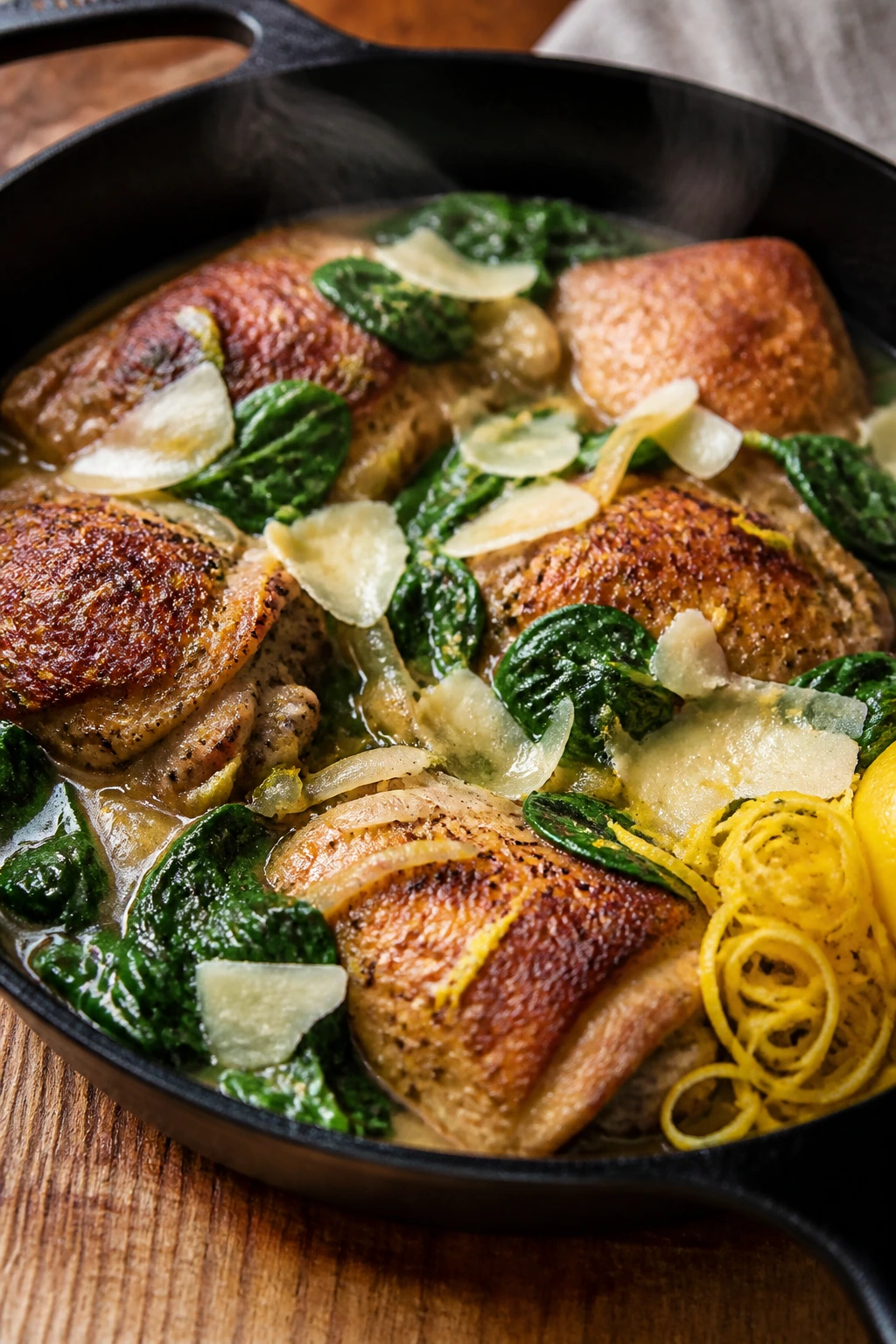
Cover and simmer gently
Put the lid on the skillet or Dutch oven, reduce the heat to medium-low, and cook for 10 to 12 minutes. The orzo should turn tender, and the chicken should register 175°F on an instant-read thermometer.
For thighs, 175°F is the sweet spot. They get tender there. If you stop too early, the chicken can still feel tight; if you push too far, the meat can still dry out even though thighs are forgiving.
Stir in the peas and spinach
Add the frozen peas and the baby spinach. Cover again for 2 minutes, just until the peas are hot and the spinach has collapsed into the sauce.
The greens should stay green. Olive-drab spinach is what happens when it sits in the pot too long.
Finish off heat
Remove the pot from the heat. Stir in the butter, parmesan, parsley, and the remaining lemon juice. Taste the sauce and adjust with a little more salt or pepper if needed.
Let the dish rest for 5 minutes before serving. The sauce thickens slightly as it sits, and the chicken relaxes a little instead of losing its juices the second you cut into it.
Check the texture before you serve
Scoop up a spoonful of orzo. It should be tender with a little bite, not mush. If it looks too thick, loosen it with 2 to 4 tablespoons of hot broth. If it looks a bit loose, give it the rest period and it will tighten up.
How to Serve the Chicken and Orzo
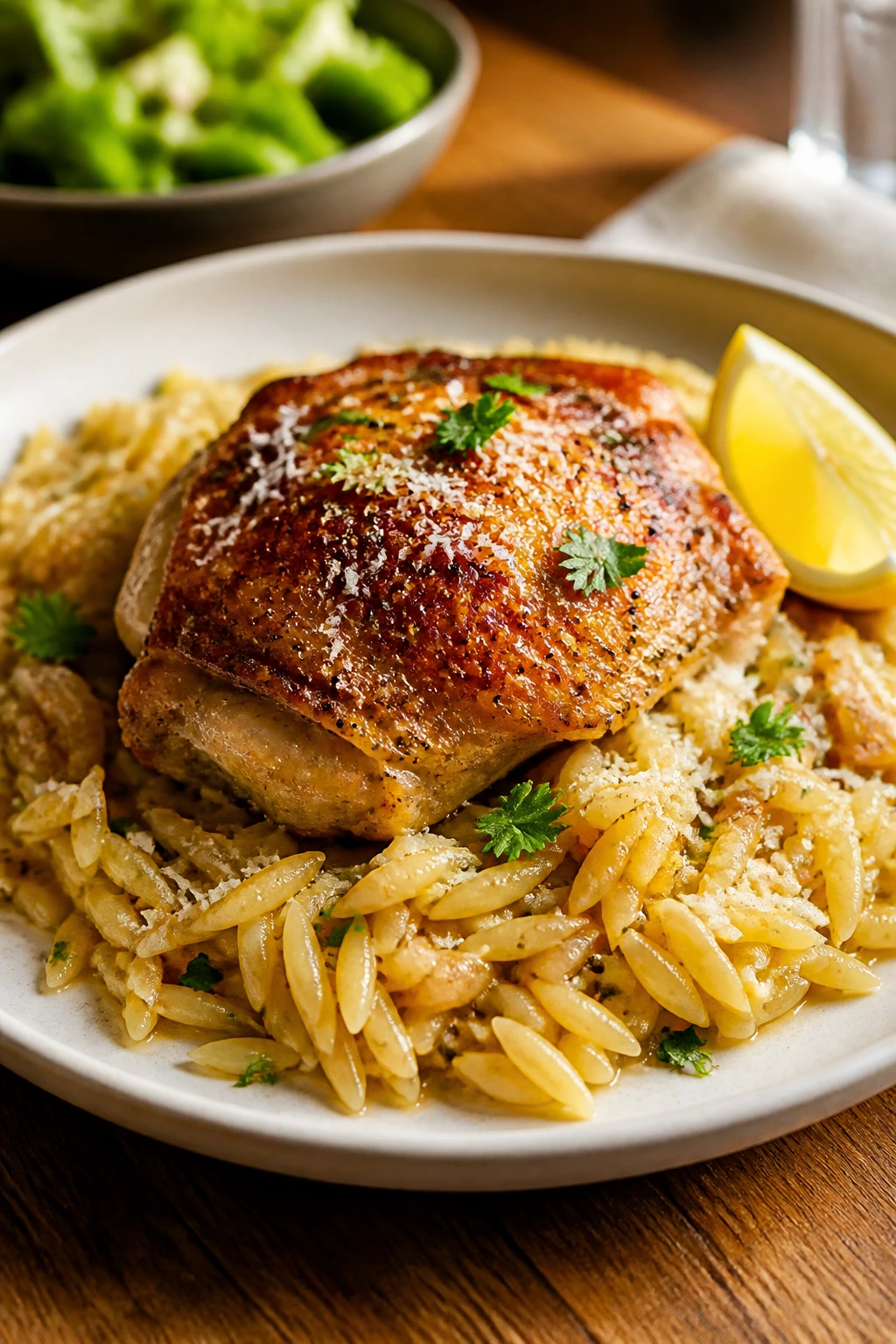
Presentation: Spoon the orzo into shallow bowls first, then lay a thigh on top so the chicken sits partly above the sauce instead of disappearing into it. Finish with another dusting of parmesan, a few parsley leaves, and a lemon wedge on the side.
Accompaniments: A simple green salad with a sharp vinaigrette keeps the plate from feeling heavy. Warm crusty bread is the practical choice if you want to chase the sauce around the bowl. Roasted broccoli or blistered green beans work too if you want another vegetable on the table.
Portions: Plan on one thigh and about a cup of orzo per person for a normal dinner. If you’re feeding bigger eaters, stretch the pan across four servings instead of six and let the salad do some work.
Beverage Pairing: A dry white wine with crisp acidity, like Sauvignon Blanc or Pinot Grigio, matches the lemon and parmesan cleanly. If you’d rather skip wine, sparkling water with a squeeze of lemon or unsweetened iced tea works well.
Small Moves That Make Weeknight Cooking Better
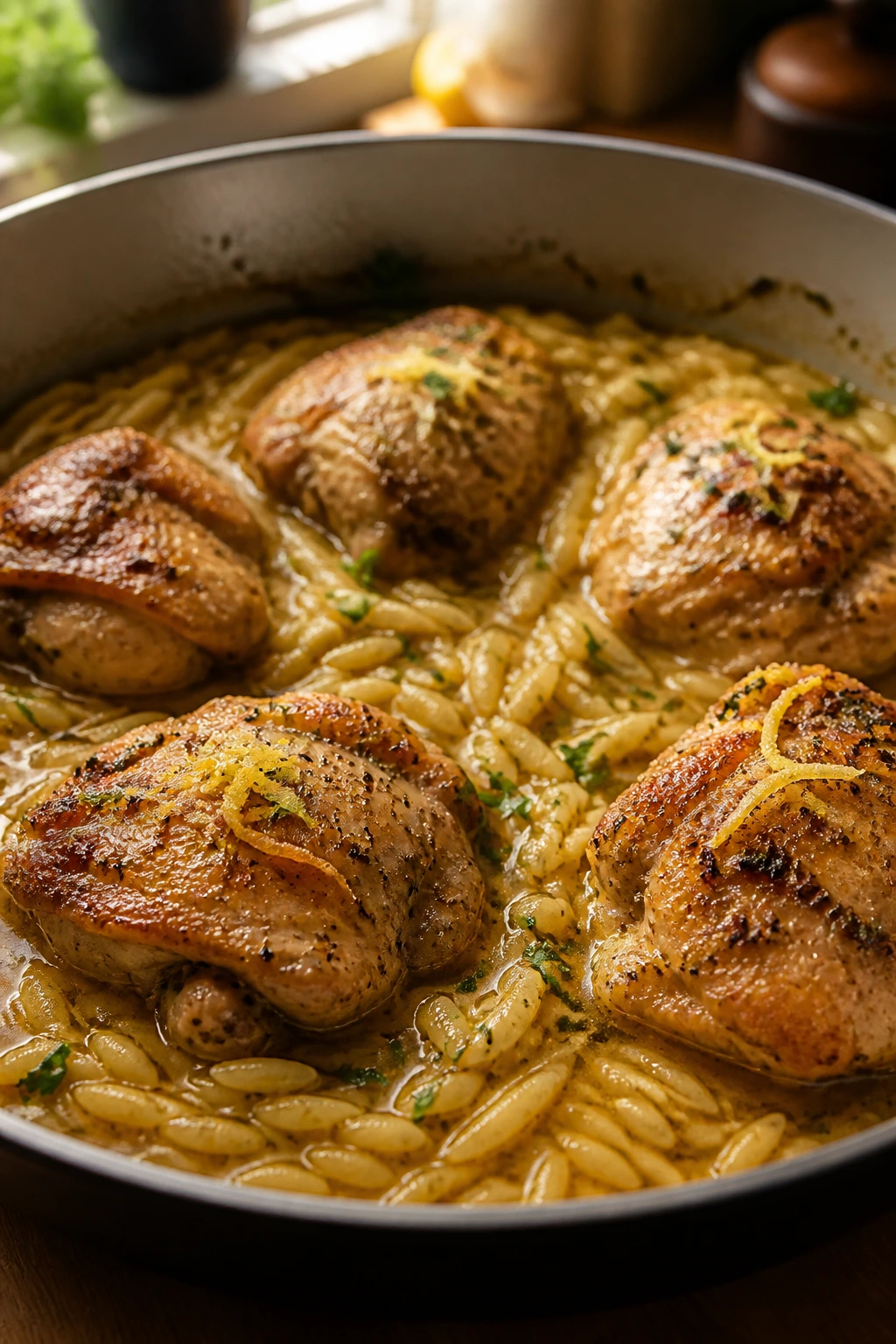
A few small habits change this dish more than another ingredient ever will.
Flavor Enhancement: Zest the lemon directly over the pan after the orzo has simmered, then stir. Warm steam lifts the oils from the zest, and the aroma lands right on top of the chicken instead of getting lost in the broth.
Customization: If your family likes a little more richness, stir in 2 tablespoons of cream with the butter and parmesan. If they prefer a sharper profile, add 1 teaspoon of Dijon mustard to the broth before the chicken goes back in. That mustard won’t taste like mustard; it just makes the sauce feel more rounded.
Serving Suggestions: A final pinch of flaky salt over the chicken right before serving gives each bite a small burst of contrast. I also like a few extra parsley leaves and a grind of black pepper at the table. It takes ten seconds, and the dish looks less like it came straight from a practical pan and more like somebody cared enough to finish it.
Make-It-Yours: For a dairy-light version, skip the parmesan and finish with extra lemon zest, a little more parsley, and a tablespoon of capers. You lose the creamy edge, but you gain a brighter, saltier pan that still feels complete.
The Mistakes That Dry Out One-Pot Chicken
-
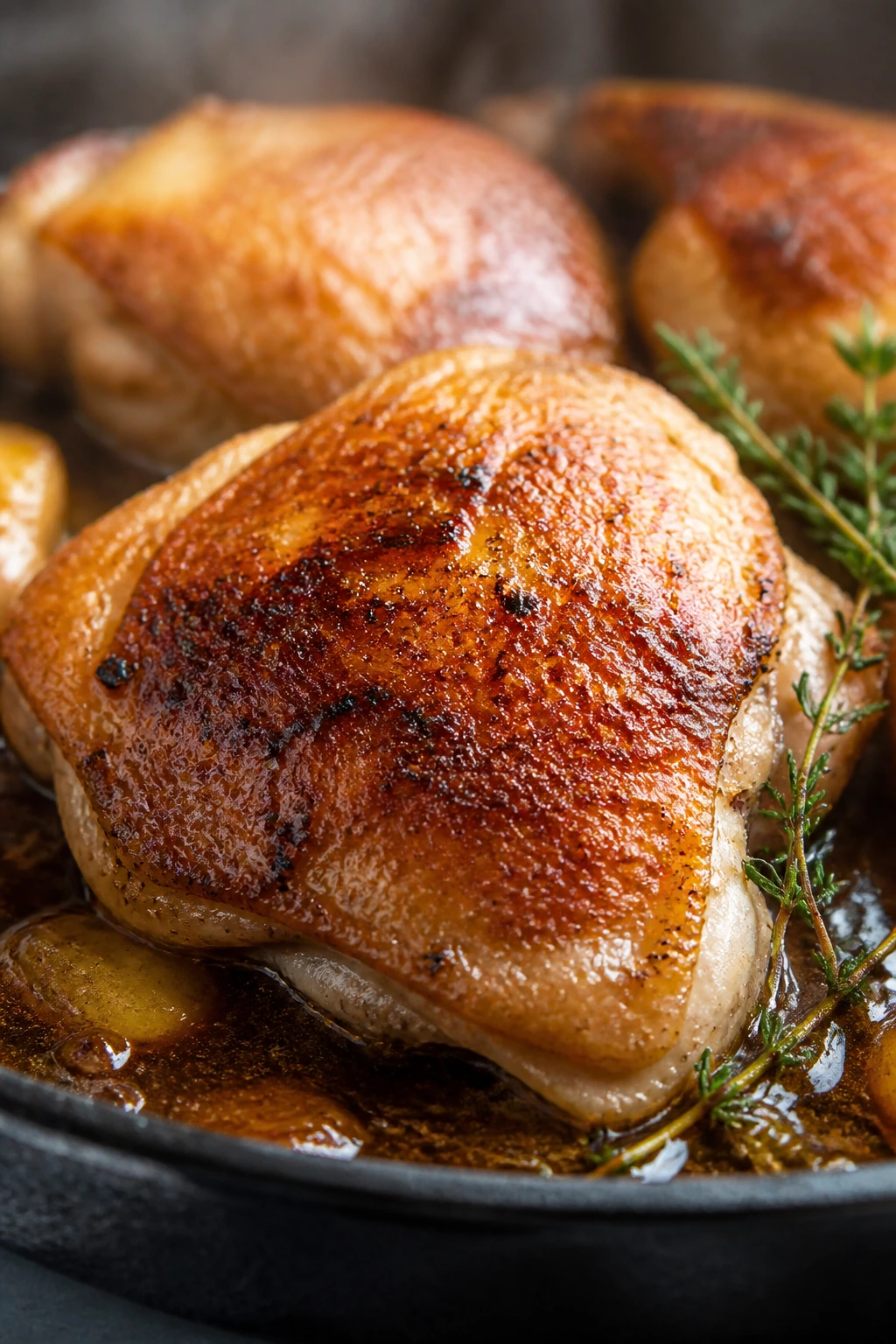
Crowding the pan at the start: If the chicken pieces sit on top of each other or touch too much, they steam instead of sear. The symptom is pale thighs with no browned flavor. Use a wide skillet or cook in two batches.
-
Boiling the orzo hard: A hard boil breaks the pasta and can turn the broth starchy in a muddy way. The fix is a gentle simmer with the lid on. You want small bubbles, not a furious churn.
-
Adding the greens too early: Spinach and peas only need a couple of minutes. If they go in too soon, the spinach goes dark and slimy, and the peas lose their snap. Add them after the chicken and orzo are already cooked.
-
Skipping the thermometer: Chicken thighs are forgiving, but “probably done” is not a measurement. Pulling them based on color alone is how people end up with dry edges and undercooked centers. Check for 175°F in the thickest part.
-
Underseasoning the liquid: Salt the chicken, yes, but don’t forget the broth and pasta. The orzo soaks up a lot of flavor as it cooks, and if the broth tastes bland at the start, the whole pot tastes flat at the end.
-
Cutting into the chicken immediately: Resting for 5 minutes lets the juices settle back into the meat. If you slice too soon, the plate fills with liquid and the thighs feel drier than they are.
Variations That Fit the Same Skillet Method
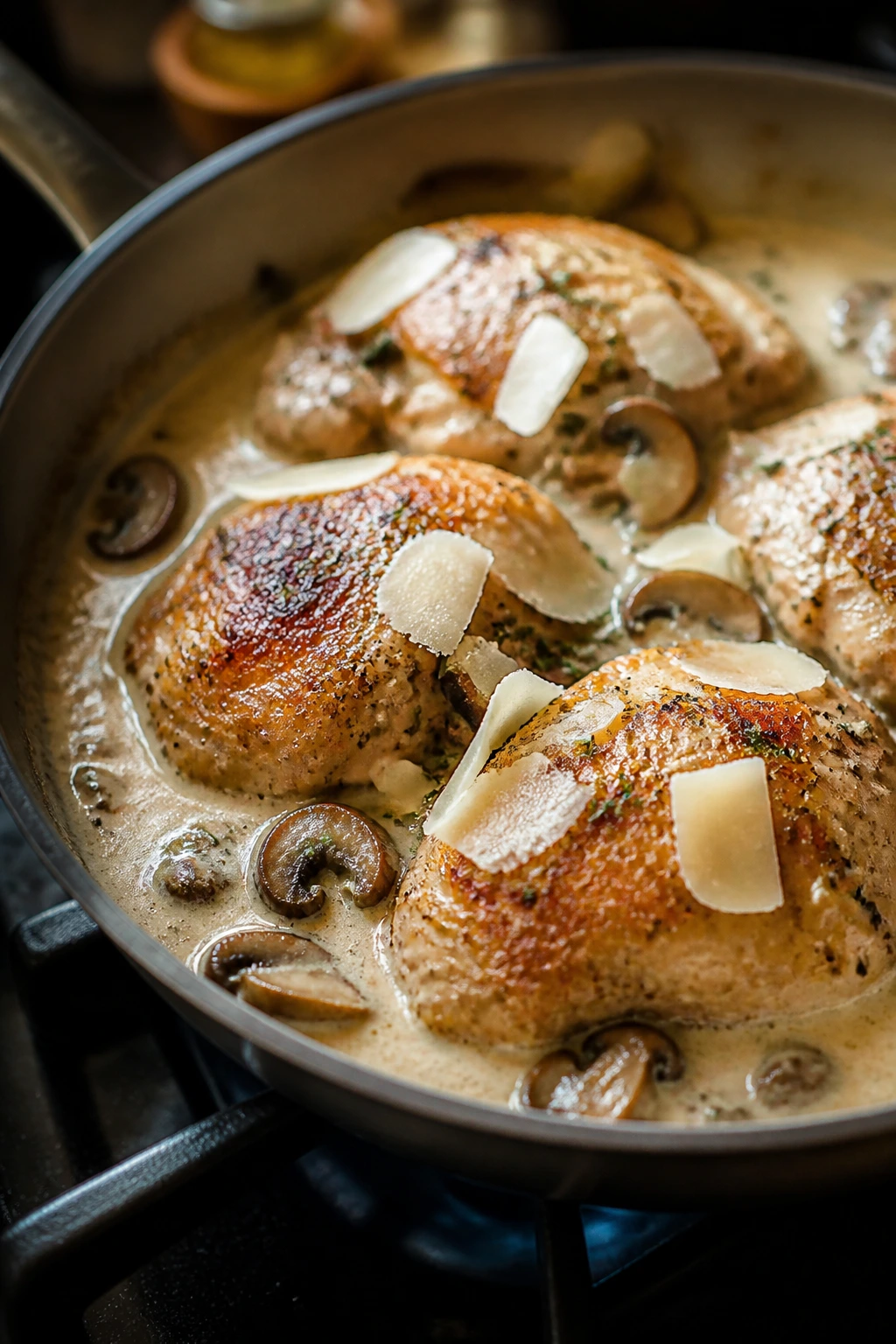
Creamy Parmesan Finish: Stir in 1/3 cup heavy cream along with the butter and parmesan, and reduce the broth by 1/2 cup so the sauce doesn’t turn loose. This version feels richer and a little more luxurious, which makes it a good pick when you want the skillet to feel like a smaller event.
Mushroom and Thyme Skillet: Add 8 ounces sliced cremini mushrooms after the onions soften and cook them until they give up their moisture and start to brown. Swap the oregano for thyme. The mushrooms bring a deeper, earthier base that works especially well if you like a less lemony finish.
Tomato and Olive Version: Stir 2 tablespoons tomato paste into the onions and garlic before the orzo goes in, then add 1/3 cup chopped kalamata olives with the peas. The result leans more Mediterranean and tastes sharper, saltier, and a little more savory.
Chicken Breast Shortcut: Use 1 1/2 pounds boneless chicken breasts sliced into thin cutlets so they cook at the same rate as the orzo. Sear for 3 minutes per side, then simmer only until they hit 165°F. This version cooks faster, but you need to pay closer attention because breasts dry out sooner than thighs.
Rice Pot Swap: Replace the orzo with 1 1/4 cups long-grain white rice and increase the broth to 4 1/4 cups. Simmer covered for 18 to 20 minutes, then rest 5 minutes before fluffing. The texture shifts from silky to more classic and grainy, which some people prefer when they want the chicken to sit on top of a true rice dinner.
Make-Ahead Notes, Fridge Storage, and Reheating
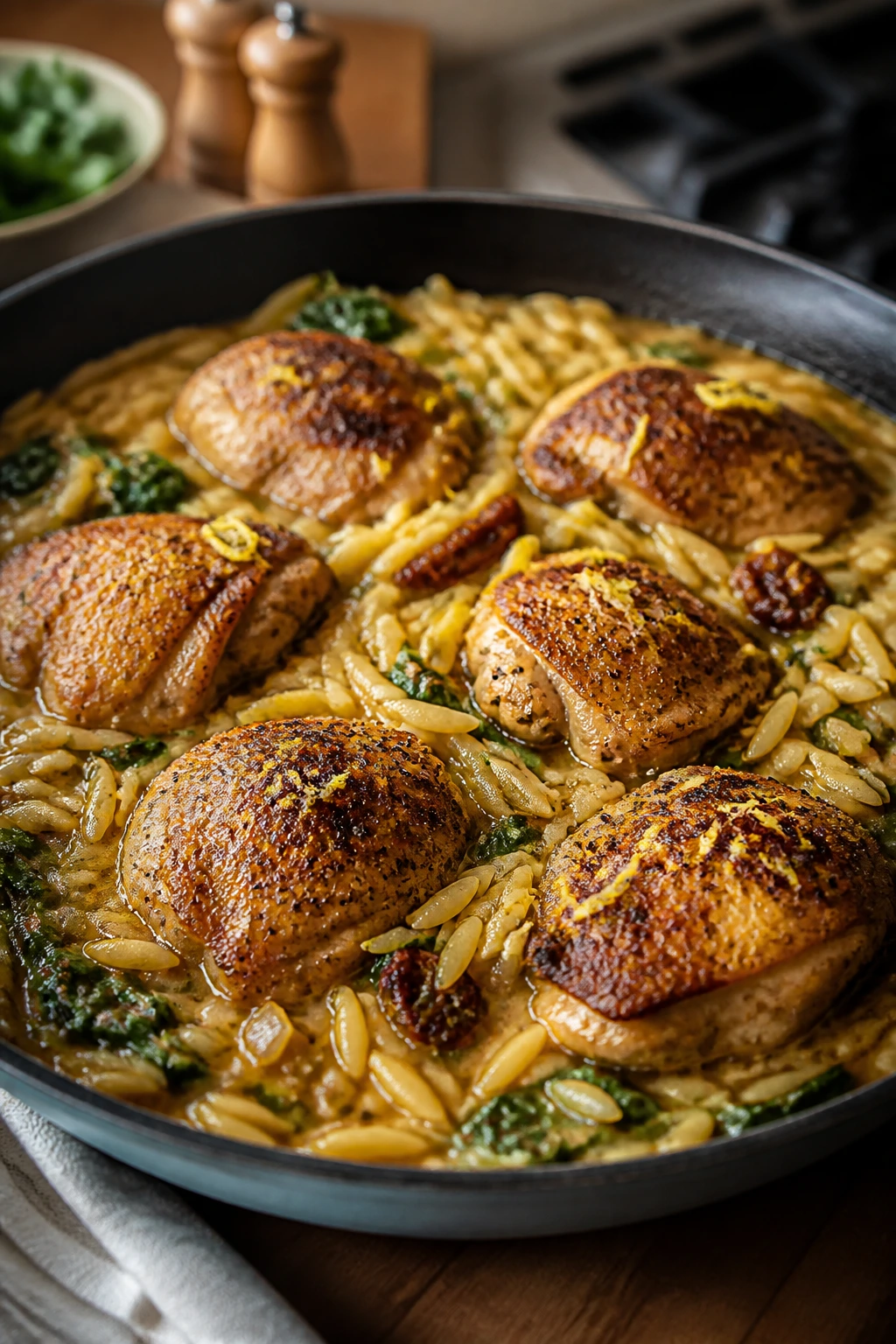
You can make parts of this dinner ahead without hurting the result. Dice the onion, mince the garlic, grate the parmesan, and season the chicken up to a day in advance. Keep everything cold and covered. If you want to go further, you can even brown the chicken ahead of time, cool it, and finish the pot later, though I still think the best version is the one that moves from skillet to table in a single run.
Once cooked, the dish keeps well in the refrigerator for 3 to 4 days in a sealed container. The orzo will continue to absorb liquid as it sits, so expect it to tighten up. That’s normal. If you know you’ll be reheating leftovers, leave the finished dish a touch looser in the pan by adding 2 to 4 tablespoons of extra broth at the end.
Freezing works for up to 2 months, though the pasta softens more after thawing. Freeze in airtight containers in single portions if possible. Thaw overnight in the refrigerator before reheating, because reheating from frozen tends to overcook the chicken before the center gets hot.
For reheating, the stovetop wins. Put the leftovers in a skillet with 2 to 3 tablespoons of broth or water, cover, and warm over medium-low heat until hot, stirring once or twice. The microwave works too, but use 50 percent power and stop to stir every 45 seconds so the orzo doesn’t seize in dry patches.
If you plan to make it ahead for a night later in the week, undercook the orzo by 1 to 2 minutes and keep the spinach out until reheating. That little change preserves the texture better than people expect.
Questions About This Chicken Dinner
Can I use chicken breasts instead of thighs?
Yes, but slice them into thinner cutlets so they cook at the same pace as the orzo. Breasts should come off the heat as soon as they hit 165°F, and they benefit from an extra spoonful of broth at the end to stay moist.
What if my orzo absorbs all the liquid before the chicken is done?
Add 1/4 cup hot broth at a time and keep the pot at a gentle simmer. Orzo can drink a lot depending on the brand, the width of the pan, and how hard the simmer runs.
Can I make this without wine?
Absolutely. Use extra broth and finish with a little more lemon juice. The wine adds a faint depth, but the dish still works without it.
How do I know the chicken is done without slicing it open?
Use an instant-read thermometer in the thickest part of the thigh. You want 175°F for thighs, which gives you tender meat instead of rubbery meat that just happens to be safe.
Can I swap in a different pasta?
Small pasta shapes like ditalini or small shells can work, but you may need a little more liquid and a few extra minutes. Orzo is the easiest choice because it cooks at about the same pace as the chicken finishing in the pan.
What should I do if the sauce gets too thick after sitting?
Stir in a splash of hot broth, 1 tablespoon at a time, over low heat. Orzo thickens as it rests, and a quick loosen-up usually brings it back.
Is this freezer-friendly?
Yes, though the orzo softens more than the chicken does. Freeze in portions and reheat gently with broth so the texture doesn’t turn sticky.
A Skillet Worth Keeping Around
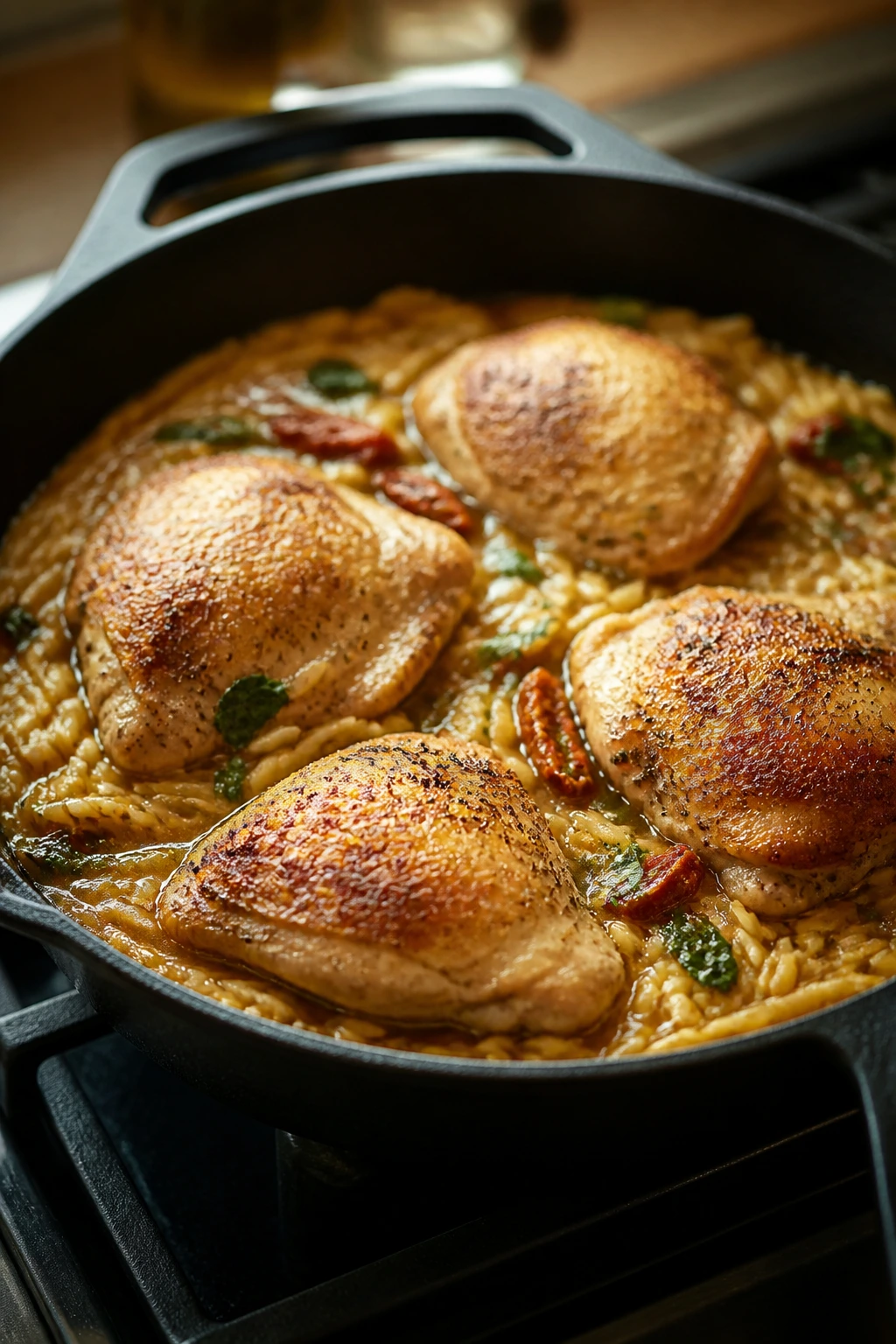
This is the kind of chicken dinner I trust on a night when I don’t want surprises. The chicken browns, the orzo soaks up every bit of flavor, and the lemon keeps the whole pan from turning heavy. Nothing about it is fussy. That’s part of the appeal.
If you keep a pack of thighs, a box of orzo, and a lemon on hand, you’re never far from dinner. The pan does the work. You just have to give it heat, a little patience, and the good sense not to rush the part where the chicken turns gold.
Juicy One-Pot Lemon Garlic Chicken Orzo — Recipe Card
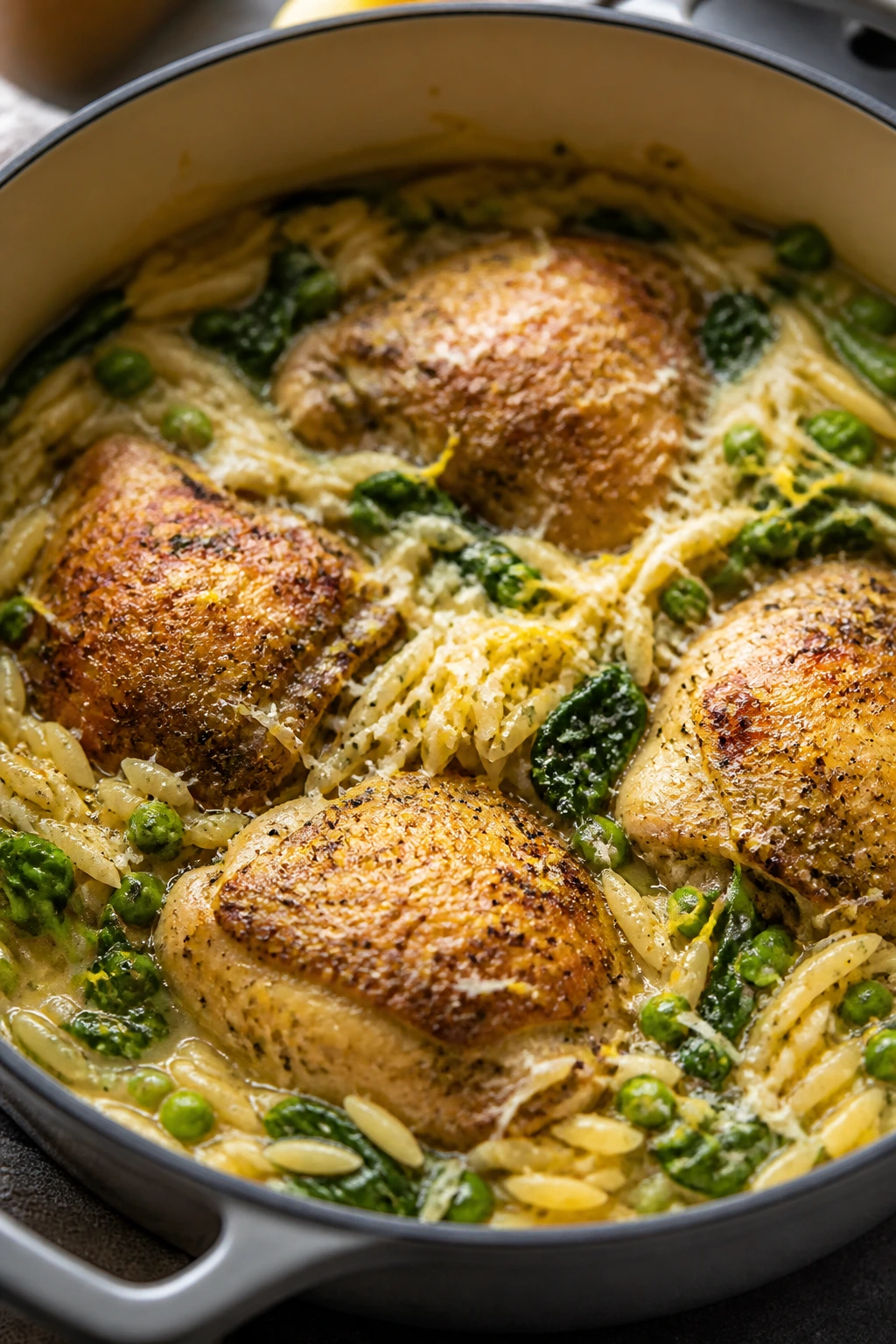
Recipe Name: Juicy One-Pot Lemon Garlic Chicken Orzo
Description: Tender chicken thighs simmer with toasted orzo, lemon, garlic, peas, spinach, and parmesan in a single skillet or Dutch oven. The chicken stays juicy, the pasta turns glossy, and the pan sauce comes together without a separate pot.
Prep Time: 15 minutes
Cook Time: 30 minutes
Total Time: 45 minutes
Course: Dinner, Main Course
Cuisine: American
Servings: 4 to 6 servings
Calories: About 490 kcal per serving
Ingredients
For the Chicken:
- 2 pounds boneless, skinless chicken thighs, trimmed of loose fat
- 1 1/2 teaspoons kosher salt
- 1 teaspoon black pepper
- 1 teaspoon smoked paprika
- 1 teaspoon garlic powder
- 2 tablespoons olive oil
For the Orzo and Sauce:
- 1 medium yellow onion, finely diced
- 4 cloves garlic, minced
- 1 1/2 cups orzo pasta
- 3 1/2 cups low-sodium chicken broth
- 1/2 cup dry white wine or extra chicken broth
- 1 teaspoon dried oregano
- 1 large lemon, zested and juiced
- 1 cup frozen peas
- 3 cups baby spinach
- 1/2 cup grated parmesan cheese
- 2 tablespoons unsalted butter
- 2 tablespoons chopped fresh parsley
- 1/4 teaspoon red pepper flakes, optional
Instructions
-
Pat the chicken thighs dry and season with salt, pepper, smoked paprika, and garlic powder.
-
Heat the olive oil in a 12-inch deep skillet or Dutch oven over medium-high heat until shimmering. Sear the chicken for 4 to 5 minutes per side until deeply golden. Transfer to a plate.
-
Lower the heat to medium. Add the onion and cook for 3 to 4 minutes until softened. Add the garlic and oregano and cook for 30 seconds.
-
Stir in the orzo and toast for 1 to 2 minutes. Pour in the wine and scrape up the browned bits from the pan.
-
Add the broth, lemon zest, and half the lemon juice. Nestle the chicken back into the pan with any juices.
-
Bring to a gentle simmer, cover, reduce the heat to medium-low, and cook for 10 to 12 minutes until the orzo is tender and the chicken reaches 175°F.
-
Add the peas and spinach, cover for 2 minutes, then remove from the heat.
-
Stir in the butter, parmesan, parsley, and remaining lemon juice. Taste and adjust seasoning. Rest for 5 minutes before serving.
Notes: Add 2 to 4 tablespoons of extra broth if the orzo thickens too much after resting. For a richer finish, stir in 1/3 cup cream with the butter and parmesan.