



If you mean the pork cut called picnic shoulder — not a basket of sandwiches — this is the one I reach for when a backyard cookout needs a real anchor. It’s a stubborn cut in the best possible way. A picnic shoulder starts out looking a little rough, a little dense, and a little too serious for a warm-weather spread, then it turns into something else after a long marinade and a slow run over indirect heat: glossy bark, soft fat, and meat that pulls apart in long, juicy strands instead of dry little crumbs.
That’s the appeal. Picnic shoulder does not need babying; it needs patience, salt, acid, and a grill lid that stays shut long enough to do the work. The marinade gives you brightness and seasoning all the way through the outer layers, while the slow cook lets the connective tissue relax instead of tightening up into shoe leather. You get pork that tastes like it belonged on the grill from the start.
And this is the part I like most: it makes a cookout feel generous without being fussy. You can slice it for plates, shred it for buns, pile it onto a platter with slaw and pickles, or tuck the leftovers into eggs the next morning. It’s the sort of recipe that quietly solves the whole meal.
Why This Shoulder Wins at a Cookout
-
It feeds a crowd without acting precious: One 5- to 6-pound picnic shoulder gives you a full platter of pork plus leftovers, which is exactly the kind of math a backyard meal likes.
-
The marinade does more than add flavor: Vinegar, orange juice, soy sauce, and salt work on different parts of the meat, so the flavor doesn’t sit only on the surface.
-
You do not need a smoker to get there: A covered gas grill or charcoal grill set up for indirect heat handles this just fine, which keeps the recipe useful even if your setup is basic.
-
It plays well with cookout sides: Coleslaw, potato salad, baked beans, corn on the cob, and toasted rolls all make sense here instead of fighting the pork.
-
The leftovers are genuinely useful: Cold slices make excellent sandwiches, and shredded pork reheats with almost no drama if you keep a few spoonfuls of the cooking juices.
-
The method is forgiving once you respect the heat: Keep the grill around 300 to 325°F, watch the thermometer, and the shoulder will tell you when it’s ready. Loud flames and guesswork are the real problem.
Timing, Yield, and the Real-World Schedule

Yield: Serves 8 to 10
Prep Time: 25 minutes
Cook Time: 3 hours 30 minutes to 4 hours 15 minutes
Total Time: 4 hours to 4 hours 40 minutes, plus marinating time
Chill/Rest Time: 12 to 24 hours to marinate; 30 minutes to rest after cooking
Difficulty: Intermediate — the steps are straightforward, but the cut is large and the grill temperature needs attention.
Best Served: Warm, after a 30-minute rest, or reheated the next day for sandwiches and bowls.
A lot of people want pork shoulder to be fast. It is not fast. If you try to rush it, you get chewy meat and a bitter crust, and neither of those things helps at a cookout where people are standing around with paper plates in hand.
The marinating window matters almost as much as the grill time. Twelve hours is enough to season the outer layers well; 24 hours gives the meat a deeper, rounder flavor. Go much beyond that and the acid starts to work against the texture, especially near the surface where the orange juice and vinegar are doing the most work.
The Ingredient List That Actually Matters
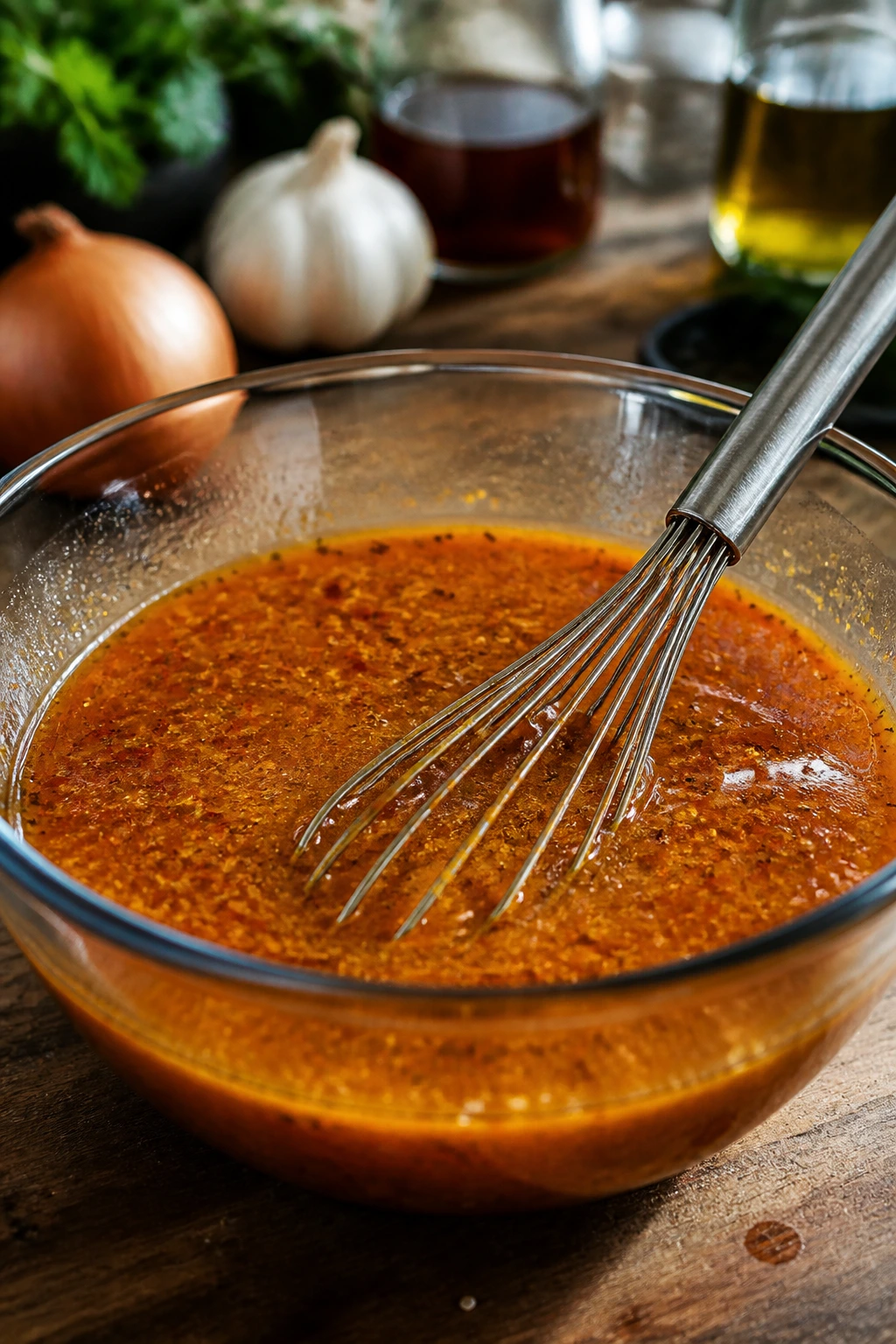
For the Marinade
- 1/2 cup extra-virgin olive oil
- 1/2 cup apple cider vinegar
- 1/2 cup fresh orange juice
- 1/4 cup low-sodium soy sauce
- 1/4 cup packed light brown sugar
- 2 tablespoons Dijon mustard
- 2 tablespoons Worcestershire sauce
- 6 garlic cloves, minced
- 1 small yellow onion, grated
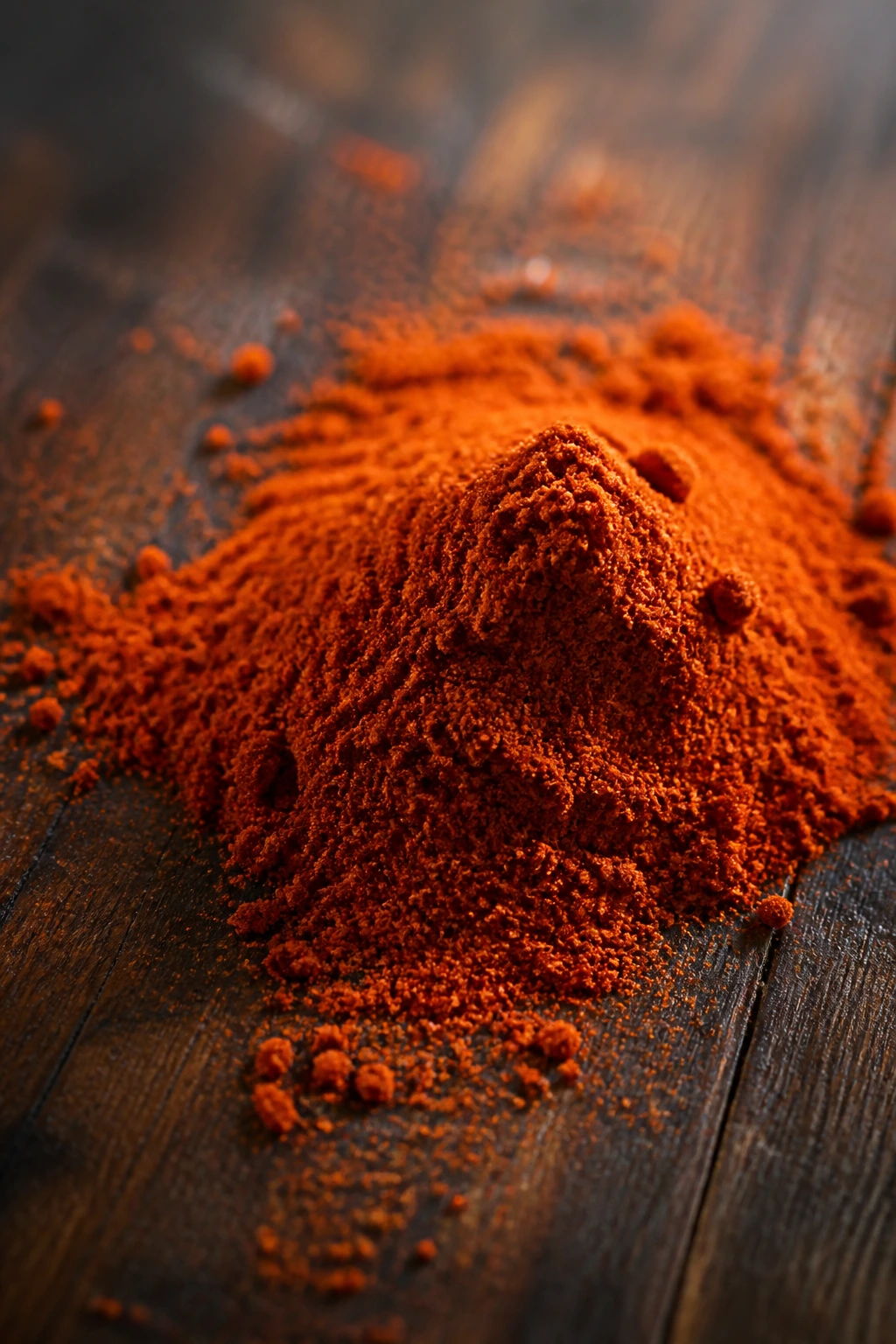
- 2 tablespoons smoked paprika
- 2 teaspoons kosher salt
- 2 teaspoons black pepper
- 1 teaspoon crushed red pepper flakes
- 1 teaspoon dried thyme
- 1 teaspoon fennel seeds, lightly crushed, optional
For the Pork
- 1 bone-in pork picnic shoulder, 5 to 6 pounds, skin removed or deeply scored
That is the whole cast. No elaborate sauce, no extra rub, no second marinade to manage. The shoulder carries the cook on its own, and the marinade gives it enough support to taste intentional instead of merely seasoned.
Why Each Ingredient Earns Its Place
The Pork Shoulder Itself
What to use: 1 bone-in pork picnic shoulder, 5 to 6 pounds, with the skin removed if possible or scored in a deep crosshatch if the skin stays on.
Preparation: Pat it dry, trim any ragged hard fat, and score the fat cap about 1/4-inch deep so the marinade can seep into the surface.
Substitutions: A boneless pork shoulder roast of the same weight works almost exactly the same way, and a pork butt will behave similarly if that’s what your butcher has.
Tips: Look for a shoulder with a modest fat cap, not a huge blanket of fat. Too much fat turns the grill into a flare-up machine, and too little leaves the meat less forgiving over a long cook.
The Acid, Salt, and Umami Base
What to use: 1/2 cup apple cider vinegar, 1/2 cup fresh orange juice, 1/4 cup low-sodium soy sauce, 2 teaspoons kosher salt, 2 tablespoons Worcestershire sauce, and 2 tablespoons Dijon mustard.
Preparation: Whisk these together until the brown sugar disappears and the mustard is fully dissolved; the mixture should look glossy, not broken.
Substitutions: Lime juice can stand in for the orange if you want sharper edges, and tamari works instead of soy sauce for a gluten-free version.
Tips: Low-sodium soy is the right move here. Regular soy can shove the whole marinade into salty territory, especially if your pork has been enhanced or lightly brined by the processor.
Sweetness, Smoke, and Heat
What to use: 1/4 cup packed light brown sugar, 2 tablespoons smoked paprika, 1 teaspoon crushed red pepper flakes, 1 teaspoon dried thyme, and 1 teaspoon lightly crushed fennel seeds.
Preparation: Measure the paprika carefully and crush the fennel seeds just enough to split them open; you want perfume, not dust.
Substitutions: Maple syrup can replace brown sugar if you want a softer sweetness, while chipotle powder can stand in for the red pepper flakes if you want smoke with more heat.
Tips: Sugar helps the exterior take on color, but it also burns faster than meat does. Keep the shoulder over indirect heat or you’ll end up with dark spots that taste more scorched than caramelized.
The Aromatics That Round It Out
What to use: 6 minced garlic cloves and 1 small yellow onion, grated.
Preparation: Mince the garlic fine and grate the onion so it disappears into the marinade instead of sitting in pieces on the surface.
Substitutions: Shallot works in place of yellow onion if that’s what you have, and 1 teaspoon garlic powder can replace fresh garlic in a pinch, though the flavor will be flatter.
Tips: Grated onion does more than taste good; it adds body to the marinade and helps it cling to the meat. If you want to use a blender, pulse only a few times so the mixture does not turn foamy and bitter.
The Gear That Makes the Cook Easier
-
Covered gas grill or charcoal grill: A lid is non-negotiable here; without one, you lose the steady heat that turns picnic shoulder tender.
-
Instant-read thermometer: This is the one tool that saves the meat from being guessed into dryness.
-
Probe thermometer, optional but helpful: If you like to watch temperatures without opening the lid, a probe can sit in the thickest part of the shoulder while it cooks.
-
Large zip-top bag or food-safe container: You need room for the shoulder and enough marinade contact to coat the meat evenly.
-
Small saucepan: This is for simmering the reserved marinade so it can become a safe glaze.
-
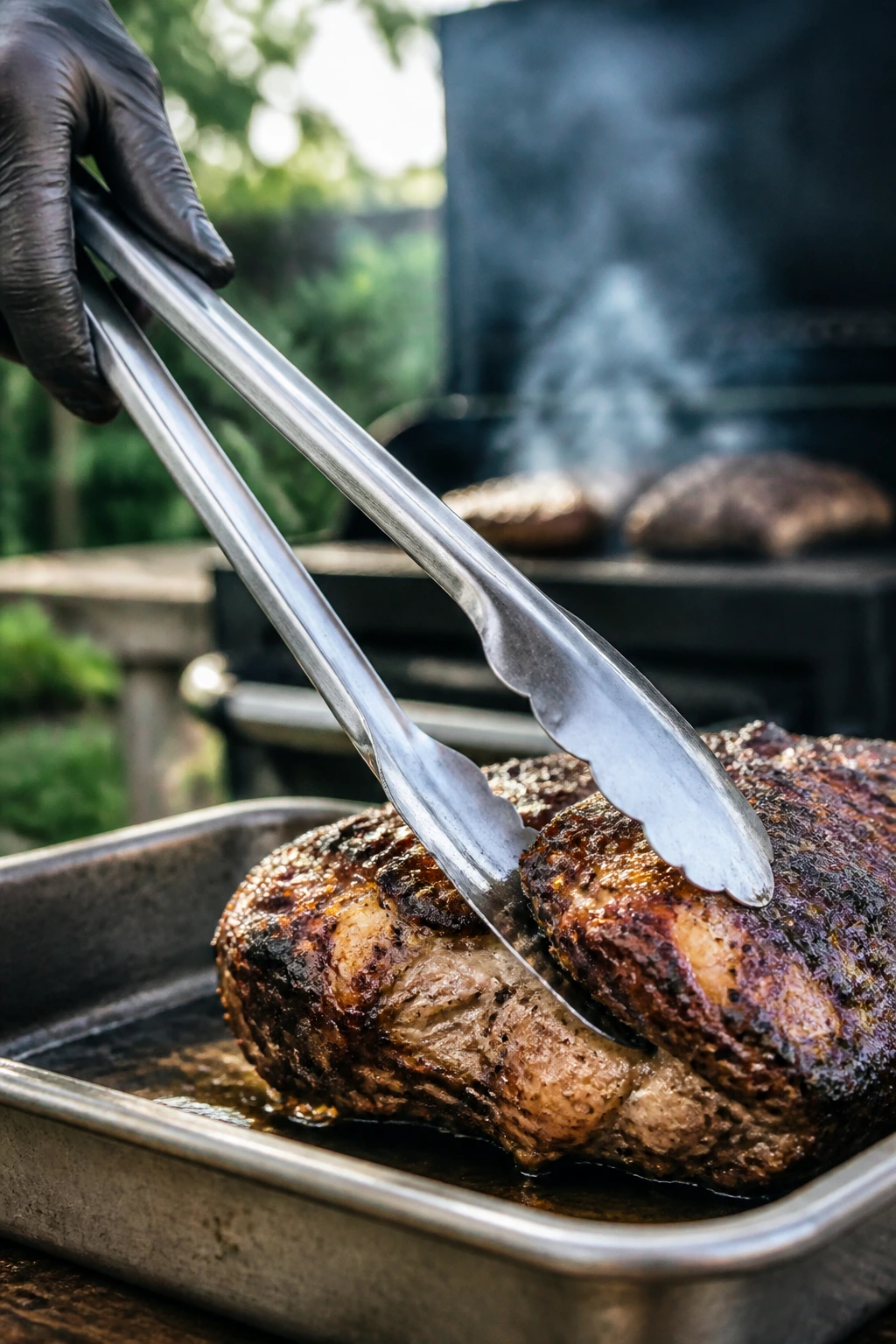
Long tongs: Short tongs are awkward over a hot grill and make every turn feel clumsy.
-
Rimmed sheet pan or disposable foil pan: Good for carrying the meat in and out of the house and catching juices when you shred it.
-
Sharp carving knife and cutting board: If you want slices instead of pulled meat, this matters even more.
-
Basting brush: Handy for brushing the cooked glaze onto the shoulder during the last stretch of grill time.
How to Marinate and Grill the Shoulder
Marinate the Pork
-
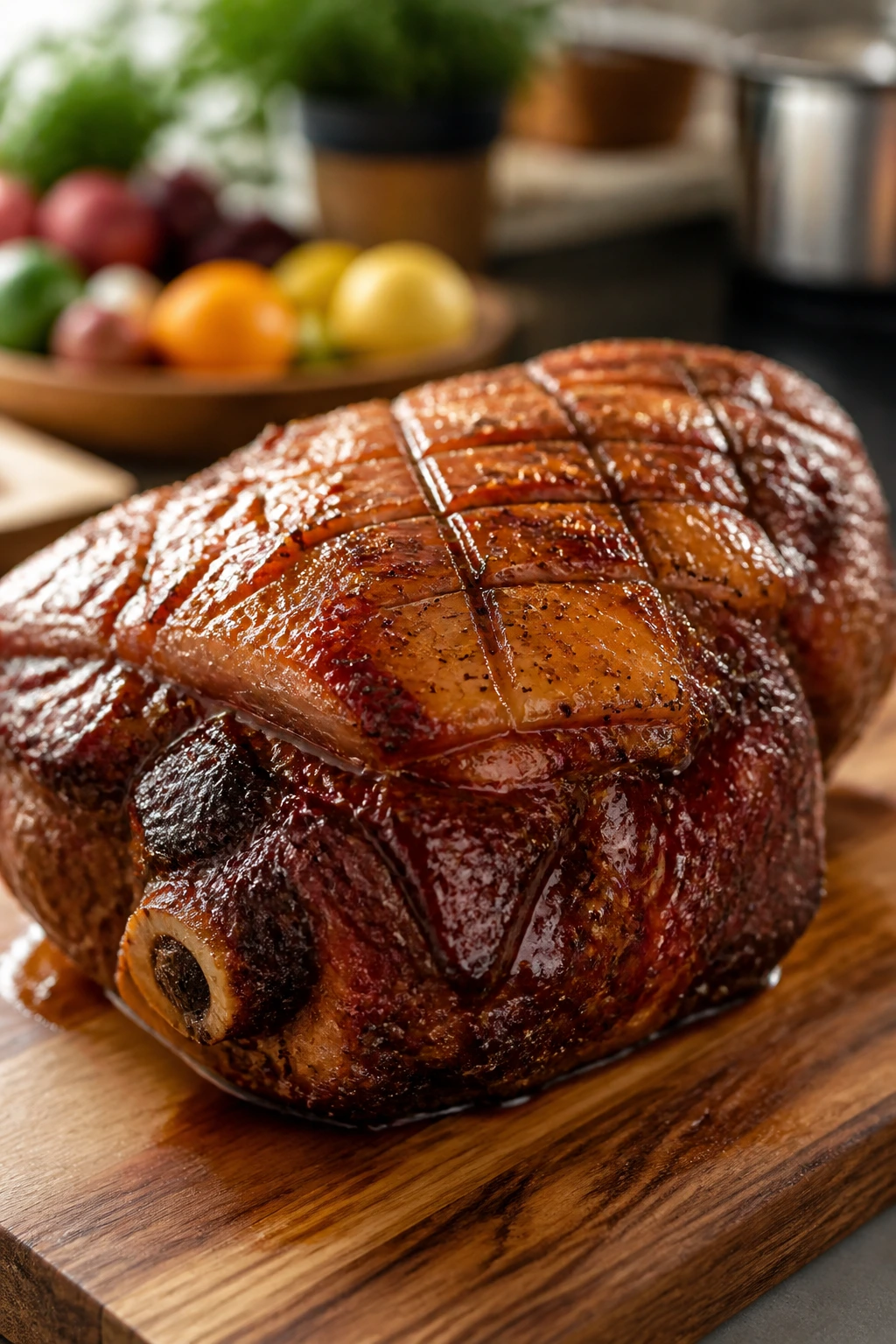
Score and dry the shoulder: Pat the pork picnic shoulder dry with paper towels. If the skin is still on, score it in a deep crosshatch pattern about 1 inch apart, cutting through the fat but not into the meat. Do not skip this step — the marinade needs a path in.
-
Whisk the marinade: In a large bowl, whisk together the olive oil, apple cider vinegar, orange juice, soy sauce, brown sugar, Dijon mustard, Worcestershire sauce, garlic, onion, smoked paprika, kosher salt, black pepper, red pepper flakes, thyme, and fennel seeds. Stir until the sugar dissolves and the mixture looks smooth.
-
Reserve some glaze: Pour 1/2 cup of the marinade into a small saucepan and set it aside. This portion will be cooked later and used as the finishing glaze. The rest is for the pork.
-
Marinate the shoulder: Put the pork into a large zip-top bag or food-safe container and pour in the remaining marinade. Turn the meat a few times so every side gets coated. Refrigerate for 12 to 24 hours, turning once or twice if you remember. A little agitation helps, but don’t obsess over it.
Cook Low and Slow
-
Preheat the grill: Take the pork out of the fridge 45 minutes before cooking. Meanwhile, set up your grill for indirect heat at 300 to 325°F. For gas, heat one side and leave the other off. For charcoal, bank the coals to one side and put a drip pan on the cooler side if you have one.
-
Start the cook: Remove the shoulder from the marinade and let excess drip off. Place it fat side up over the cooler side of the grill, away from direct flame. Close the lid and cook for 3 hours to 3 hours 30 minutes before checking the temperature. Keep the lid shut as much as possible. Every peek steals heat.
-
Make the glaze: While the shoulder cooks, bring the reserved 1/2 cup marinade to a gentle boil in the small saucepan. Lower the heat and simmer for 3 to 4 minutes, until it looks slightly thickened and glossy. Set it aside. Never use raw marinade as a sauce.
-
Brush and finish: During the last 45 minutes of cooking, brush the cooked glaze over the shoulder every 15 minutes. Keep the heat steady. If the exterior is darkening too quickly, loosely tent the top with foil for the final stretch.
-
Check for tenderness: Cook until the thickest part of the shoulder reads 195 to 203°F and a thermometer or skewer slides in with almost no resistance. If the shoulder still feels tight, give it another 15 to 20 minutes and check again. For this cut, don’t stop at safe; stop at tender.
Rest and Pull
-
Rest before shredding: Move the shoulder to a cutting board or rimmed pan, tent it loosely with foil, and rest for 30 minutes. The juices need time to settle, and the meat will be easier to handle.
-
Shred or carve: Pull out the bone, discard any large fat pockets, and shred the meat with two forks or gloved hands. If you want slices instead, carve across the grain after a 20- to 30-minute rest, but the pulled texture is the sweet spot here.
-
Moisten with juices: Spoon a little of the resting liquid over the meat before serving. That last step is not decoration. It keeps the pork from drying out on the platter.
How to Serve It at a Backyard Cookout
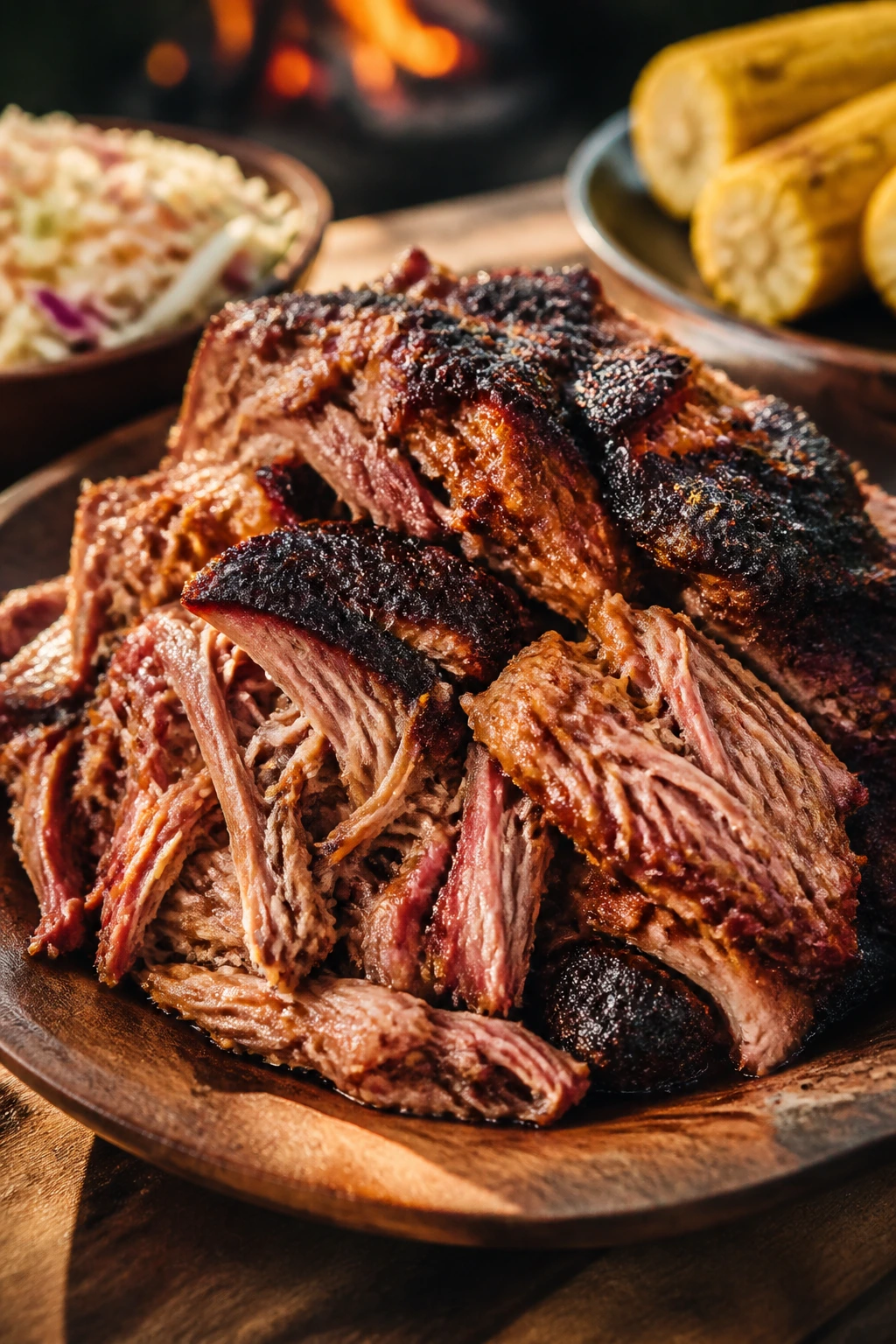
Presentation: Pile the pulled pork on a warmed platter so the darker bark sits on top and the lighter interior meat shows underneath. Spoon a few tablespoons of the resting juices over the top, then leave the edges a little rough instead of packing it into a neat mound. A little chaos looks right here.
Accompaniments: This pork wants acid on the side. Vinegar slaw, dill pickles, pickled red onions, corn on the cob, potato salad, baked beans, and toasted potato rolls all make sense with it. If you’re building sandwiches, warm the buns on the grill for 30 to 45 seconds per cut side so they hold up better against the juices.
Portions: Plan on 6 to 8 ounces cooked pork per person if it’s the main event, or a little less if you’re serving several other meats. A 5- to 6-pound picnic shoulder usually gives enough for 8 to 10 hearty servings, or roughly a dozen sandwich portions if the sides are generous.
Beverage Pairing: A cold lager or pilsner cuts through the sweetness and fat without getting in the way. Unsweetened iced tea with lemon works just as well for a non-alcoholic option, and a dry hard cider has enough snap to keep up with the vinegar and smoke.
Extra Tips for Better Flavor and Less Fuss
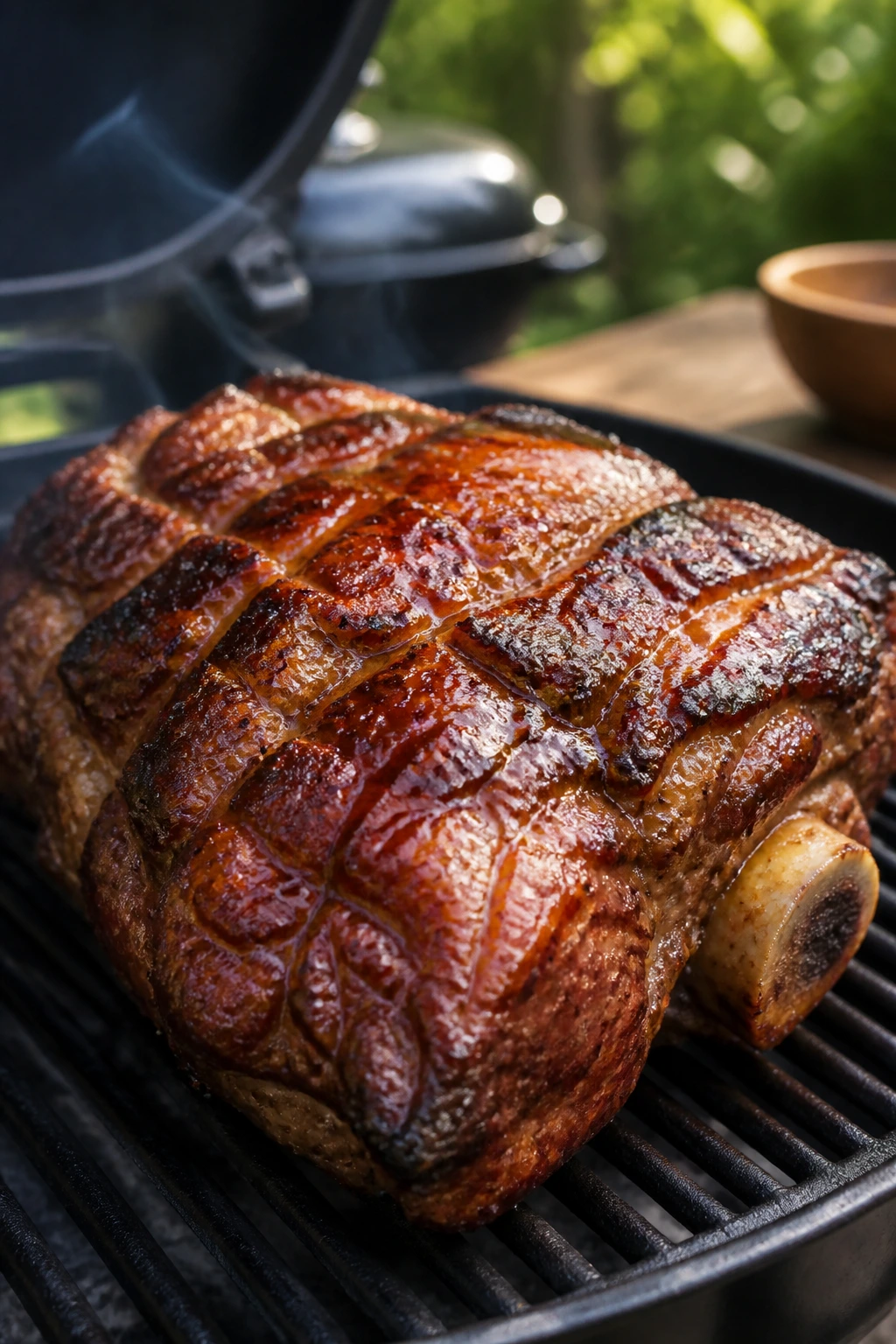
Flavor Enhancement: If you like a pork flavor that leans a little old-school, keep the fennel seeds in. They don’t make the shoulder taste like sausage; they just make the meat smell fuller when the lid comes off the grill. A tiny bit of fennel goes a long way, so don’t double it unless you want that profile front and center.
Time-Saver: Mix the marinade the night before and refrigerate it in a sealed container. The garlic, onion, and paprika settle into one another, and the actual cook feels calmer because the messy part is already done.
Heat Control: If your grill tends to run hot, set a foil pan of water on the hot side or lower the burner a notch. Picnic shoulder doesn’t need a blast furnace. It wants a steady 300 to 325°F and a lid that stays put.
Leftover Move: Shred the leftovers while they’re still warm and toss them with a spoonful or two of the cooking juices before chilling. That little step makes reheated pork much softer the next day, especially if you’re turning it into sandwiches or rice bowls.
The Mistakes That Make Picnic Shoulder Tough
-
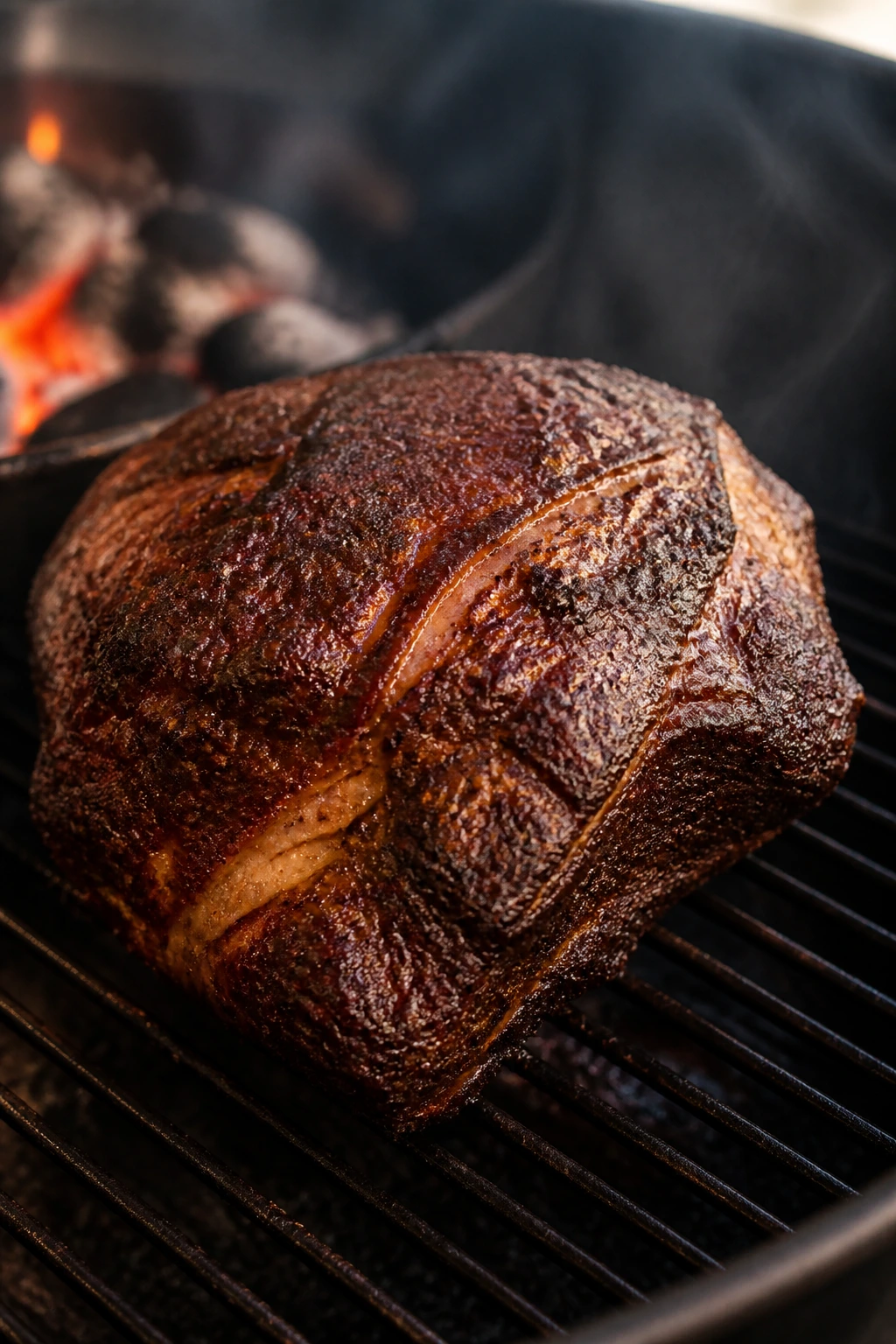
Cooking it over direct flame: The brown sugar in the marinade will scorch fast if the meat sits over a hot flame. The fix is simple: keep the shoulder on the cooler side of the grill and let the lid do the work.
-
Stopping at “safe” instead of “tender”: Pork shoulder may be safe to eat much earlier, but it will not be pleasant until the connective tissue has broken down. If the thermometer reads 165°F and the meat still feels tight, it is not done in the way this recipe needs.
-
Using raw marinade as a glaze: People do this because it seems efficient. It isn’t. The reserved marinade must be boiled and simmered before it touches the cooked meat, or you risk carrying raw meat juices back onto the finished pork.
-
Not letting the roast rest: Slice or shred too early and the juices flood the board instead of staying in the meat. Thirty minutes under loose foil is not wasted time; it’s what keeps the pork from drying out.
-
Slicing with the grain if you want sandwich-style meat: The shoulder has long muscle fibers, and cutting the wrong direction makes every bite feel stringy. If you want neat slices, carve across the grain after resting. If you want true cookout-style pork, shred it.
-
Over-salting the marinade: Low-sodium soy is there for a reason, and the salt in the formula already does a lot of the work. If you start with an enhanced, pre-brined shoulder, cut the added kosher salt to 1 teaspoon or the meat can tip into salty fast.
Variations for Different Crowds
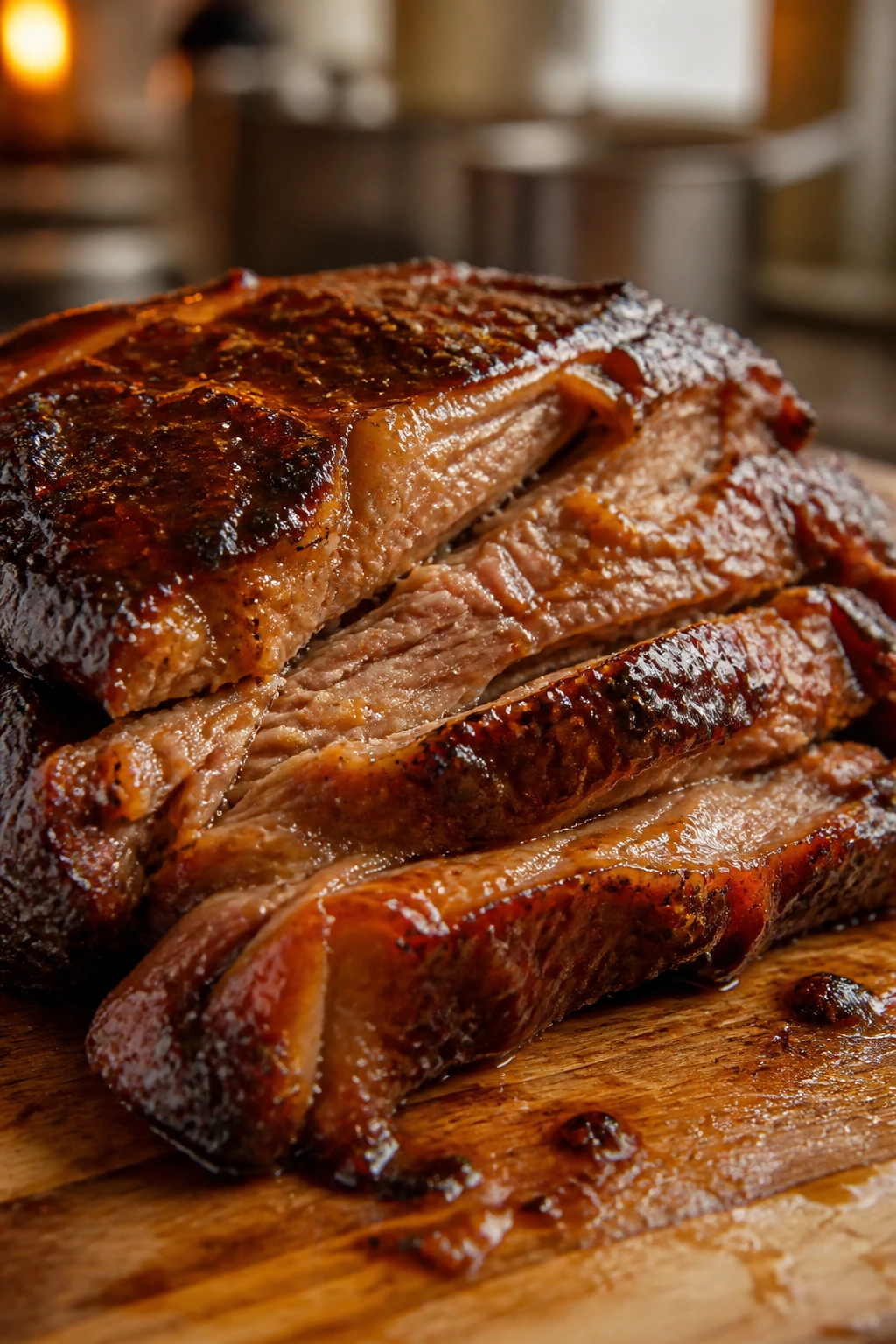
Carolina Vinegar Kick: Replace the orange juice with another 1/2 cup of apple cider vinegar and add 1 tablespoon yellow mustard. The finished pork comes out sharper and a little more aggressive, which is exactly what you want if the slaw on the side is creamy and rich.
Smoky Maple Glaze: Swap the brown sugar for 1/4 cup pure maple syrup and brush the glaze on during the last 20 minutes only. The finish turns darker and stickier, and the sweetness tastes rounder than plain brown sugar.
Garlic-Herb Porch Roast: Add 1 tablespoon chopped rosemary and 2 tablespoons chopped parsley to the marinade, then reduce the smoked paprika to 1 tablespoon. This version reads greener and less smoky, which works well if the rest of the cookout already leans heavy on char.
Spicy Chipotle Picnic: Stir 2 chopped chipotles in adobo into the marinade and cut the brown sugar to 2 tablespoons. The pork picks up heat and a little smoke from the peppers, and the leftovers make particularly good tacos the next day.
Oven Backup Plan: If the grill is occupied or the weather misbehaves, roast the shoulder in a covered Dutch oven or roasting pan at 300°F for about the same time, uncovering for the last 30 minutes to brown the top. You lose a bit of outdoor flavor, but you keep the meat juicy and the schedule intact.
Make-Ahead, Storage, and Reheating
The marinade can be mixed up to 3 days ahead and kept covered in the fridge. In fact, it tastes better after a night in the refrigerator because the garlic and paprika settle down and stop tasting sharp. Just whisk it again before using, since the oil and vinegar separate.
The raw shoulder should marinate for 12 to 24 hours. That is the sweet spot. Go shorter and the flavor stays mostly on the surface; go much longer and the vinegar starts to make the outer layer a little soft, which is not a trade I’d make for this cut.
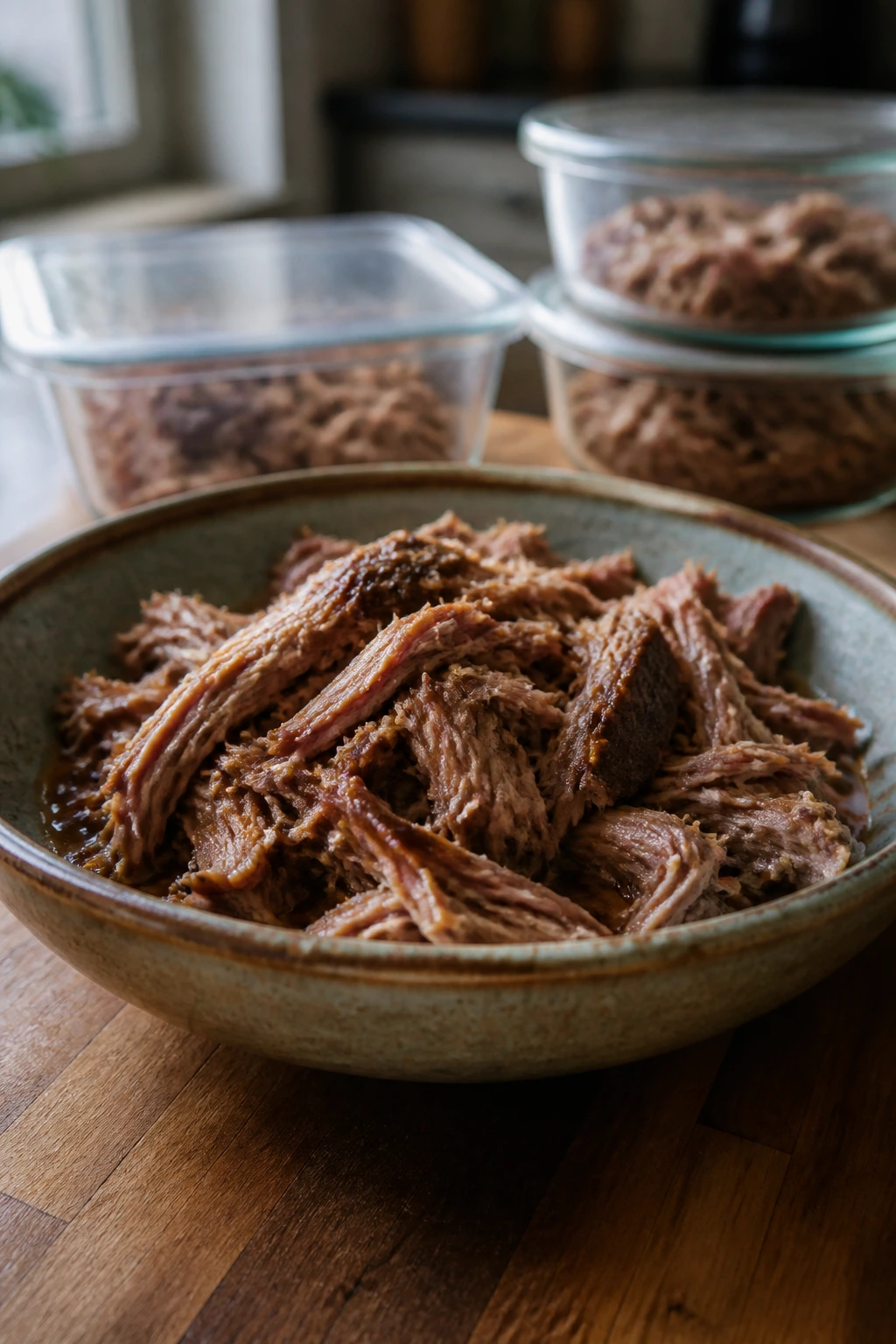
Leftover cooked pork keeps 3 to 4 days in the refrigerator if you store it in an airtight container with a few spoonfuls of the cooking juices. For freezing, pack it in flat freezer bags or a freezer container for up to 2 months. Flattening the package helps it thaw faster and keeps the meat from sitting in a giant icy block.
To reheat, the oven is best. Put the pork in a covered baking dish with 2 to 3 tablespoons of broth, water, or reserved juices and warm it at 300°F until steaming hot, usually 15 to 20 minutes for smaller portions or longer for a full batch. A microwave works if you move in short bursts — 45 to 60 seconds at a time — and stir or flip between bursts so the edges don’t dry out. If you reheat it on the grill, wrap it in foil first and keep the heat low; otherwise the bark turns hard.
Honestly, this is one of those pork dishes that improves after a night in the fridge. The smoke, acid, and garlic settle into the meat in a way that makes next-day sandwiches taste almost planned.
Questions People Ask Before They Fire Up the Grill
Can I use a boneless pork shoulder instead of a bone-in picnic shoulder?
Yes. Boneless shoulder behaves almost the same way, and it can be easier to carve once it’s cooked. Keep the weight in the same range and watch the temperature the same way.
Do I really need to marinate it overnight?
You don’t need a full overnight soak, but you do need time. Twelve hours gives you a solid result, while 24 hours deepens the flavor and helps the exterior taste less like surface seasoning.
Can I cook this on a gas grill without a charcoal setup?
Absolutely. Set one side of the grill to medium and leave the other side off, then park the shoulder over the unlit side with the lid closed. The key is steadiness, not fuel type.
What if my grill runs hotter than I want?
Lower the burner slightly, move the shoulder farther from the heat source, or use a foil pan of water to buffer the temperature. If the outside is dark before the inside is tender, tent the top loosely with foil and keep going.
Can I slice the pork instead of shredding it?
Yes, but the texture changes a lot. For slicing, pull the shoulder a little earlier — around 185 to 190°F — and let it rest well before carving across the grain. It will be firmer and less fall-apart than the shredded version.
What if I do not have an instant-read thermometer?
You can cook by feel, but I wouldn’t recommend guessing on a cut this big. The thermometer tells you when the meat is safe and when it’s actually tender, and those are not the same number for pork shoulder.
Can I turn the leftovers into something besides sandwiches?
Definitely. Fold the shredded pork into scrambled eggs, pile it into baked potatoes, toss it with rice and black beans, or stuff it into tacos with pickled onions. Leftovers are one of the reasons this cut earns its spot on the grill.
Is the picnic shoulder the same thing as a picnic ham?
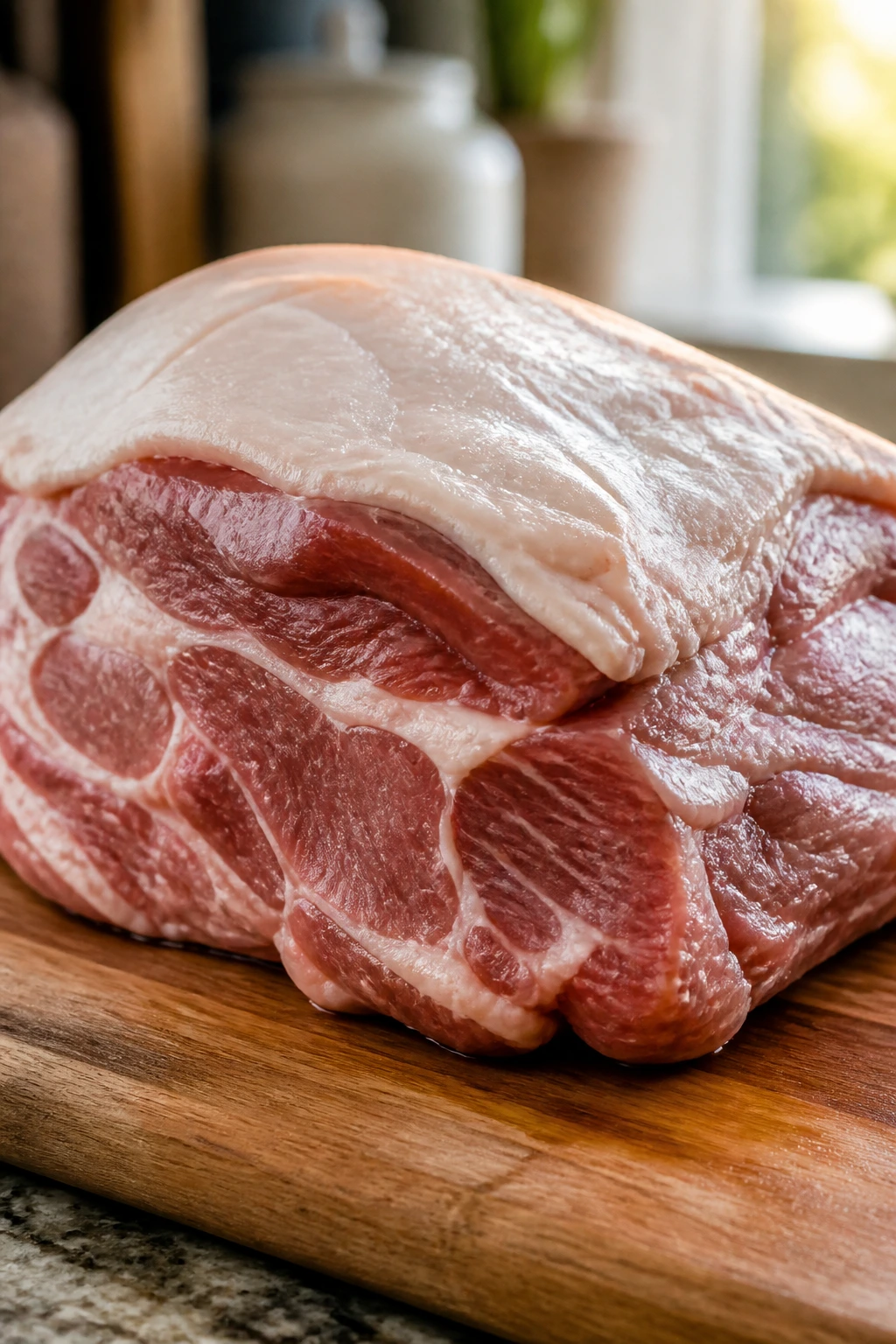
No, and that confusion causes plenty of trouble. A picnic ham is usually cured or smoked; this recipe is meant for a raw pork picnic shoulder. If you buy the cured version, the salt level and cook time are completely different.
One Last Reason to Make It
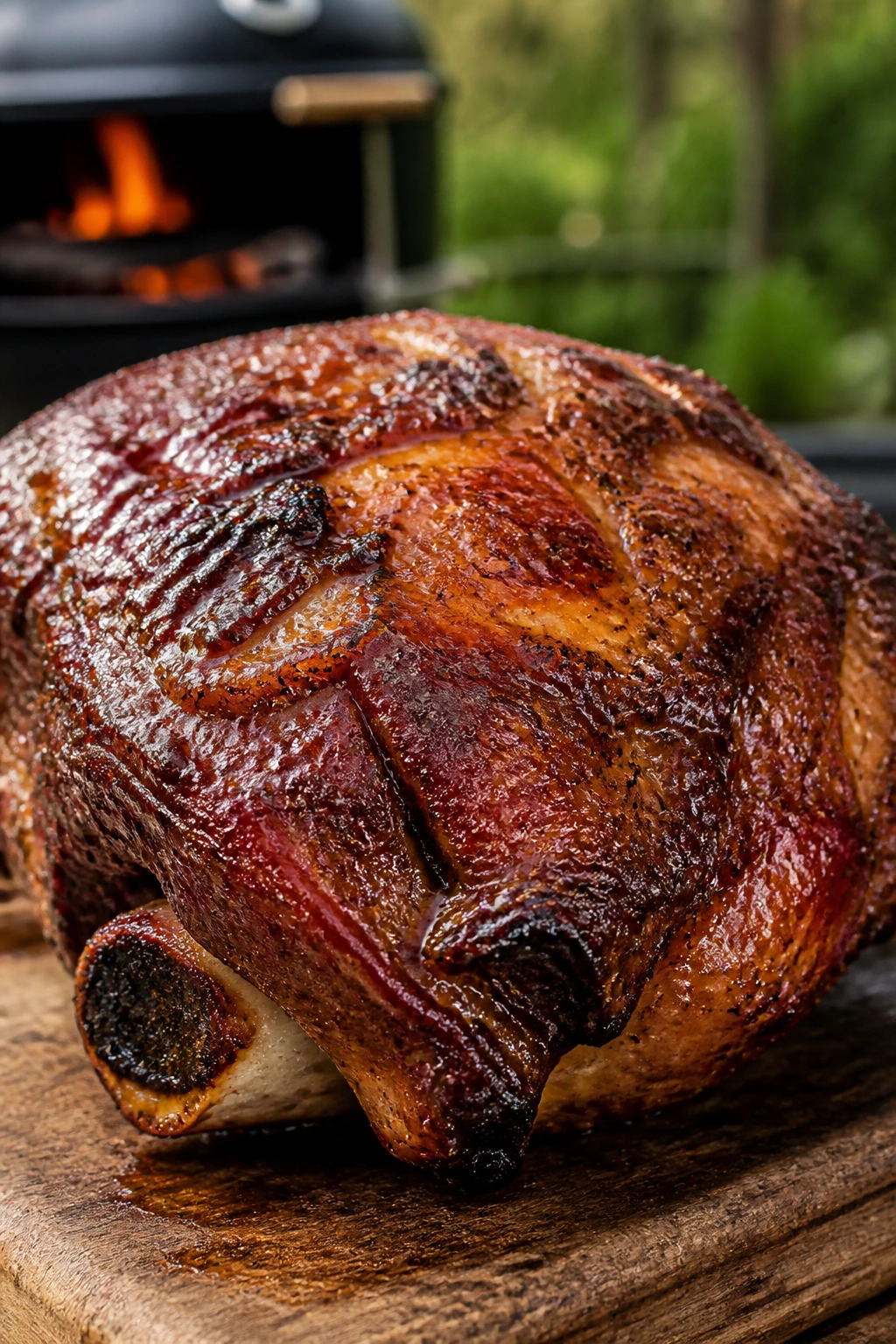
Picnic shoulder has a reputation for being rough around the edges, and that is exactly why I like it for backyard cookouts. It asks for a little time, a little heat discipline, and a marinade with enough backbone to stand up to its fat and connective tissue. In return, it gives you pork that tastes like it belongs on a platter beside cold drinks and a stack of paper plates.
The best part is how little fuss it makes once the grill is set. Keep the lid down, watch the thermometer, and let the meat get where it’s going on its own. That’s the whole deal, and it works.
Marinated Picnic Shoulder for Backyard Cookouts — Recipe Card
Recipe Name: Marinated Picnic Shoulder for Backyard Cookouts
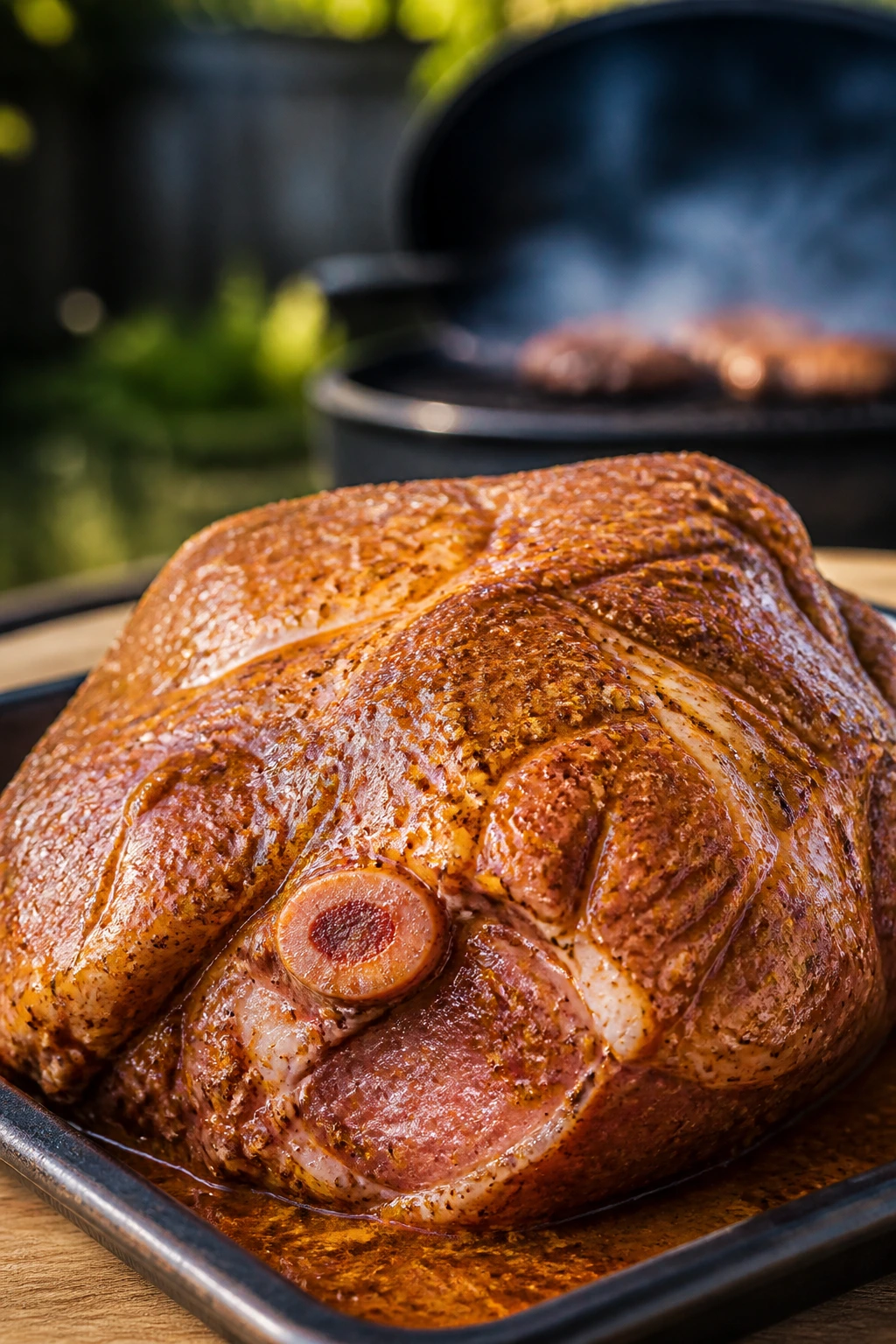
Description: Bone-in pork picnic shoulder marinated in orange juice, apple cider vinegar, soy sauce, garlic, and smoked paprika, then grilled over indirect heat until tender and pull-apart juicy.
Prep Time: 25 minutes
Cook Time: 3 hours 30 minutes to 4 hours 15 minutes
Total Time: 4 hours 40 minutes to 5 hours, plus 12 to 24 hours marinating
Course: Main Course
Cuisine: American
Servings: 8 to 10
Calories: 430 kcal
Ingredients
For the Marinade
- 1/2 cup extra-virgin olive oil
- 1/2 cup apple cider vinegar
- 1/2 cup fresh orange juice
- 1/4 cup low-sodium soy sauce
- 1/4 cup packed light brown sugar
- 2 tablespoons Dijon mustard
- 2 tablespoons Worcestershire sauce
- 6 garlic cloves, minced
- 1 small yellow onion, grated
- 2 tablespoons smoked paprika
- 2 teaspoons kosher salt
- 2 teaspoons black pepper
- 1 teaspoon crushed red pepper flakes
- 1 teaspoon dried thyme
- 1 teaspoon fennel seeds, lightly crushed, optional
For the Pork
- 1 bone-in pork picnic shoulder, 5 to 6 pounds, skin removed or deeply scored
Instructions
- Pat the pork dry and score the skin or fat cap if needed.
- Whisk together all marinade ingredients. Reserve 1/2 cup in a small saucepan.
- Marinate the pork in the remaining mixture for 12 to 24 hours in the refrigerator.
- Preheat the grill for indirect heat at 300 to 325°F.
- Cook the pork fat side up over indirect heat for 3 hours to 3 hours 30 minutes.
- Simmer the reserved marinade for 3 to 4 minutes, then brush it on during the last 45 minutes of cooking.
- Continue cooking until the thickest part reaches 195 to 203°F and the meat is fork-tender.
- Rest 30 minutes, then shred or carve and spoon over the resting juices before serving.
Notes: Use low-sodium soy sauce unless your pork is very plain and unenhanced. Do not use raw marinade as a sauce. If the exterior browns too fast, loosely tent with foil during the final stretch.