



Moist creamy cheesecake with cream cheese frosting is the dessert I make when I want a slice that feels cool, dense, and a little luxurious without turning heavy or sugary. The best version has a center that quivers instead of cracking, a crust that snaps when your fork hits it, and a frosting layer that tastes tangy enough to keep the whole thing from becoming cloying.
Cheesecake goes wrong in familiar ways. Mix it too hard and you trap air; bake it too long and the edge turns dry while the middle stays stubbornly soft; chill it too little and the knife drags through a mushy slab. I like recipes that respect those details, because cheesecake is not a place to improvise wildly. It’s a low-heat, slow-set dessert. Patience pays better here than enthusiasm.
This version leans into that calm method. The filling uses full-fat cream cheese, sour cream, a little heavy cream, and just enough cornstarch to keep the slices neat without making them cakey. Then the cream cheese frosting comes on top in a thick, spreadable layer that tastes like a cousin of the filling rather than a separate sweet topping. That matters. The best cheesecake should taste unified from crust to top, not like three random desserts stacked together.
Why You’ll Love This Cheesecake
Some cheesecakes are all richness and no structure. This one has both.
- Silky center: The filling bakes into a cool, custardy middle that slices cleanly after a long chill instead of collapsing onto the plate.
- No dry ring: The water bath and low oven keep the outer edge from turning chalky, which is the part most home bakers get wrong.
- Frosting with a reason: The cream cheese frosting doesn’t just sit there looking pretty; it gives the top a tangy, creamy finish that matches the filling.
- Slices neatly: Cornstarch, slow cooling, and an overnight chill give you pieces that hold together on the spatula.
- Balanced sweetness: Lemon juice and a pinch of salt keep the whole dessert from tasting like sugar pasted over dairy.
- Worth the wait: Cheesecake is one of those desserts that improves after a full rest in the fridge, so it’s actually easier to serve when you make it ahead.
Yield: 12 slices
Prep Time: 30 minutes
Cook Time: 1 hour 5 minutes
Total Time: 1 hour 35 minutes active, plus 7 hours chilling
Difficulty: Intermediate — the ingredient list is simple, but the baking and cooling steps need a steady hand.
Chill/Rest Time: 7 hours, preferably overnight
Best Served: Cold, after a full chill, with the frosting fully set
Why This Moist Creamy Cheesecake Stays Soft in the Fridge
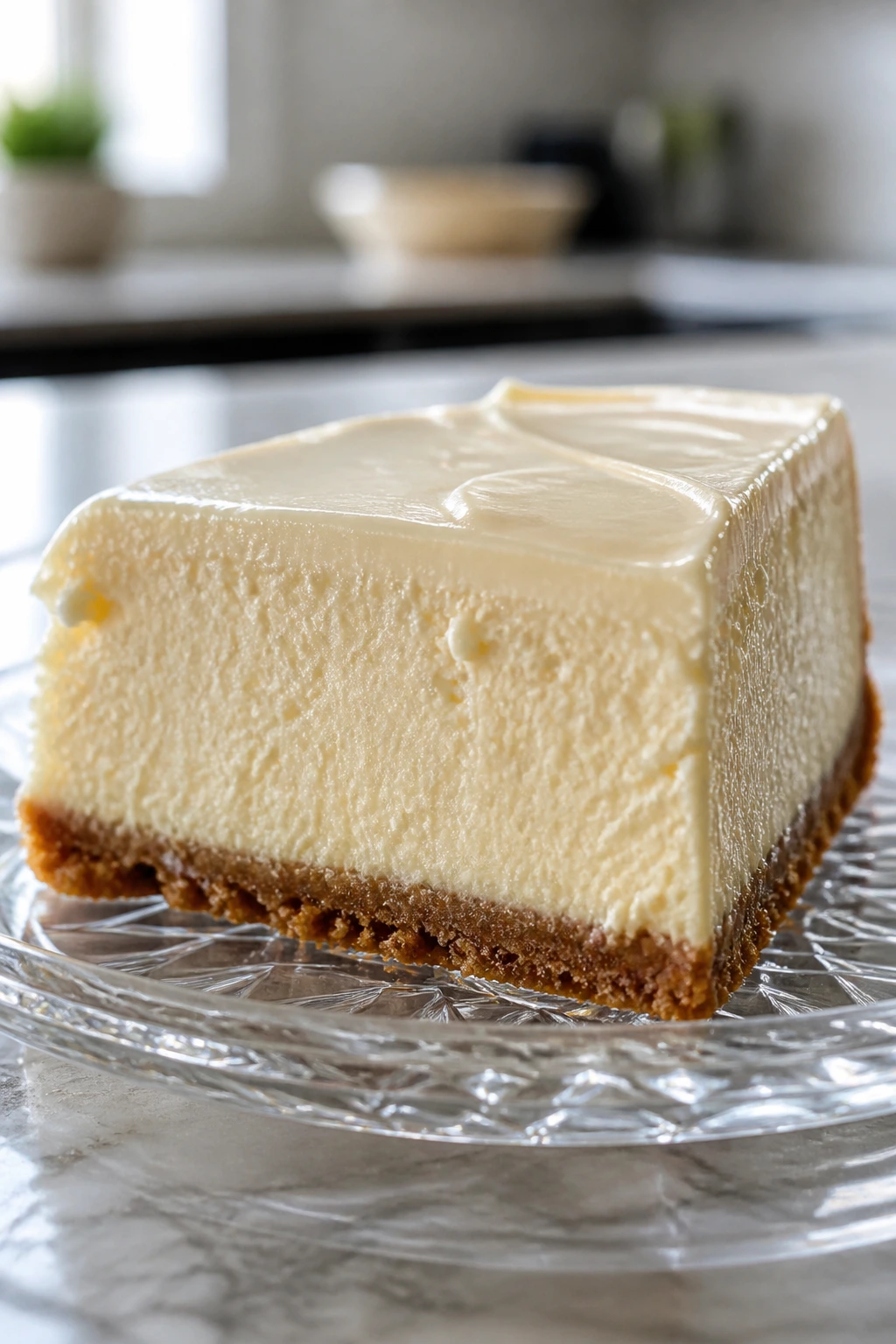
A cheesecake should settle like custard, not rise like a sponge cake. If it puffs up in the oven, you’ve pulled too much air into the batter or pushed the heat too hard. That’s when cracks show up and the middle goes a little grainy around the edges.
The center should wobble, not hold its breath
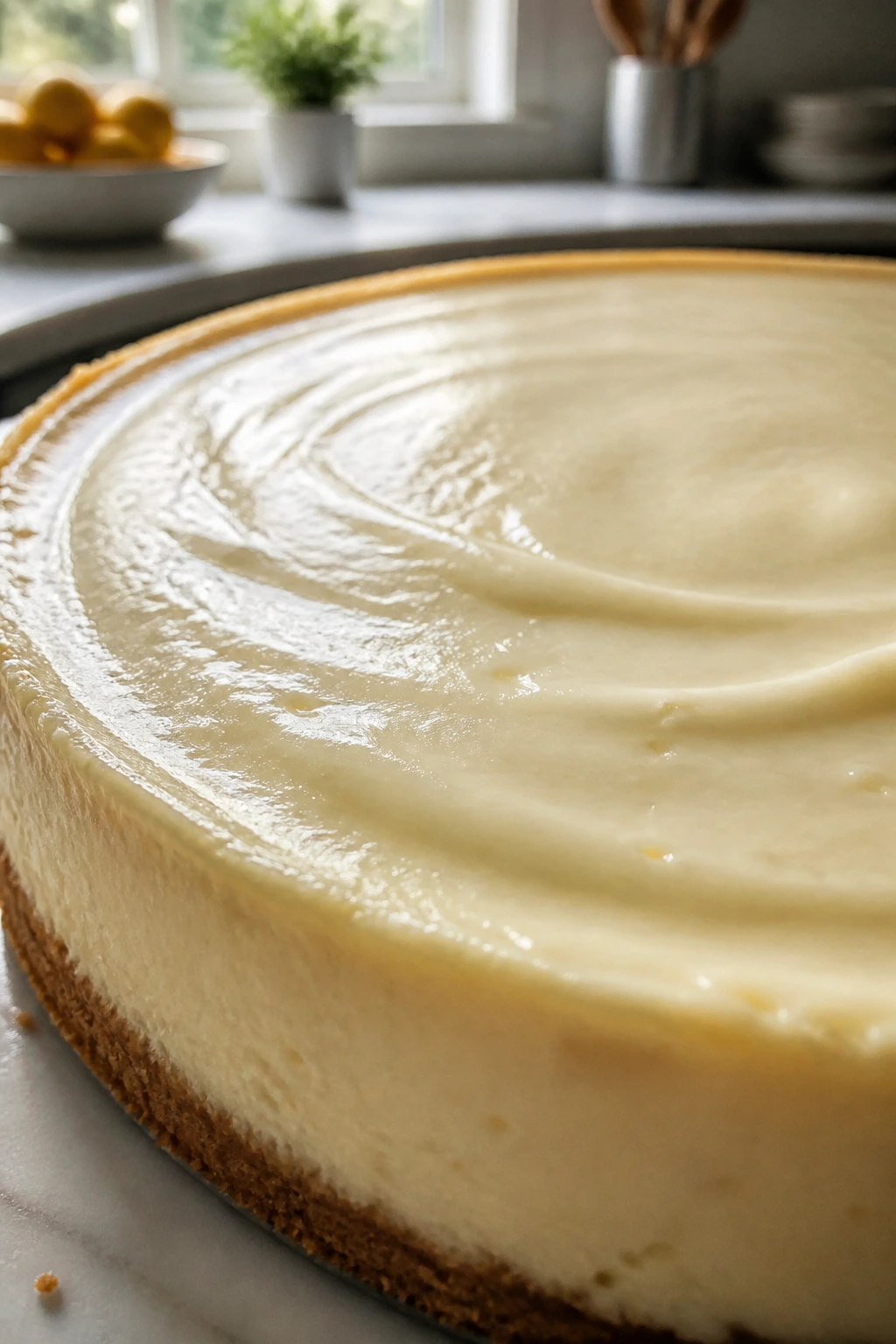
The sweet spot is a cheesecake that looks set at the rim and still jiggles in the middle when you nudge the pan. That wobble is not a flaw. It’s the sign that the eggs are just cooked enough to hold the filling together after the cake cools and chills. I like to think of it as a soft landing, not a finish line.
If you bake until the whole surface is firm, the middle often overcooks from carryover heat before you even get it out of the oven. Then the texture goes dense in a bad way — not creamy, just tight. A good cheesecake should feel almost too soft when it leaves the oven. Almost. The fridge takes care of the rest.
The water bath earns its place
A water bath sounds fussy until you see what it does. The hot water creates gentle, even heat around the springform pan, which keeps the sides from setting ahead of the center. That’s the difference between a cheesecake with a pale, smooth top and one with a dry shoulder and a pale crack running down the middle.
I know some bakers skip it and get away with it. Fine. But if you want the sort of creamy cheesecake that slices like cold butter, the bath is not extra decoration. It’s part of the recipe’s structure.
The frosting is there to match, not mask
Cream cheese frosting on cheesecake can go wrong if it’s too thick or too sweet. Then the topping feels like a separate cake layer pasted over the top. I prefer a frosting that still tastes like cream cheese first, sugar second. That keeps the dessert in the same flavor family all the way through.
The result is a slice that tastes cool, tangy, and soft from the first bite to the last. Not airy. Not fussy. Just the kind of cheesecake that disappears one neat wedge at a time.
The Ingredient List I Reach For Every Time
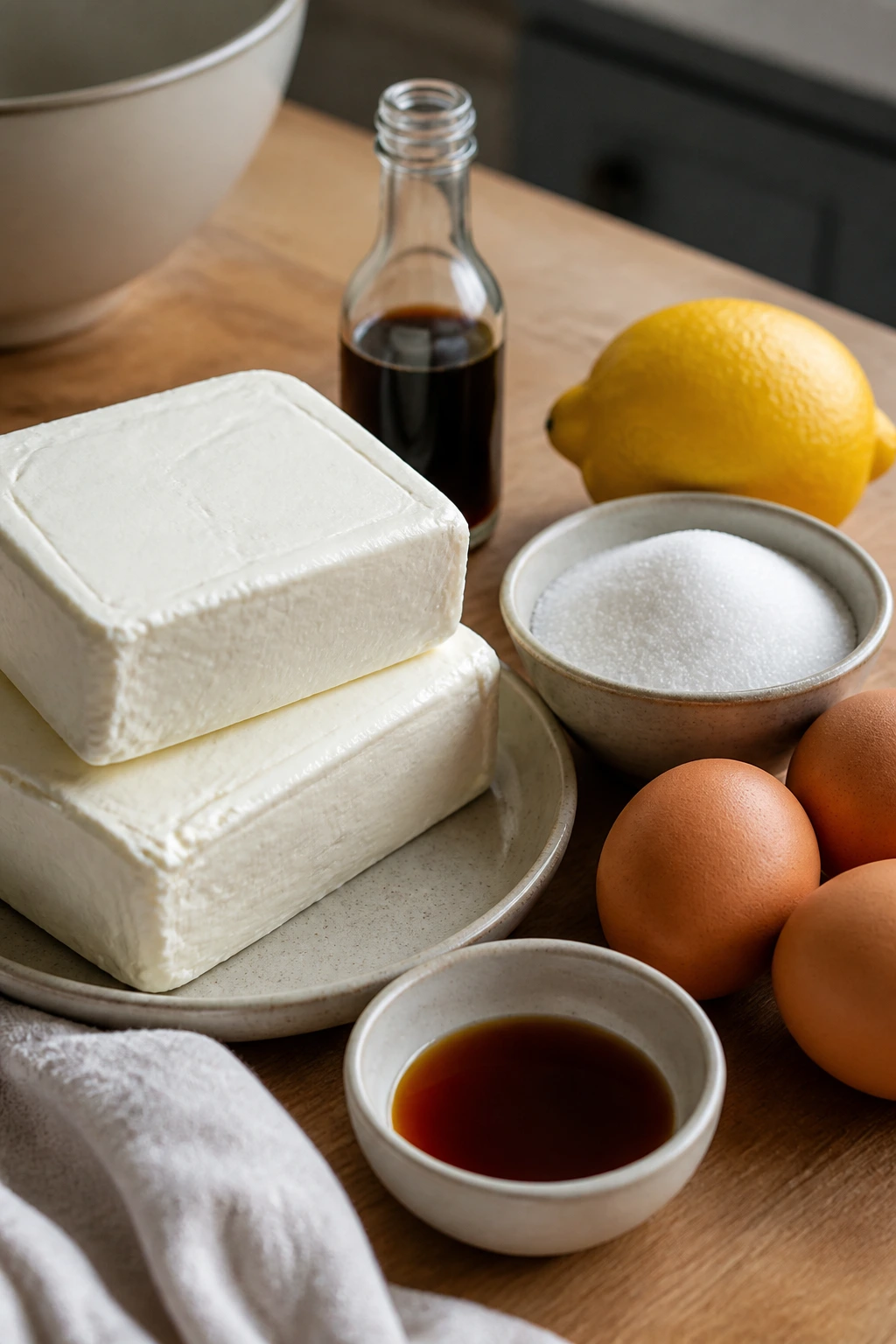
For the Graham Cracker Crust:
- 2 cups graham cracker crumbs, from about 16 full sheets
- 3 tablespoons granulated sugar
- 1/2 teaspoon ground cinnamon
- 6 tablespoons unsalted butter, melted
- Pinch of fine sea salt
For the Cheesecake Filling:
- 4 blocks (32 ounces) full-fat cream cheese, softened to room temperature
- 1 cup granulated sugar
- 2 tablespoons cornstarch
- 1/4 teaspoon fine sea salt
- 1 cup sour cream, room temperature
- 1/4 cup heavy cream
- 2 teaspoons pure vanilla extract
- 1 tablespoon fresh lemon juice
- 3 large eggs, room temperature
For the Cream Cheese Frosting:
- 8 ounces cream cheese, softened
- 1/2 cup unsalted butter, softened
- 2 1/2 cups powdered sugar, sifted
- 1 teaspoon pure vanilla extract
- Pinch of fine sea salt
- 1 to 2 tablespoons heavy cream, only if needed
For the Finish:
- 1 cup fresh raspberries or sliced strawberries
- 1 teaspoon finely grated lemon zest, optional
What Each Ingredient Is Doing in the Bowl
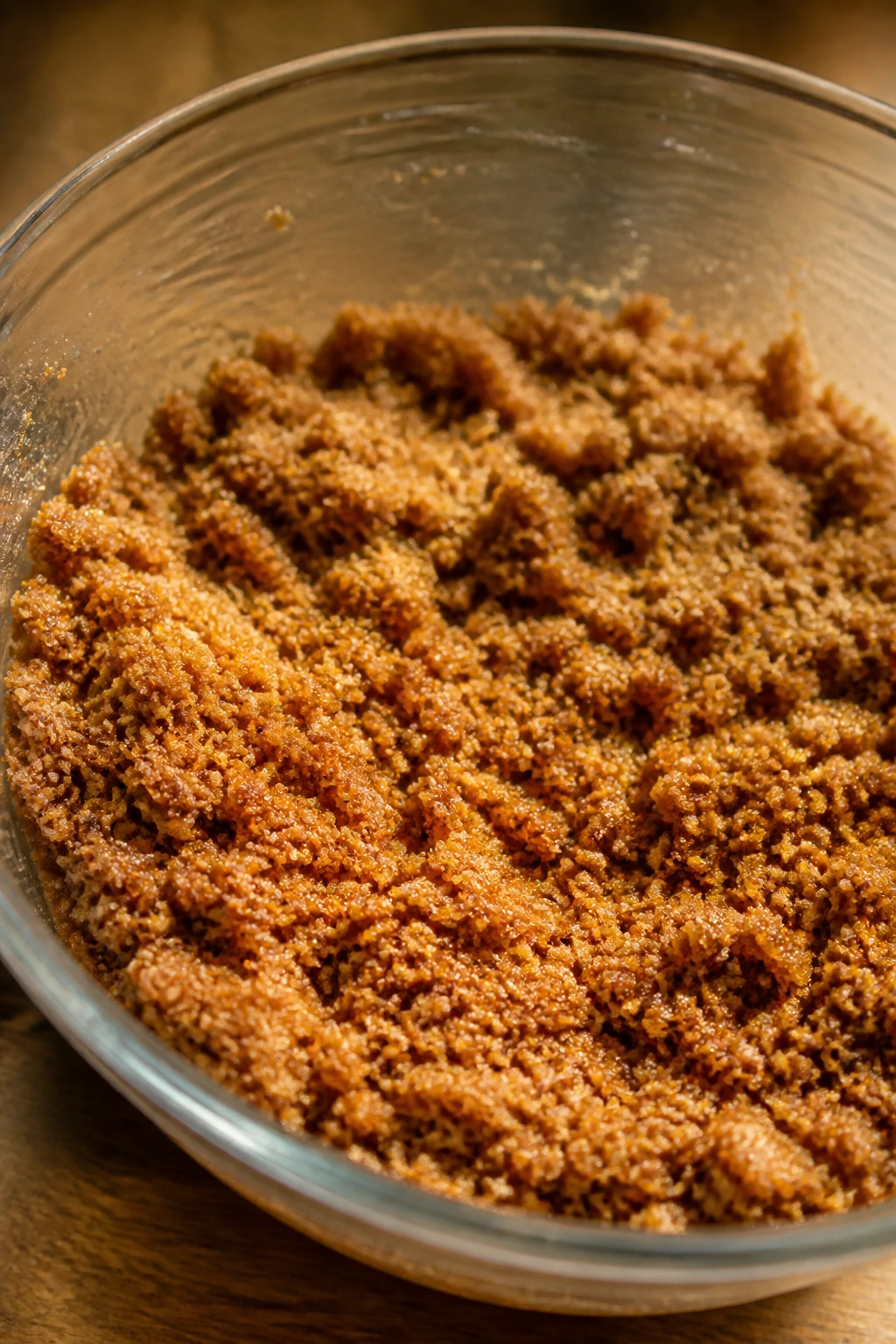
Graham Crust
What to use: 2 cups graham cracker crumbs, 3 tablespoons granulated sugar, 1/2 teaspoon cinnamon, 6 tablespoons melted butter, and a pinch of salt.
Preparation: Crush the crackers finely so the crust packs tight, then mix until every crumb looks evenly damp and sandy. The texture should resemble wet beach sand, not dry gravel.
Substitutions: Vanilla wafers, Biscoff cookies, chocolate sandwich cookies, or gluten-free grahams all work if you want a different flavor path. Biscoff makes the cheesecake taste warmer and spicier, while chocolate cookies push it toward a more dessert-bar style.
Tips: Press the crust firmly with the bottom of a measuring cup, especially around the corners where the side meets the base. A 10-minute bake gives it a toasty smell and helps it hold together after the filling goes in.
Creamy Filling Base
What to use: 32 ounces full-fat cream cheese, 1 cup granulated sugar, 2 tablespoons cornstarch, 1/4 teaspoon salt, 1 cup sour cream, 1/4 cup heavy cream, 2 teaspoons vanilla, 1 tablespoon lemon juice, and 3 large eggs.
Preparation: Let the cream cheese, sour cream, heavy cream, and eggs sit out until they lose their fridge chill. Cold dairy leaves tiny lumps that never fully disappear, no matter how long you beat the batter.
Substitutions: Full-fat Greek yogurt can replace the sour cream one-for-one if that’s what you have, though it tastes a little sharper and slightly less plush. You can swap the heavy cream for half-and-half in a pinch, but the filling will set less richly.
Tips: Beat the cream cheese smooth before anything else goes in, then keep the mixer on low once the eggs arrive. Air is the enemy here. You want a batter that looks glossy and thick, not foamy.
Flavor Balancers
What to use: 2 teaspoons vanilla, 1 tablespoon lemon juice, 2 tablespoons cornstarch, and a small pinch of salt.
Preparation: Measure the lemon juice carefully and keep the cornstarch dry until it goes into the bowl. A little acid brightens the dairy without making the cheesecake taste lemony.
Substitutions: Orange zest can stand in for lemon juice if you want a softer citrus note, and all-purpose flour can replace the cornstarch at the same amount. I prefer cornstarch because it melts into the batter more smoothly and leaves a cleaner slice.
Tips: Don’t skip the salt. One tiny pinch keeps the filling from tasting flat, especially after a long chill when sweetness can start to dominate.
Cream Cheese Frosting Finish
What to use: 8 ounces cream cheese, 1/2 cup butter, 2 1/2 cups powdered sugar, 1 teaspoon vanilla, a pinch of salt, and 1 to 2 tablespoons heavy cream.
Preparation: Beat the cream cheese and butter until there are no little white specks left, then add the sugar slowly so you don’t end up with a cloud of powdered sugar in your kitchen.
Substitutions: Mascarpone can replace half the cream cheese if you want a milder, silkier frosting. If you want a less sweet top, start with 2 cups powdered sugar and add the rest only if the frosting feels too loose.
Tips: The frosting should spread like soft buttercream, not pour like glaze. If it looks stiff, add cream a teaspoon at a time. If it looks loose, chill it for 10 minutes before spreading.
The Tools That Save You from Cracks
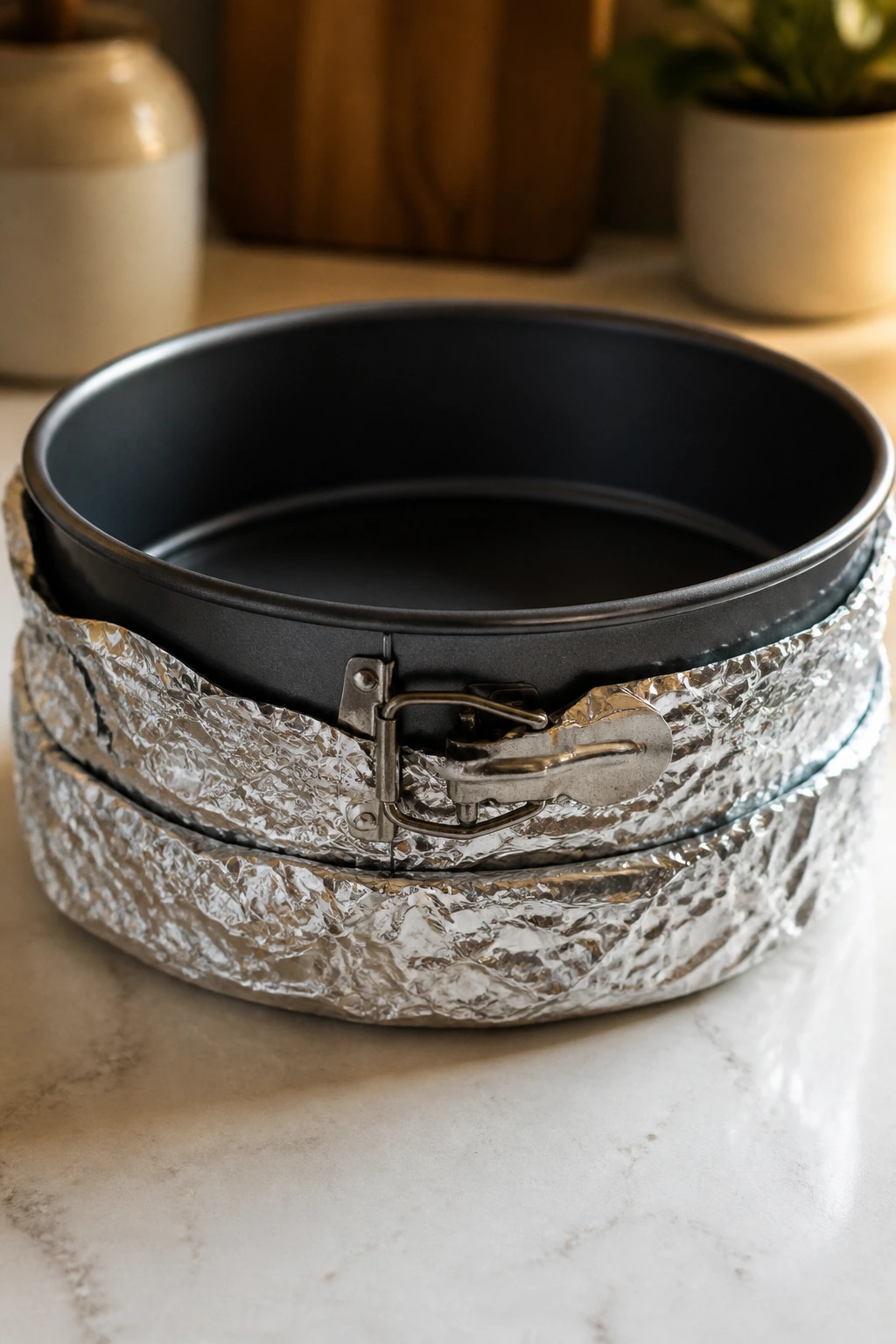
- 9-inch springform pan: The removable side makes it possible to unmold the cheesecake without tearing the crust.
- Heavy-duty aluminum foil: Wrap the pan in two layers so the water bath doesn’t sneak in and ruin the crust.
- Large roasting pan: This holds the springform and the hot water bath during baking.
- Hand mixer or stand mixer: Either one works, but a hand mixer gives you more control when the eggs go in.
- Rubber spatula: You’ll need this for scraping the bowl and folding down the batter without overbeating.
- Measuring cups and spoons: Cheesecake is less forgiving than a quick bread; rough guesses can throw off the texture.
- Fine-mesh sieve: Useful for sifting powdered sugar into the frosting if it’s clumpy.
- Wire rack: Lets the pan cool evenly instead of steaming on the counter.
- Offset spatula: Optional, but it spreads frosting across the top in smooth, clean sweeps.
Baking the Cheesecake Without Drying It Out
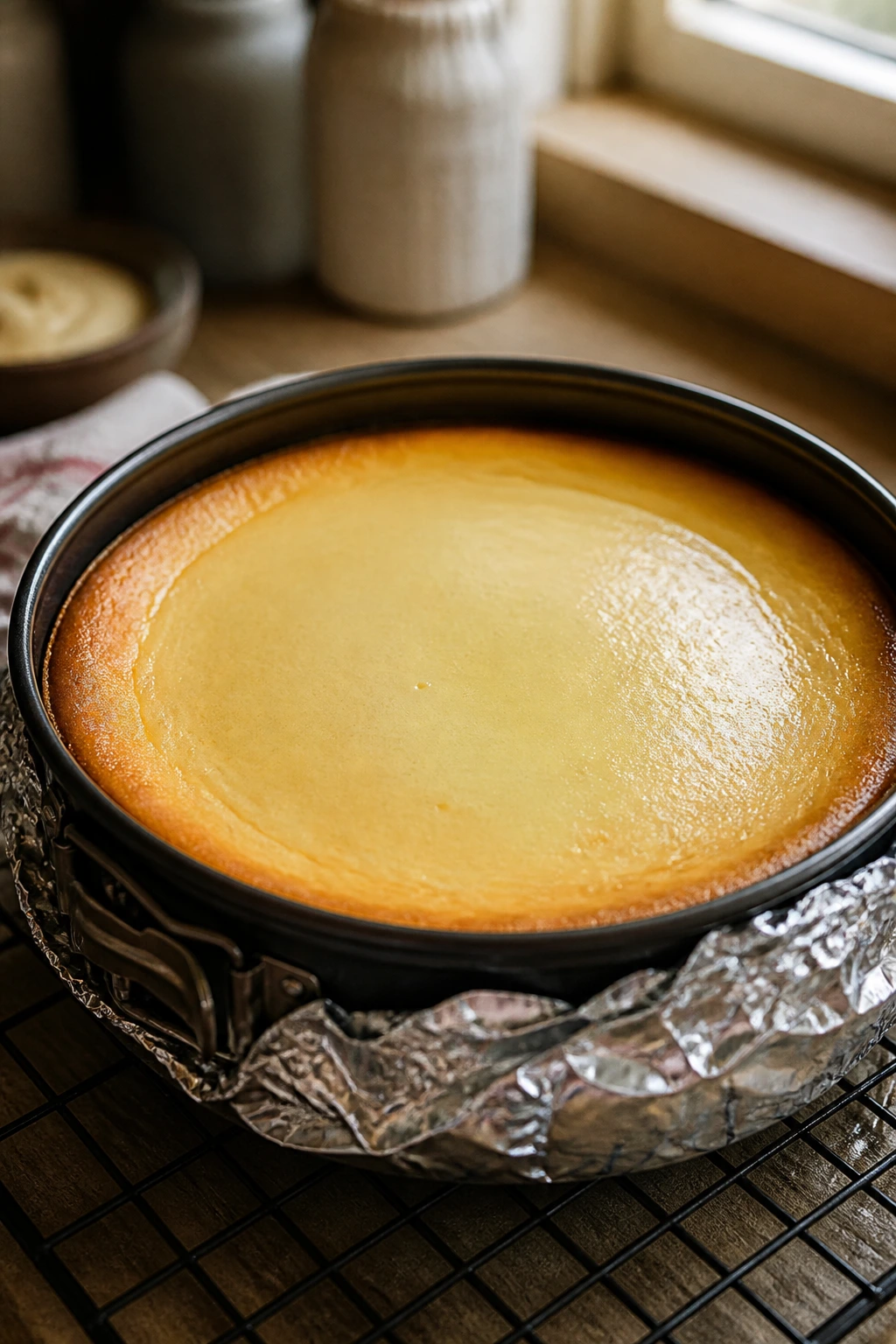
Prepare the Pan and Crust:
-
Preheat the oven to 325°F (160°C) and move a rack to the center position. Wrap the outside of a 9-inch springform pan with two wide layers of heavy-duty foil, bringing the foil up above the sides of the pan. Grease the inside lightly and line the bottom with a parchment circle.
-
Stir together the graham cracker crumbs, sugar, cinnamon, salt, and melted butter in a medium bowl until every crumb is damp. Press the mixture firmly into the bottom of the pan and about 1 inch up the sides. Bake for 10 minutes, until the crust smells toasty and looks set, then cool it on a rack while you mix the filling.
Mix the Filling:
-
Beat the softened cream cheese on medium-low speed for 1 to 2 minutes, scraping the bowl once or twice, until it looks smooth and no lumps remain. Do not rush this step. Lumps in the cream cheese almost never disappear later.
-
Add the granulated sugar, cornstarch, and salt. Beat on low speed for 30 seconds just until the mixture turns thick and glossy. The batter should look creamy, not fluffy.
-
Mix in the sour cream, heavy cream, vanilla, and lemon juice on low speed until the batter looks fully blended. Scrape the bowl again so the corners don’t hide any dense cream cheese.
-
Add the eggs one at a time, mixing on the lowest speed for 10 to 15 seconds per egg. Stop the mixer the second each egg disappears. If the batter looks airy or foamy, you’ve gone too far. A cheesecake batter should stay smooth and heavy.
Bake and Cool Slowly:
-
Pour the batter into the cooled crust and tap the pan gently on the counter once or twice to release big air bubbles. Set the springform pan inside the roasting pan, then pour in very hot water until it reaches about 1 inch up the sides of the springform.
-
Bake for 55 to 65 minutes, until the outer 2 to 3 inches look set and the center still jiggles like soft gelatin when you nudge the pan. An instant-read thermometer inserted into the center should read about 150°F (65°C). If the top starts browning too fast, tent it loosely with foil.
-
Turn off the oven, crack the door open about 2 inches, and leave the cheesecake inside for 1 hour. This slow cooldown keeps the middle from sinking and helps prevent a split top.
-
Remove the cheesecake from the water bath and set it on a wire rack. After 10 to 15 minutes, run a thin knife around the edge to release it from the pan walls, then let it cool to room temperature for 1 hour.
-
Cover the cheesecake lightly and chill it for at least 6 hours, though overnight is better. The cake should feel cold and firm before you even think about frosting it.
Make the Frosting and Finish:
-
Beat the cream cheese and butter together on medium speed for 1 to 2 minutes, until smooth and pale. Add the powdered sugar, vanilla, salt, and 1 tablespoon of heavy cream, then beat on low for a few seconds before switching to medium until the frosting looks thick and spreadable. Add the remaining cream only if the mixture feels too stiff to move across the top.
-
Remove the springform ring, set the cheesecake on a serving plate, and spread the frosting over the top in an even layer or a loose, swirled finish. Scatter the berries and lemon zest over the surface, then chill the finished cake for 30 minutes before slicing.
-
Slice with a sharp knife dipped in hot water and wiped dry between cuts. The first cut matters. Make it clean.
How the Cream Cheese Frosting Finishes the Top
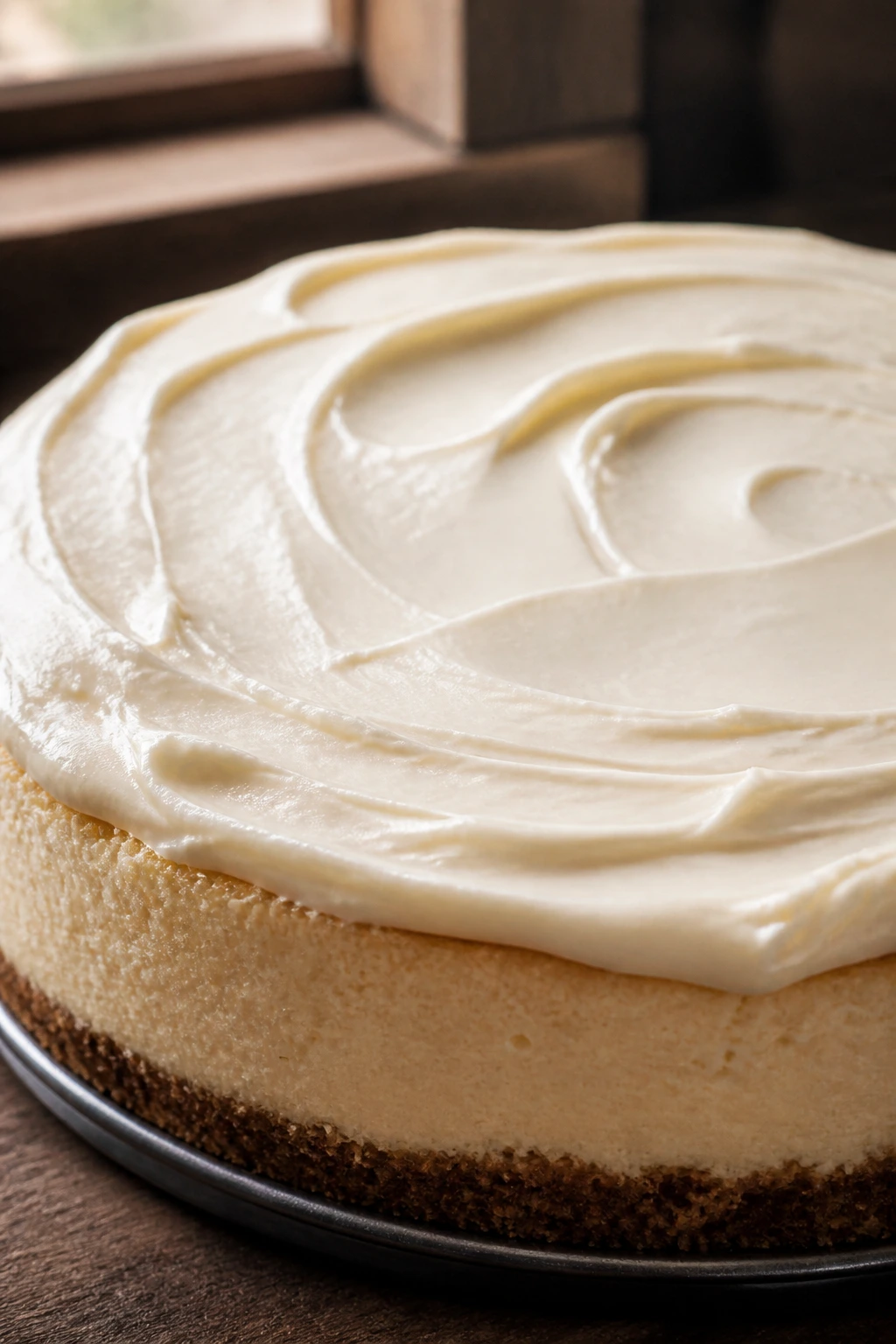
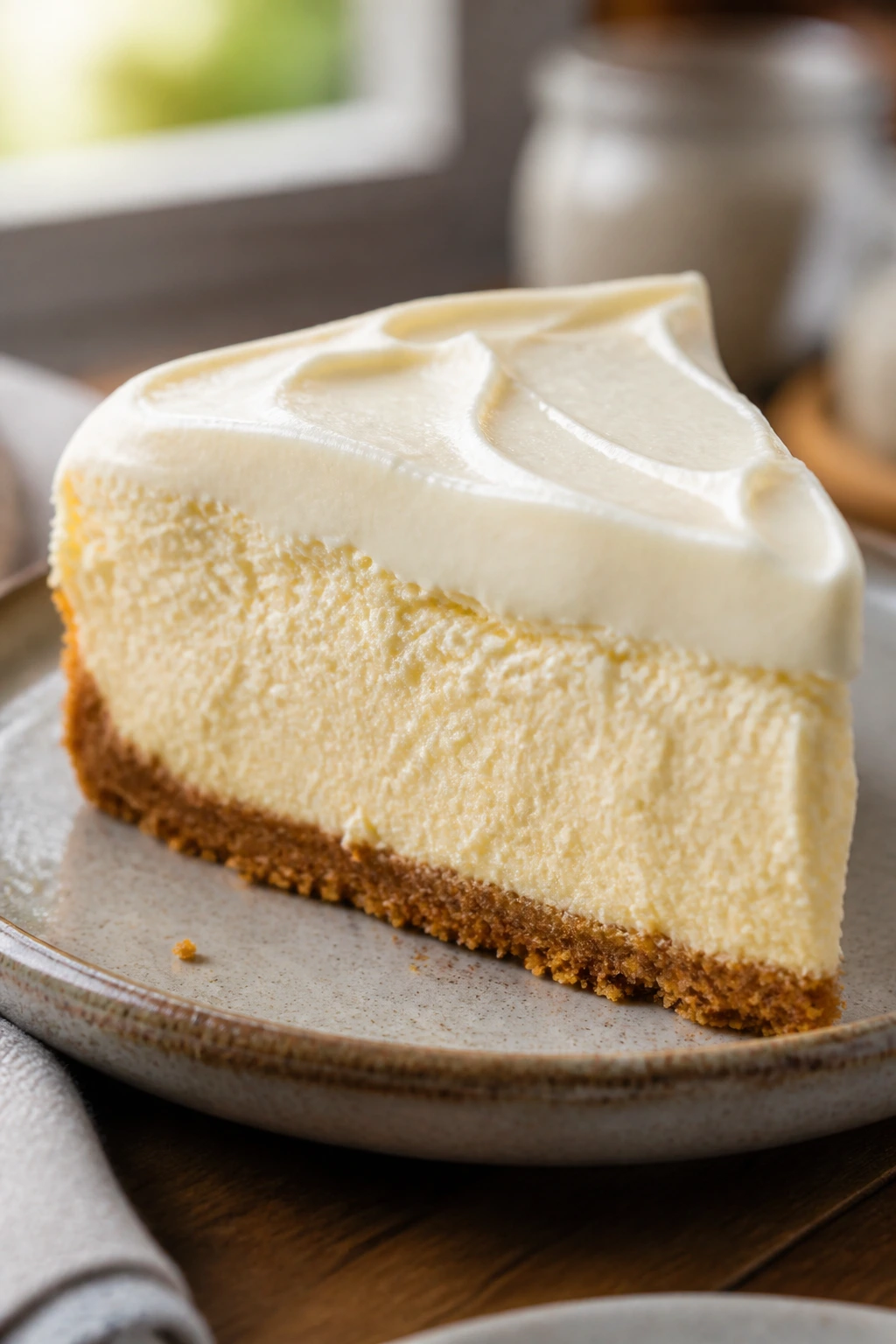
Cream cheese frosting on cheesecake sounds obvious until you taste a version where the frosting is too sweet, too soft, or too thick. Then it feels like two desserts arguing with each other. I like mine modestly sweet and tangy enough to echo the filling. It should sit on the top like a soft blanket, not a mattress.
Keep the frosting colder than the filling
If the cheesecake has had a proper chill, the frosting spreads cleaner and doesn’t melt into the surface. That cold cake gives you control. Warm cheesecake and frosting together make a greasy, sliding mess, and there’s no elegant way around that.
I prefer to frost only when the cake feels firm all the way through. If you press the center with a clean fingertip, it should feel cool and steady, not springy. That tiny detail matters more than the clock.
Beat slowly once the sugar goes in
Powdered sugar has a habit of flying everywhere if you start on high speed. More than that, high speed can make the frosting airy, which sounds nice until you try to spread it and it starts tearing. I keep the mixer low at first, then bring it up only after the sugar disappears.
The final texture should be smooth, thick, and just soft enough to pull a ridge when you drag a spatula through it. If it’s too tight, a teaspoon of cream loosens it. If it’s too loose, 10 minutes in the fridge pulls it back together.
Spread it with intention
You do not need a half-inch frosting dome unless you love a heavy slice. A thin, even layer keeps the cheesecake flavor at the center of the show. If you want a bakery look, build small swirls around the edge and leave the middle barely textured. That simple move gives the top a little lift without burying the cake under sugar.
How to Serve a Slice So It Looks Clean
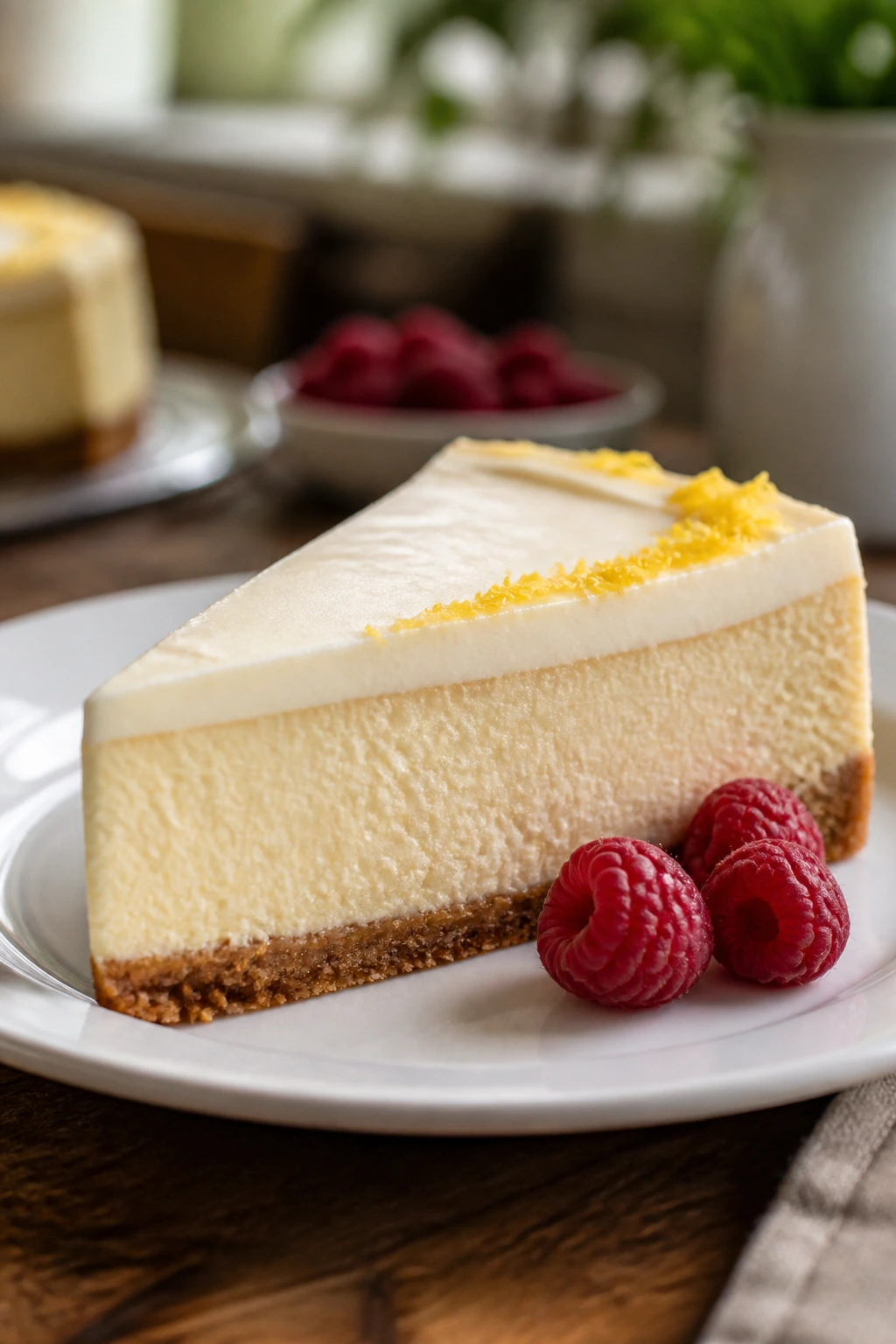
Presentation: Let the cheesecake sit out for 15 to 20 minutes before serving if you want the cleanest mouthfeel, then cut with a hot, wiped knife. A thin line of lemon zest over the frosting and a few raspberries on each plate make the pale filling and white frosting look sharper.
Accompaniments: I like serving this with fresh berries, a spoonful of raspberry sauce, or a small pile of macerated strawberries because the tart fruit cuts through the cream cheese. A plain espresso on the side does the same thing in drink form. If you want something a little softer, a dollop of unsweetened whipped cream works, but keep it small.
Portions: A 9-inch cheesecake cut into 12 slices gives generous dessert portions. If you’re serving after a heavy meal, cut it into 14 thinner wedges and use a warmed knife so the slices stay neat. This cake is rich enough that a smaller piece still feels like plenty.
Beverage Pairing: Espresso is my first pick because the bitter edge sharpens the dairy and crust. Tawny port or a small glass of dessert wine also works if you want the plate to feel more formal. For a nonalcoholic option, strong black tea with milk does the job without fighting the frosting.
Small Upgrades That Make the Slice Taste More Intentional
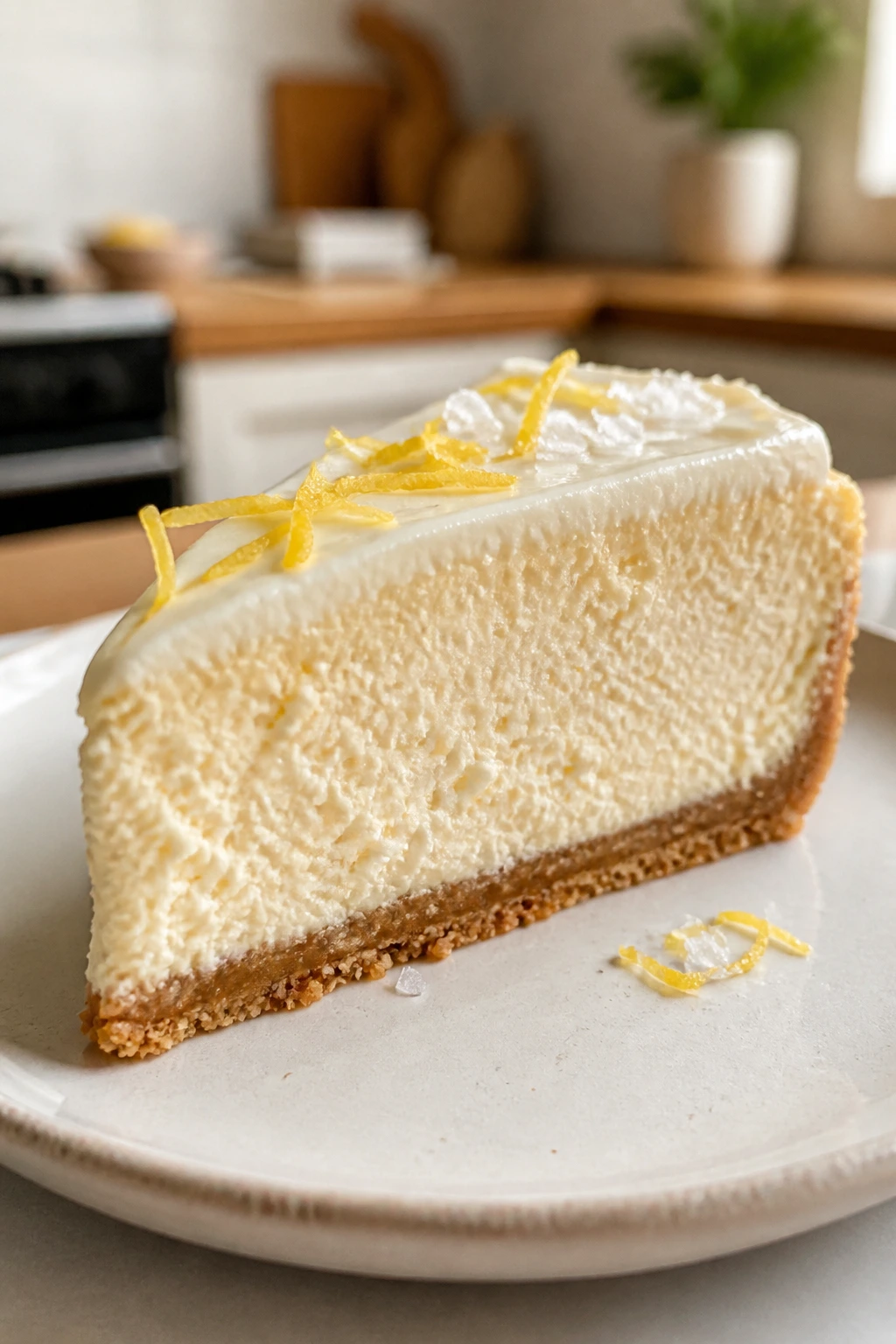
Flavor Enhancement: A teaspoon of finely grated lemon zest in the filling gives the cheesecake a brighter finish without turning it into a lemon dessert. I also like a tiny pinch of flaky salt on top of the frosting right before serving; the salt wakes up the dairy in a way sugar never does.
Customization: If you want more contrast, swirl 2 to 3 tablespoons of seedless raspberry jam over the top of the chilled cheesecake before the frosting goes on. You can also swap the graham crust for Biscoff crumbs if you like a caramel-spice note under the tangy filling.
Serving Suggestions: Toasted sliced almonds, a spoonful of blueberry compote, or a few curls of white chocolate all work as finishing touches. Use one garnish, not four. Too many toppings make the cheesecake look busy and muddy the flavor.
Make-It-Yours: For a gluten-free version, use certified gluten-free graham crumbs or a gluten-free cookie crust. For a slightly lighter sweetness, cut the frosting sugar to 2 cups and keep the rest of the recipe unchanged. For a sharper tang, replace the sour cream with full-fat Greek yogurt and expect a firmer, slightly brighter filling.
Common Mistakes That Turn Cheesecake Grainy or Dry
-
Starting with cold dairy: Cold cream cheese leaves little lumps that the mixer never fully fixes. The batter may look smooth from a distance, but the finished slice feels bumpy. Set the cream cheese, sour cream, and eggs out early so they lose their chill before you start.
-
Beating the eggs too hard: Once the eggs go in, fast mixing whips air into the batter. That air expands in the oven and shrinks on cooling, which leads to cracks and a puffy top that falls in the middle. Use the lowest speed and stop as soon as each egg disappears.
-
Baking until the center is firm: If the whole cheesecake looks set in the oven, it is already overcooked. The center should still jiggle when you gently shake the pan, and the carryover heat will finish the job during the slow cooldown.
-
Skipping the foil wrap: Water bath leaks are sneaky. One tiny gap in the foil can let water soak the crust, and then you end up with a soggy bottom that tastes like damp cracker paste. Wrap the pan in two layers of heavy-duty foil and make sure the seams sit high.
-
Frosting a warm cheesecake: Warm cheesecake and cool frosting do not stay in place together. The frosting slides, the top smears, and the finish looks messy no matter how careful you were. Chill the cake completely before you add the topping.
-
Cutting with a dull knife: A dull blade drags through the filling and smears the frosting. Warm the knife under hot water, wipe it dry, and clean it between slices. That one habit makes the dessert look bakery-neat instead of homemade in the wrong way.
Variations That Change the Flavor Without Breaking the Texture
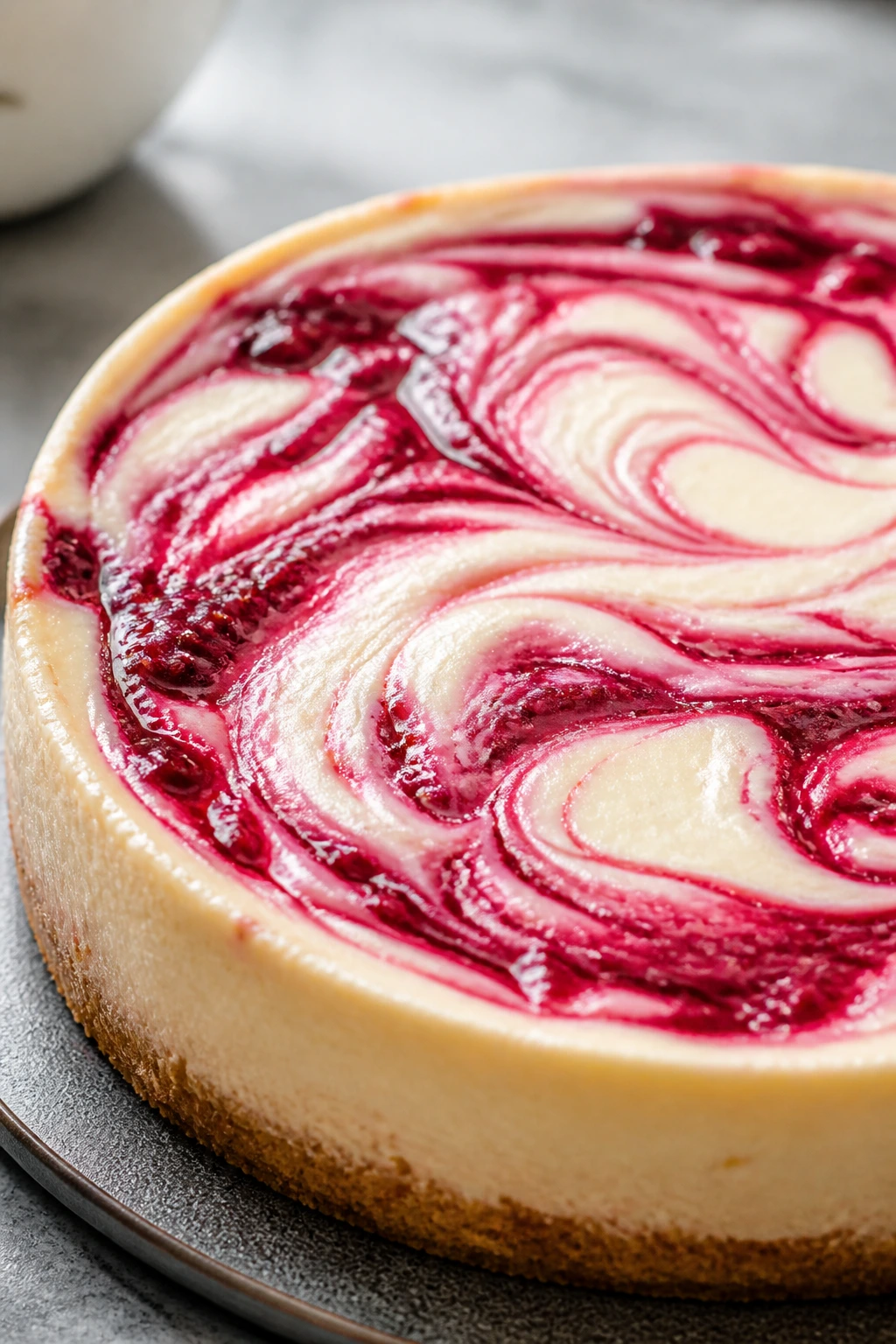
Raspberry Ribbon: Swirl 1/3 cup thick seedless raspberry jam into the batter just before it goes into the pan. The jam should be thick enough to hold streaks, not run through the batter; that keeps the cheesecake from getting patchy or watery.
Chocolate Cookie Crust: Replace the graham crackers with 24 chocolate sandwich cookies, filling removed, plus 5 tablespoons melted butter. The darker crust makes the tang of the filling stand out more, and it plays especially well if you add a few chocolate curls on top.
Lemon Brightener: Add 2 teaspoons finely grated lemon zest to the filling and another teaspoon to the frosting. This version tastes a little sharper and cleaner, which is useful if you plan to serve it after a rich meal.
Salted Caramel Crown: Drizzle 1/4 cup warm caramel sauce over each slice and finish with a few flakes of salt. I like this one for people who want the dessert to feel a little more dramatic without changing the base recipe.
Gluten-Free Almond Crust: Use 1 3/4 cups almond flour, 1/4 cup granulated sugar, 6 tablespoons melted butter, and a pinch of salt in place of the graham crust. Bake it for 8 minutes instead of 10 so it doesn’t go too dark.
Storing, Freezing, and Making It Ahead
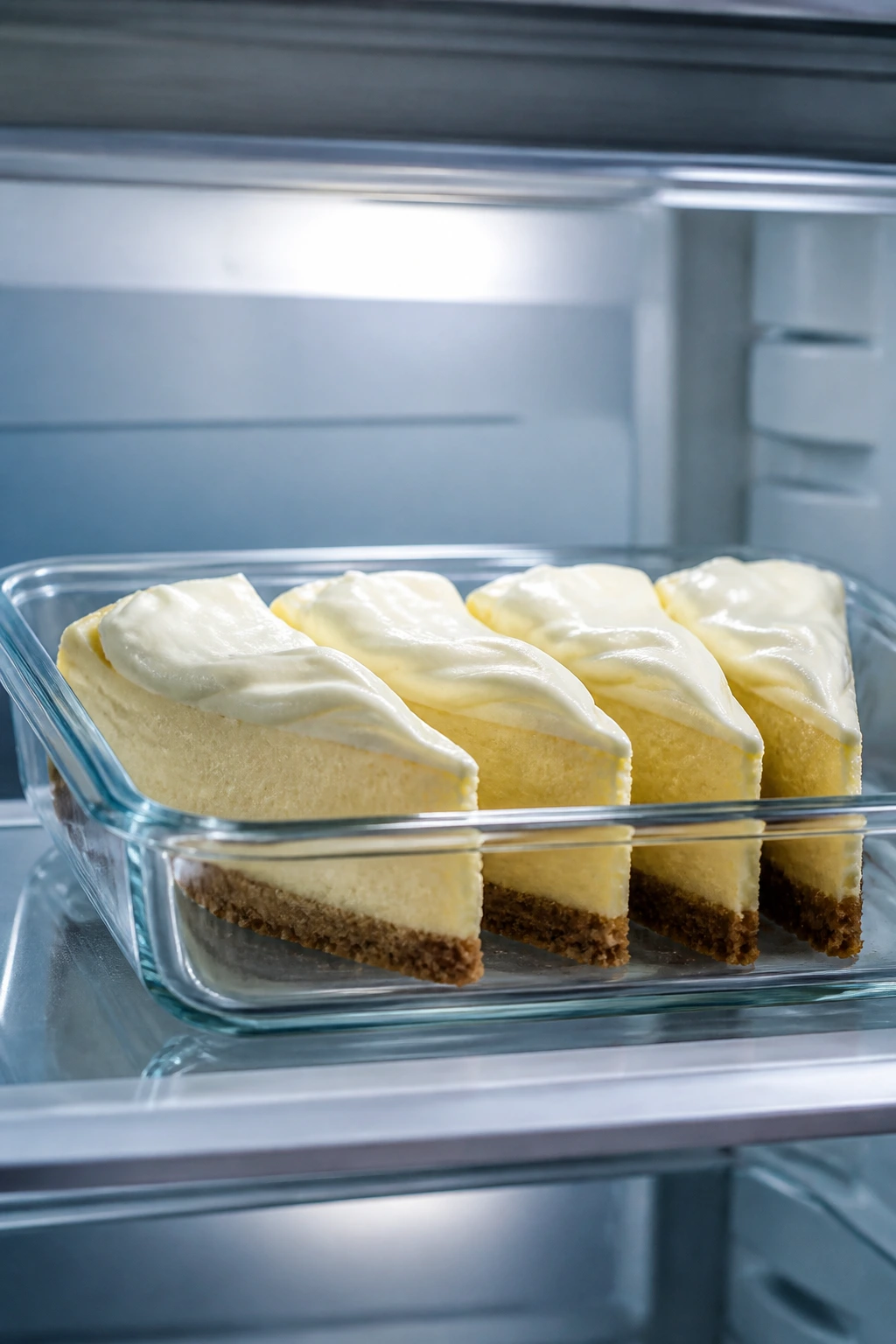
Cheesecake behaves better than most frosted desserts in the fridge, but only if you store it with some care. Once the cake is fully chilled and frosted, cover it with a cake dome or place slices in airtight containers. It keeps in the refrigerator for up to 5 days, though the crust is best in the first 3.
Room temperature is a short stop, not a destination. Leave the cheesecake out for no more than 2 hours before returning it to the fridge. Because this dessert contains dairy-rich filling and frosting, I do not like stretching that window.
Freezing works well if you plan ahead. Wrap individual slices tightly in plastic wrap, then add a layer of foil or place them in a freezer-safe container. They keep for up to 2 months with good texture. Thaw slices overnight in the refrigerator while still wrapped; that keeps condensation from beading on the frosting.
For make-ahead planning, bake the cheesecake base 1 day in advance and frost it the next day after it has chilled thoroughly. If you want to do even more ahead, the whole cake can be baked, chilled, and frosted a full day before serving. I would not frost it too far in advance if you’re adding fruit on top, because berries leak color and soften the surface. If you want the freshest look, add fruit garnish within a few hours of serving.
There isn’t a true reheating step here, and honestly, that’s part of the charm. Cheesecake wants cold, not heat. If you want to take the fridge edge off, let a slice sit on the counter for 15 to 20 minutes. A microwave will soften the frosting and turn the crust limp, which is a bad trade for a few degrees of warmth.
Cheesecake Questions People Ask Before They Bake It
Can I use low-fat cream cheese?
You can, but I wouldn’t choose it here. Low-fat cream cheese holds more water and sets softer, which can leave the filling loose and the frosting a little slippery. Full-fat block cream cheese gives the cleanest slice and the richest texture.
Do I really need a water bath?
Need? No. Want the smoothest texture and the least chance of cracks? Yes. If you skip the bath, at least place a pan of hot water on the rack below the cheesecake so the oven stays humid, and watch the top closely so it doesn’t brown too fast.
How do I know when the cheesecake is done?
The outer ring should look set, and the center should still jiggle like soft gelatin when you nudge the pan. If you have an instant-read thermometer, aim for about 150°F in the center. A cheesecake that looks fully firm in the oven is usually past its best texture.
Can I make it ahead and frost it later?
Absolutely, and that’s the smart way to do it. Bake and chill the cheesecake one day, then frost it the day you plan to serve or the night before. The cake actually slices better after an overnight chill.
What if I only have a 10-inch springform pan?
You can use it, but the cheesecake will be a little wider and slightly shorter, so it may bake 5 to 10 minutes faster. Start checking early and trust the jiggle test more than the clock. A thinner cake can go from perfect to overbaked fast.
Can I freeze the frosted cheesecake?
Yes. Freeze slices individually so you can thaw only what you need, and wrap them tightly so the frosting does not pick up freezer smells. Thaw overnight in the fridge rather than on the counter; that keeps the texture creamy instead of wet.
What if the frosting turns out too soft or too sweet?
Too soft usually means the cream cheese or butter was warmer than it should have been, or the frosting needed more powdered sugar. Chill it for 10 minutes, then beat briefly again. Too sweet is easier: add a tiny pinch more salt or a spoonful of softened cream cheese to pull the sweetness back.
The Slice Worth Waiting For
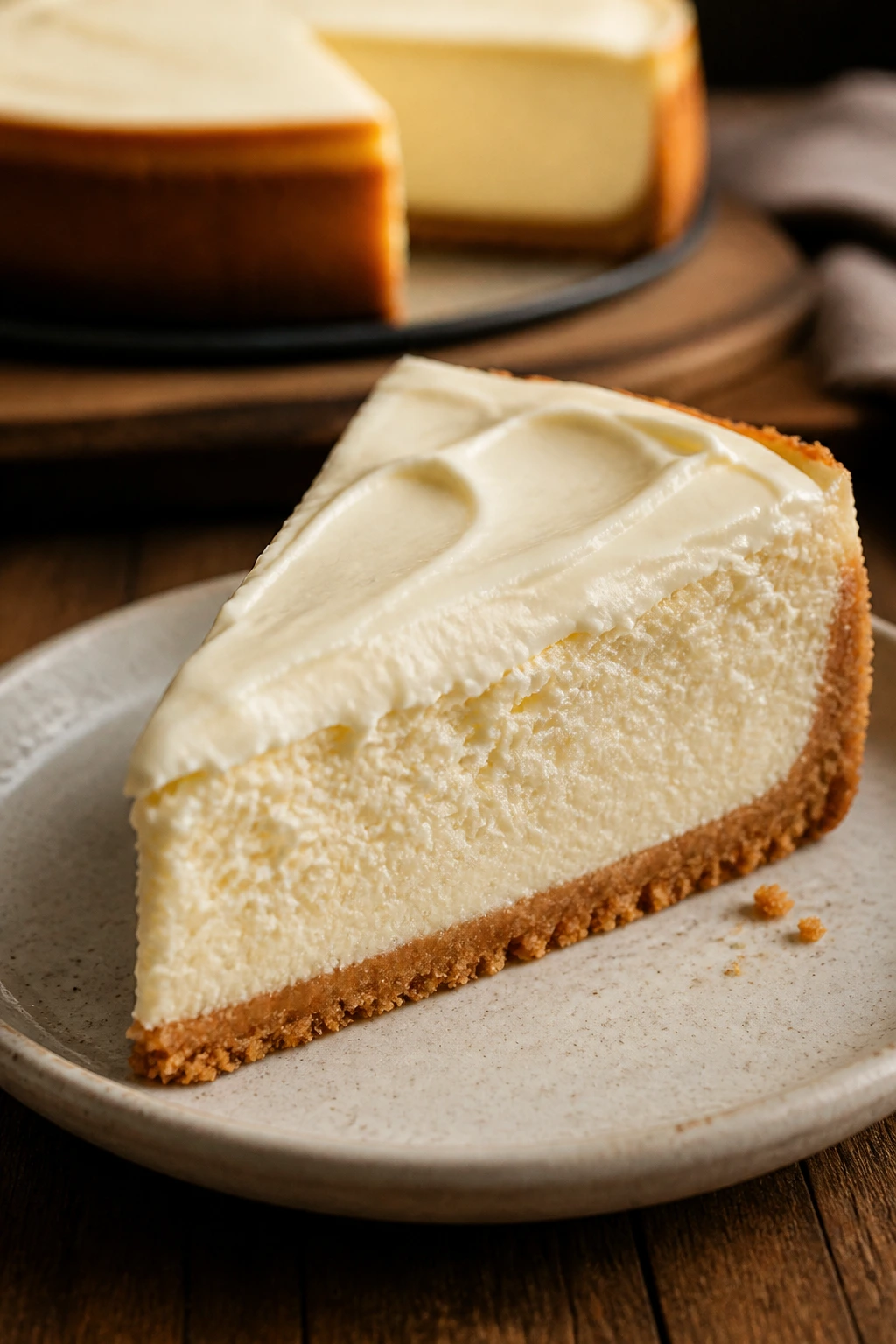
A cheesecake like this asks for time, not drama. Give it a low oven, a slow cooldown, and a long chill, and it rewards you with that soft, clean slice that holds its shape from the first cut to the last forkful. The frosting finishes it with a tangy cap instead of a sugary lid, which is exactly why the whole thing works.
If you’ve ever wanted a cheesecake that feels rich without tasting heavy, this is the one to make. Keep the batter calm, keep the oven gentle, and let the fridge do the hard part. The next time you need a dessert that looks composed on a plate and tastes even better after a night in the cold, this is the one I’d put out first.
Moist Creamy Cheesecake with Cream Cheese Frosting — Recipe Card
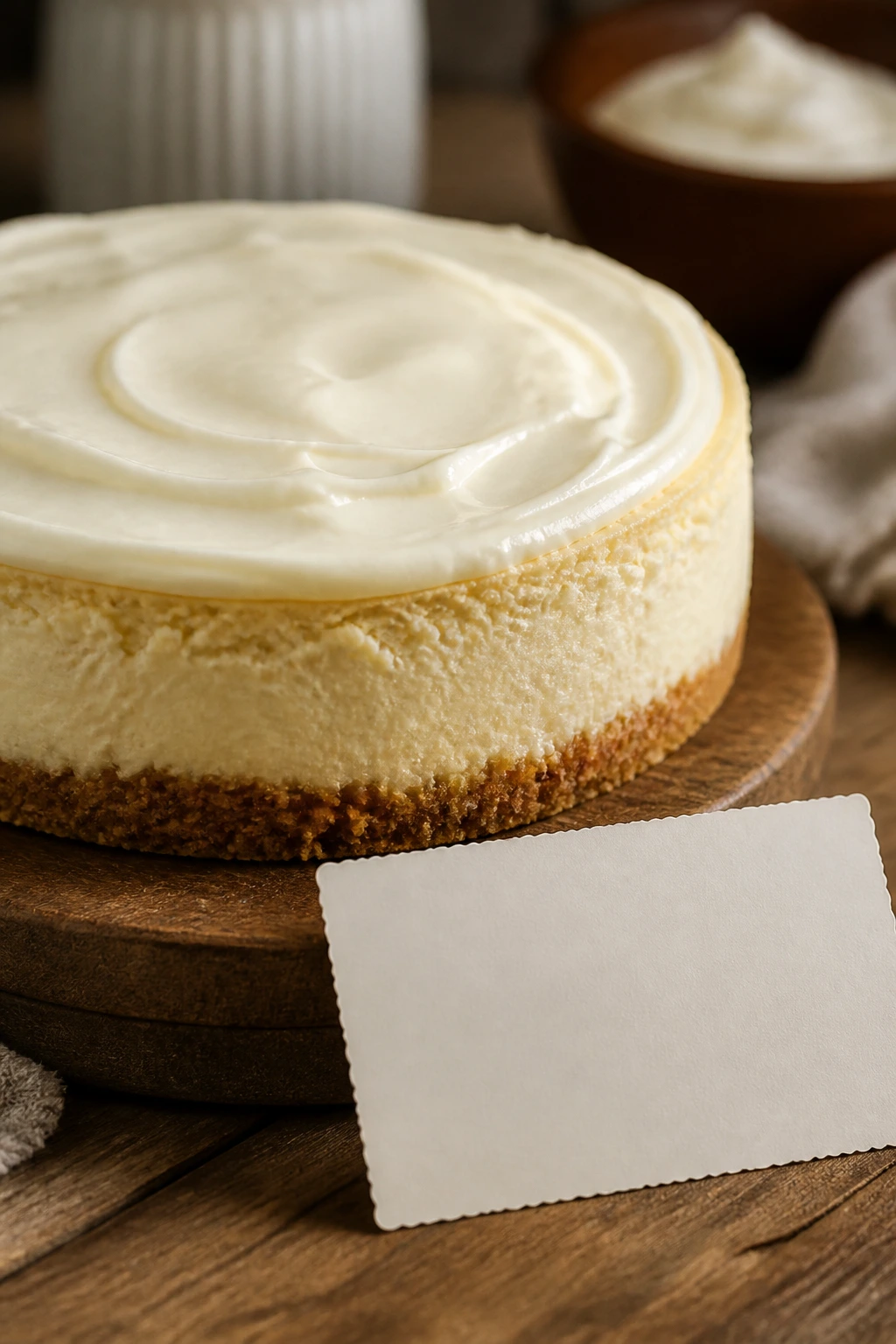
Recipe Name: Moist Creamy Cheesecake with Cream Cheese Frosting
Description: A baked vanilla cheesecake with a buttery graham crust, a smooth sour cream filling, and a tangy cream cheese frosting on top. It chills into neat slices with a cool, custardy center and a soft, creamy finish.
Prep Time: 30 minutes
Cook Time: 1 hour 5 minutes
Total Time: 1 hour 35 minutes active, plus 7 hours chilling
Course: Dessert
Cuisine: American
Servings: 12 slices
Calories: 620 kcal
Ingredients
For the Graham Cracker Crust:
- 2 cups graham cracker crumbs, from about 16 full sheets
- 3 tablespoons granulated sugar
- 1/2 teaspoon ground cinnamon
- 6 tablespoons unsalted butter, melted
- Pinch of fine sea salt
For the Cheesecake Filling:
- 4 blocks (32 ounces) full-fat cream cheese, softened to room temperature
- 1 cup granulated sugar
- 2 tablespoons cornstarch
- 1/4 teaspoon fine sea salt
- 1 cup sour cream, room temperature
- 1/4 cup heavy cream
- 2 teaspoons pure vanilla extract
- 1 tablespoon fresh lemon juice
- 3 large eggs, room temperature
For the Cream Cheese Frosting:
- 8 ounces cream cheese, softened
- 1/2 cup unsalted butter, softened
- 2 1/2 cups powdered sugar, sifted
- 1 teaspoon pure vanilla extract
- Pinch of fine sea salt
- 1 to 2 tablespoons heavy cream, only if needed
For the Finish:
- 1 cup fresh raspberries or sliced strawberries
- 1 teaspoon finely grated lemon zest, optional
Instructions
-
Preheat the oven to 325°F (160°C) and wrap a 9-inch springform pan with two layers of heavy-duty foil. Grease the inside lightly and line the bottom with parchment.
-
Mix the graham cracker crumbs, sugar, cinnamon, salt, and melted butter. Press into the pan and bake for 10 minutes. Cool slightly.
-
Beat the cream cheese until smooth, about 1 to 2 minutes.
-
Add the sugar, cornstarch, and salt. Mix on low until glossy.
-
Mix in the sour cream, heavy cream, vanilla, and lemon juice until combined.
-
Add the eggs one at a time on low speed, mixing just until each disappears.
-
Pour the filling into the crust and set the pan in a roasting pan. Add very hot water to come about 1 inch up the sides.
-
Bake for 55 to 65 minutes, until the edges are set and the center still jiggles. The center should reach about 150°F.
-
Turn off the oven, crack the door, and rest the cheesecake inside for 1 hour. Remove, cool to room temperature, then chill for at least 6 hours or overnight.
-
Beat the cream cheese, butter, powdered sugar, vanilla, salt, and cream until smooth and spreadable.
-
Remove the springform ring, spread the frosting over the chilled cheesecake, and top with berries and lemon zest.
-
Chill for 30 minutes before slicing. Use a hot, wiped knife for clean cuts.
Notes: Chill overnight for the cleanest slices. Use full-fat block cream cheese, not tub-style cream cheese. If the frosting feels too soft, chill it for 10 minutes before spreading.