



There’s a particular smell that hits the kitchen when garlic meets hot beef and soy sauce starts to bubble in the pan. Salty, a little sweet, a little sharp. Then the broccoli goes in while it still has some snap, and the whole skillet starts looking like the sort of dinner you’d normally order in a paper carton and eat standing at the counter.
This spicy Asian ground beef and broccoli version works because it keeps the parts people chase in the takeout classic and trims away the fussy bits. You don’t need to slice steak across the grain, marinate it, or baby it in a screaming-hot wok. Ground beef gives you more browned edges, more little craggy spots for sauce to cling to, and less risk of ending up with chewy strips that taste like work. I’ll take that trade every time.
The other thing this dish gets right is balance. The sauce needs salt from soy sauce, depth from oyster sauce, a little acidity from rice vinegar, and enough heat to wake up the beef without covering everything in fire. Broccoli is not there as a token vegetable. It earns its spot because those florets soak up the sauce around the edges while still keeping a firm bite at the stem if you don’t overcook them.
Get the order right and the skillet does the heavy lifting. Get the order wrong and you end up with gray beef, limp broccoli, and a sauce that tastes thin and tired. So the first job is not “cook fast.” It’s “cook in the right sequence.”
Why This Skillet Tastes Bigger Than the Ingredient List
A short ingredient list can still cook like a much bigger meal. That’s the charm here. Ground beef gives you fat, browning, and a built-in savory base before you even touch the sauce, and broccoli brings enough structure to keep each bite from turning soft or muddled.
I also like that this dish doesn’t ask you to choose between speed and flavor. The beef browns in minutes. The broccoli steams just long enough to lose its raw edge. The sauce goes glossy almost immediately once it hits the heat. There’s no waiting around, no long simmer, no odd ingredient you need to hunt down at the last minute.
The spicy part is adjustable, which matters more than people admit. A teaspoon of chili garlic sauce gives the pan a warm, steady burn. Two teaspoons push it harder. If you keep a bottle of sriracha or chili crisp around, you can steer the heat from “barely there” to “wake the table up” without changing the whole recipe.
And the real payoff is texture. Ground beef soaks up the sauce in a way sliced beef never quite does. Every crumble gets coated. Every broccoli floret ends up with that shiny edge you want. It’s a small thing. It changes everything.
Why You’ll Keep Coming Back to It
Fast enough for a weeknight: The entire dish lands on the table in about 30 minutes, and most of that is just the browning and steaming you’d be doing anyway.
The sauce actually sticks: Cornstarch gives the pan a light glaze instead of a watery puddle at the bottom of the skillet.
Broccoli keeps some bite: A short covered steam leaves the florets bright green and crisp-tender instead of dull and mushy.
The heat is easy to tune: Chili garlic sauce, sriracha, or chili crisp all work, so you can make it mild for kids or punchy for people who like a little burn.
Leftovers hold up well: The beef reheats without turning dry, and the sauce loosens back up with a splash of water in the pan.
Timing, Yield, and the Shape of the Finished Pan
A skillet dinner lives or dies by timing. This one is forgiving if you stay nearby, which is my favorite kind of weeknight food. The beef browns, the broccoli softens just enough, and the sauce thickens in a narrow window that is easy to miss if you wander off to answer a text or unload the dishwasher.
Yield: Serves 4
Prep Time: 15 minutes
Cook Time: 15 minutes
Total Time: 30 minutes
Difficulty: Beginner — the steps are straightforward, but you do need to keep an eye on heat, broccoli tenderness, and sauce thickness.
Best Served: Hot from the skillet over rice or noodles, while the sauce is still glossy and the broccoli is bright.
If you like your broccoli with more resistance, keep the steam short. If you want it softer, give it another 30 seconds under the lid. Small adjustments matter here. The difference between crisp-tender and limp is about a minute, maybe less.
What Goes Into the Skillet
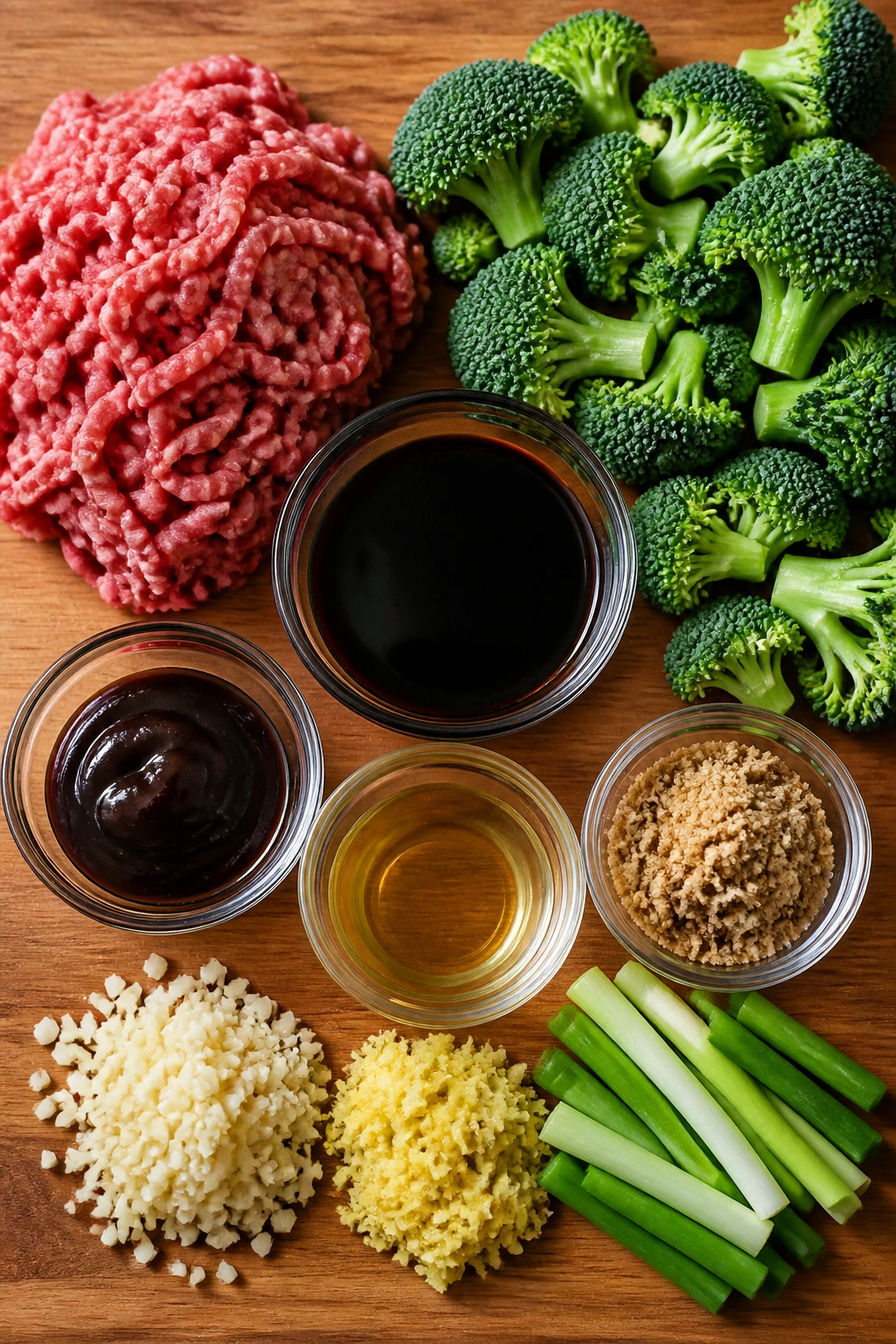
The ingredient list is short on purpose. You don’t need a pantry raid. You need a few things that know how to pull their weight, and you need them measured with enough care that the sauce tastes sharp rather than muddy.
For the Sauce
- 1/4 cup low-sodium soy sauce
- 2 tablespoons oyster sauce
- 1 tablespoon rice vinegar
- 1 tablespoon packed light brown sugar
- 1 teaspoon toasted sesame oil
- 1 teaspoon cornstarch
- 1/4 cup water or low-sodium beef broth
- 1 to 2 teaspoons chili garlic sauce or sriracha, depending on how much heat you want
For the Stir-Fry
- 1 tablespoon neutral oil, such as avocado, canola, or grapeseed, if your beef is lean
- 1 pound ground beef, preferably 85/15
- 4 cups broccoli florets, cut into small bite-size pieces
- 3 cloves garlic, minced
- 1 tablespoon fresh ginger, grated
- 4 scallions, thinly sliced, whites and greens separated
- 1/4 teaspoon black pepper
For Garnish
- 1 tablespoon toasted sesame seeds, optional
The only ingredient here that people sometimes shrug at is the oyster sauce, and that’s usually the one they miss most when it’s gone. It adds depth and a round, savory edge that soy sauce alone does not give you.
Why Each Ingredient Matters Once It Hits the Pan
Ground Beef
What to use: 1 pound ground beef, ideally 85/15, which gives you enough fat for flavor without turning the skillet greasy.
Preparation: Break the beef into larger pieces first, then into smaller crumbles as it browns. You want browned edges, not baby-food granules.
Substitutions: Ground turkey or ground chicken can work, though both need a little more oil and a more careful hand with seasoning. Crumbled tofu will also work if you want a meatless version, but the texture changes the whole dish.
Tips: If the beef releases more than a couple tablespoons of fat, spoon some off before you add the broccoli. Too much fat makes the sauce slide off instead of coating.
Broccoli
What to use: 4 cups broccoli florets, which is usually one large head once you trim the thick stalk and cut the crown into small pieces.
Preparation: Cut the florets smaller than you think you should. Big florets take longer to soften, and by the time the stems are cooked, the tops can turn drab and overdone.
Substitutions: Broccolini, cauliflower florets, snap peas, or even green beans can step in if broccoli isn’t what you have. Broccolini cooks a little faster, so shorten the steam.
Tips: If you’re using frozen broccoli, thaw it first and dry it well. Wet frozen broccoli dumps extra water into the pan and washes out the sauce.
The Sauce
What to use: Soy sauce, oyster sauce, rice vinegar, brown sugar, sesame oil, cornstarch, water or broth, and chili garlic sauce.
Preparation: Whisk until the cornstarch disappears and the sugar breaks up. A few tiny grains are fine; clumps are not.
Substitutions: Tamari can replace soy sauce for a gluten-free version. Hoisin can stand in for oyster sauce in a pinch, though it leans sweeter and less deep.
Tips: Taste the sauce before it goes into the skillet. You want it salty and a little aggressive in the bowl, because the beef and broccoli dilute it slightly once everything is in the pan.
Aromatics and Finish
What to use: 3 cloves garlic, 1 tablespoon grated ginger, 4 scallions, and a little toasted sesame oil already built into the sauce.
Preparation: Mince the garlic finely and grate the ginger so it melts into the pan instead of sitting in sharp little chunks. Separate the scallion whites from the greens so you can cook one and finish with the other.
Substitutions: Shallots can replace scallion whites, and a tiny spoonful of garlic paste can stand in for fresh garlic if needed. Ginger paste works too, though fresh ginger has a cleaner edge.
Tips: Garlic burns fast. It should go into the pan late enough that the beef and broccoli are already mostly cooked, or you’ll end up with bitterness tucked into the sauce.
The Tools That Make This Faster and Cleaner
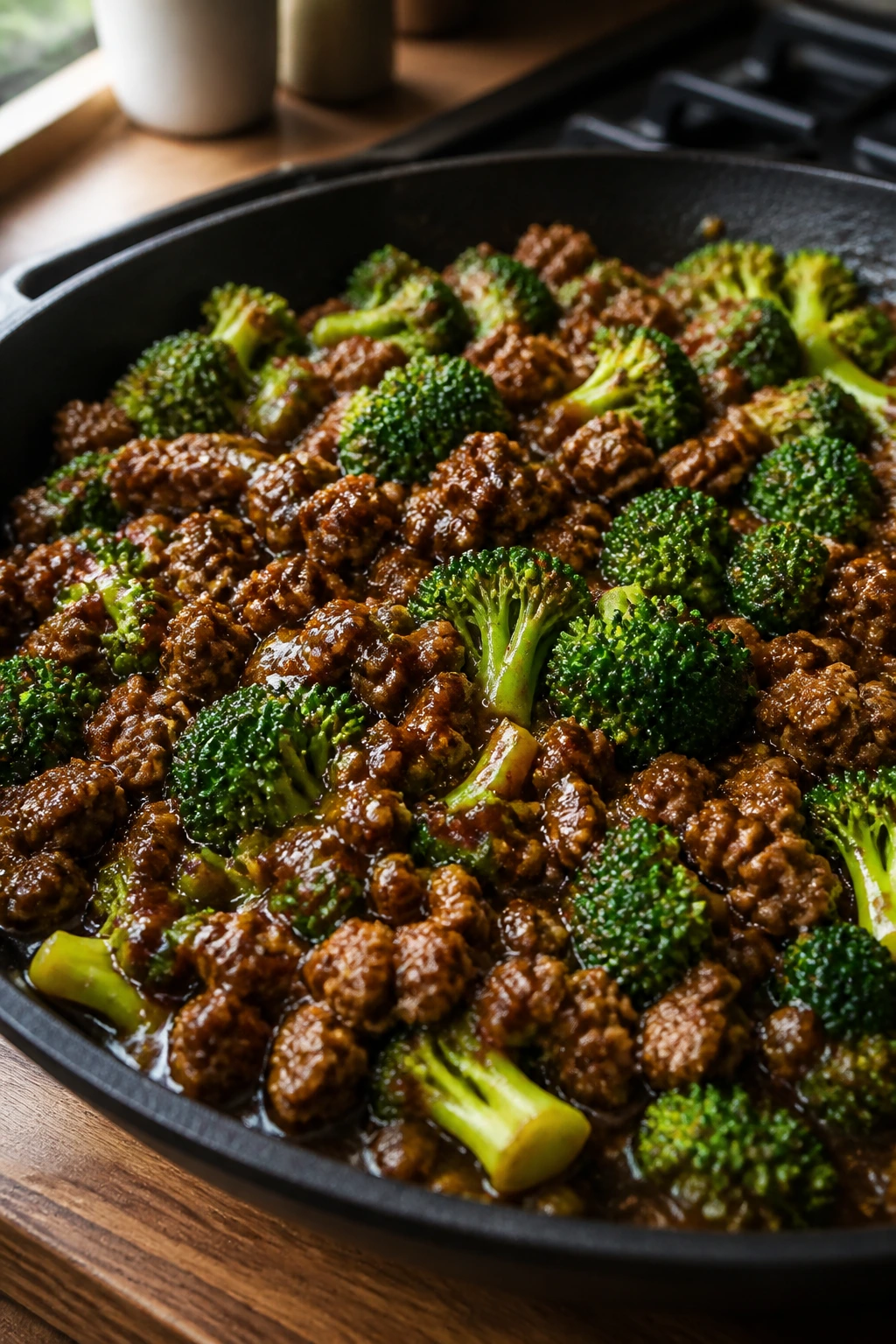
You do not need a lot of gear for this one. That’s part of the appeal. A good skillet and a few small tools will carry the whole thing, and if you already own a lid that fits, you’re halfway home.
- 12-inch skillet or wok — A wide surface helps the beef brown instead of steaming, and it gives the broccoli room to move.
- Tight-fitting lid — Needed to steam the broccoli quickly; if your skillet lid is missing, foil can work in a pinch.
- Small mixing bowl — Use this for the sauce so the cornstarch dissolves before it hits the heat.
- Whisk or fork — A whisk gives the smoothest sauce, but a fork will do the job if you press out any cornstarch clumps.
- Wooden spoon or heatproof spatula — Best for breaking up the beef and tossing the broccoli without scraping the pan rough.
- Microplane or fine grater — Makes the ginger melt into the sauce instead of sitting in stringy bits.
- Measuring spoons and cups — The sauce is not the place to eyeball everything.
- Instant-read thermometer, optional — Handy if you want to check the beef for 160°F without guessing.
I like a skillet here more than a wok if I’m cooking for four. A wok is fine, but a wide pan gives the beef more surface contact, which means better browning and less gray meat clinging to itself in one damp pile.
The Exact Way to Cook the Beef, Broccoli, and Sauce
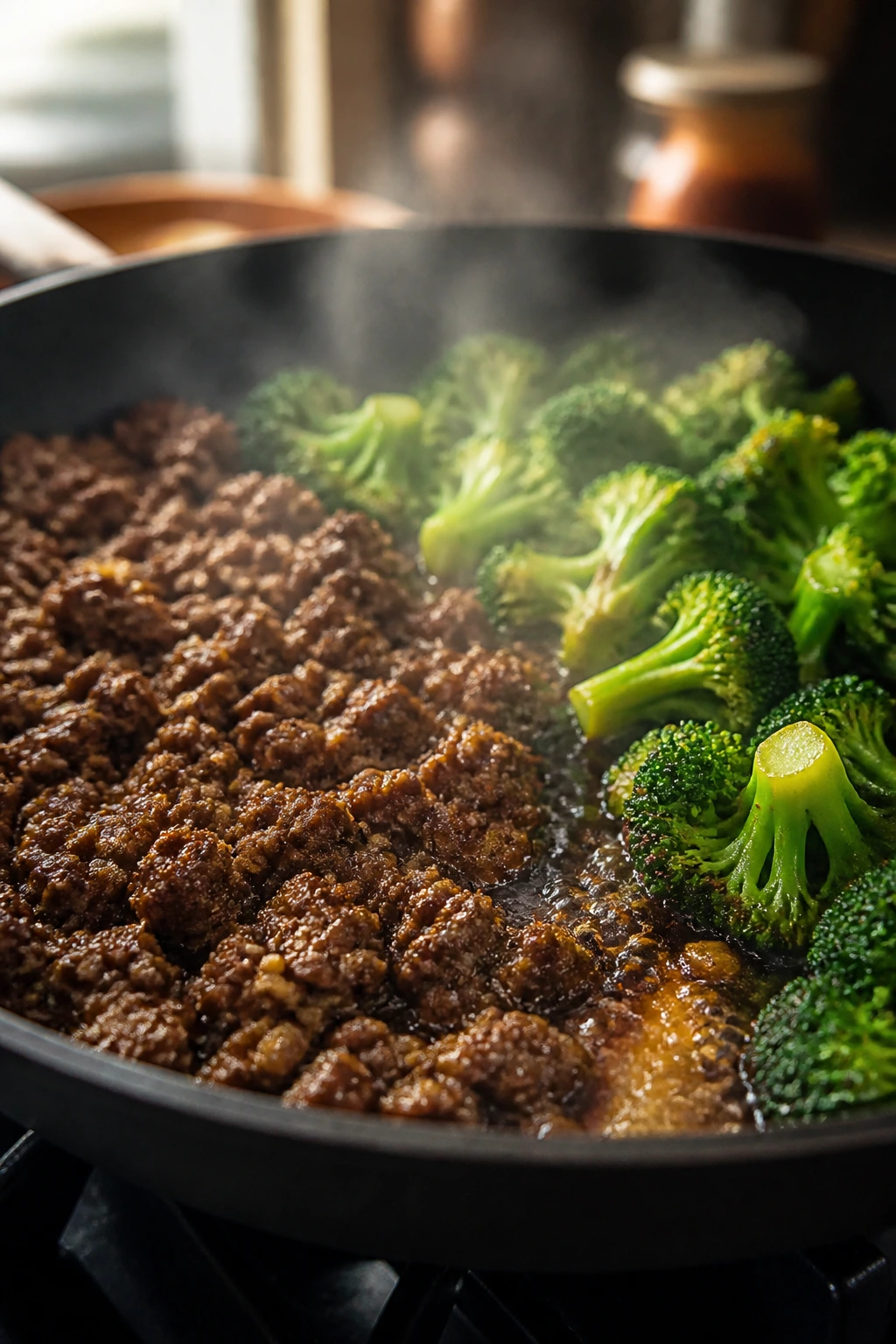
If you’ve ever had a stir-fry come out dull, the issue was usually not the ingredients. It was the order. Beef first. Broccoli second. Garlic and ginger late. Sauce at the end. That sequence keeps the aromatics from burning and the vegetables from collapsing into soft little piles.
Make the Sauce
-
In a small bowl, whisk together the soy sauce, oyster sauce, rice vinegar, brown sugar, sesame oil, cornstarch, water or broth, and chili garlic sauce until the cornstarch dissolves and the mixture looks smooth.
-
Set the bowl beside the stove before you turn on the heat. Once the beef is browned, the rest moves fast.
Brown the Beef and Steam the Broccoli
-
Heat a 12-inch skillet or wok over medium-high heat. If your beef is lean, add the neutral oil and swirl it around the pan.
-
Add the ground beef and cook for 5 to 7 minutes, breaking it into small crumbles with a spatula, until it loses its pink color and picks up browned edges. If the beef gives off a lot of fat, spoon off all but about 1 tablespoon.
-
Add the broccoli florets and 2 to 3 tablespoons of water. Cover the skillet and cook for 2 to 3 minutes, just until the broccoli turns bright green and the stems are crisp-tender. Do not let the florets go soft; they keep cooking later.
Finish the Pan
-
Uncover the skillet and add the garlic, ginger, scallion whites, and black pepper. Stir constantly for 30 to 45 seconds, until the aromatics smell sweet and sharp instead of raw. If the garlic starts to brown hard, you waited too long.
-
Give the sauce a quick whisk again, then pour it into the skillet. Toss everything for 1 to 2 minutes, until the sauce bubbles and turns glossy, coating the beef and broccoli in a thin shiny layer.
-
Turn off the heat and stir in the scallion greens. Taste and adjust only if needed. If the sauce feels too thick, add a tablespoon of water. If it tastes flat, a tiny splash of rice vinegar wakes it back up.
-
Serve immediately over rice or noodles while the broccoli is still green and the beef still looks freshly glazed.
A note on doneness: ground beef should reach 160°F in the center if you’re using a thermometer. That’s the safe finish line. If you’re going by sight, make sure there’s no pink left in the crumbles and the juices run clear.
How to Plate It So the Sauce Stays Glossy
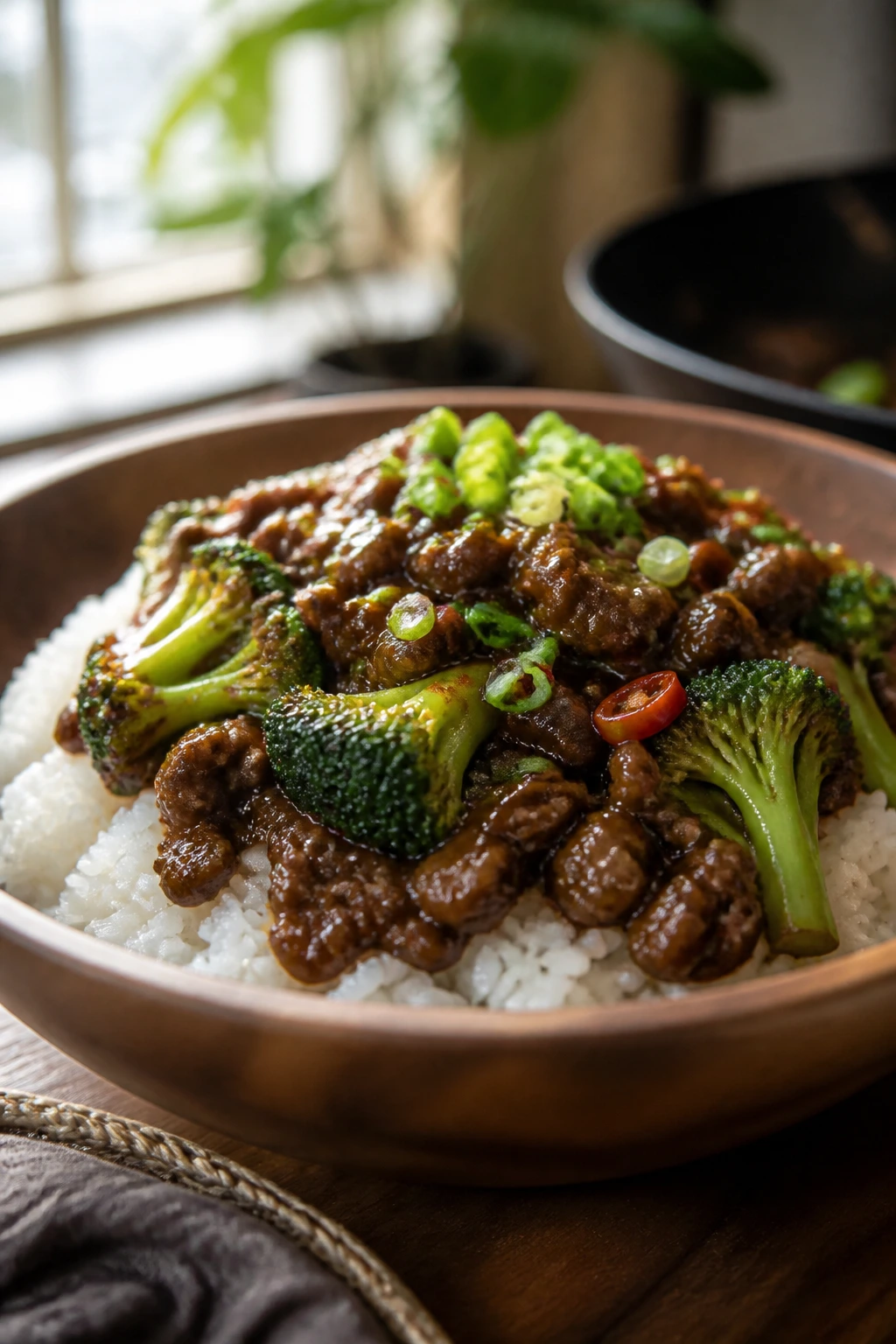
Presentation: Spoon the beef and broccoli over a mound of hot jasmine rice so the sauce runs through the grains instead of disappearing under the meat. I like to finish with the scallion greens and sesame seeds right at the end, because the green bits and pale seeds make the bowl look fresh even if you made it on a tired Tuesday.
Accompaniments: Steamed rice is the obvious partner, but rice noodles, soba, or even a pile of stir-fried mushrooms all work. If you want something cold on the side, a quick cucumber salad with rice vinegar and a pinch of sugar cuts through the richness without asking much of you.
Portions: Four servings is the honest answer for this pan if you’re serving it over rice. If you’re feeding very hungry people, stretch it with extra broccoli or a second batch of rice rather than pretending a pound of beef will feed six adults without help.
Beverage Pairing: Cold jasmine tea is clean and makes sense here. If you want something with more bite, a crisp lager or a dry sparkling water with lime both do the job without fighting the sauce.
The one plating move I wouldn’t skip is keeping the rice hot. Lukewarm rice makes the whole dish feel flatter, even when the sauce is right. A bowl of steam under a glossy stir-fry changes the whole first bite.
Small Changes That Lift the Whole Bowl
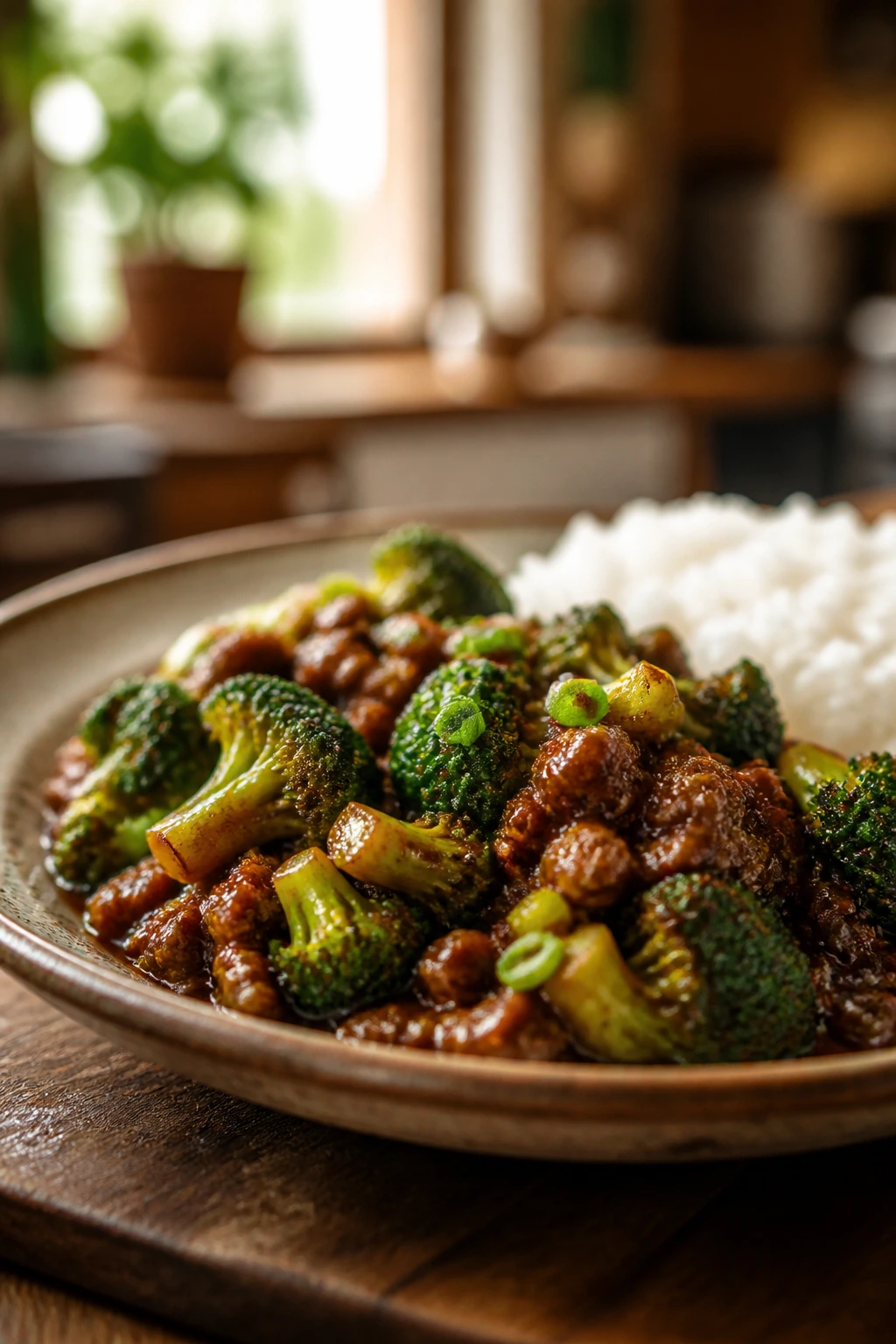
Flavor Enhancement: A spoonful of chili crisp at the table adds crunch, heat, and a little garlic oil that makes the finished bowl taste louder without changing the recipe underneath. If you like a deeper savory note, a few drops of fish sauce in the sauce bowl will do more than another pinch of salt ever will.
Customization: Toss in 6 ounces of sliced mushrooms with the beef if you want the pan to feel fuller without using more meat. Snap peas, thin-sliced bell pepper, or shredded carrots can go in with the broccoli if you want more color and a little extra sweetness.
Serving Suggestions: I like sliced scallions, sesame seeds, and a tiny squeeze of lime over the top. Lime is not traditional in every version of this dish, but the acid can wake up the soy and sesame in a way that feels brighter than vinegar alone.
Make-It-Yours: For a gluten-free plate, use tamari instead of soy sauce and choose a gluten-free oyster sauce or mushroom stir-fry sauce. For a lower-carb bowl, spoon everything over cauliflower rice and keep the sauce amount the same; the cauliflower takes on the glaze nicely.
A small personal preference: I almost always keep the heat somewhere between warm and sharp rather than painfully hot. The beef and broccoli have more to say when the spice doesn’t steamroll them.
Mistakes That Flatten the Flavor
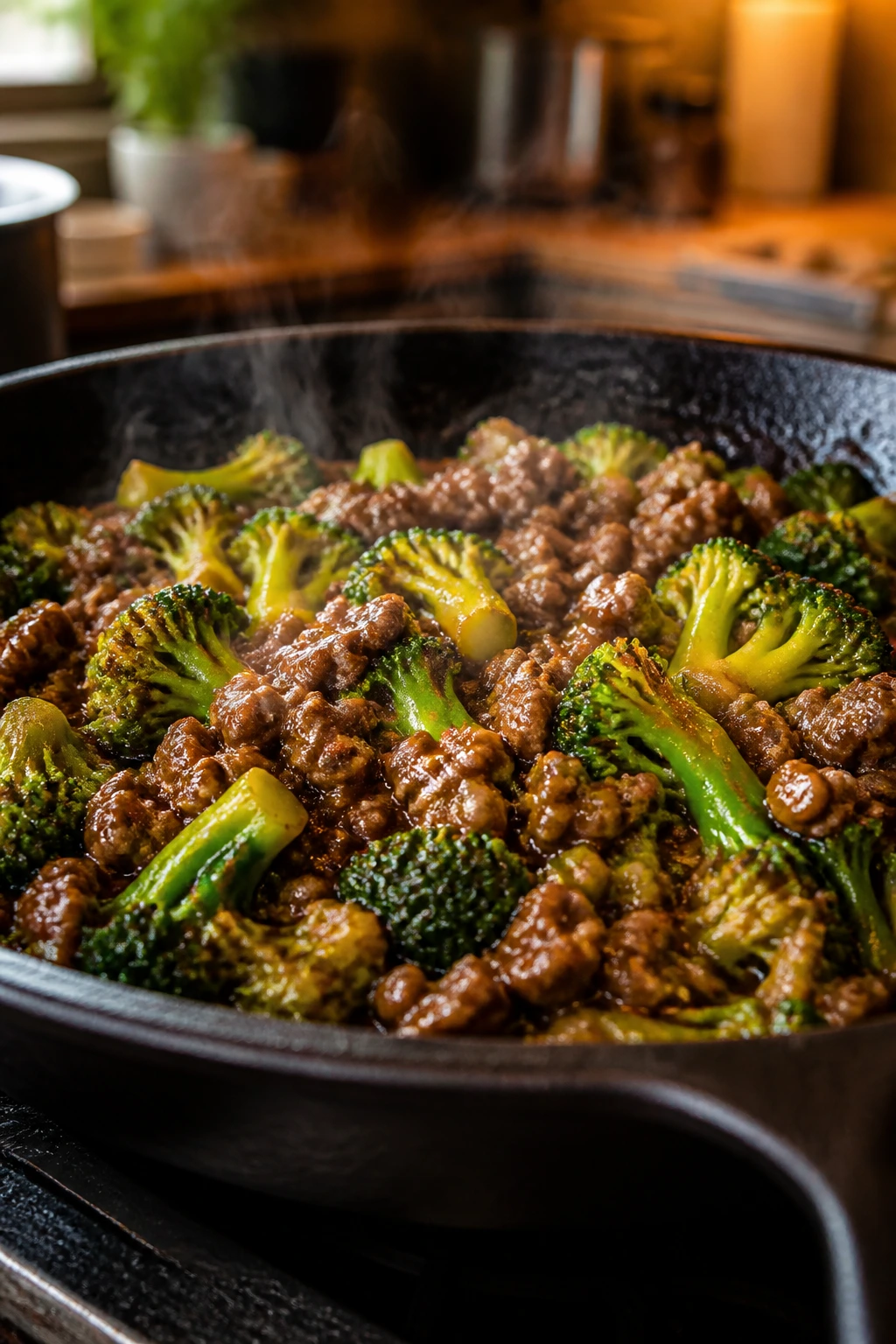
-
Crowding the skillet — If the beef goes in too tightly, it steams instead of browning, and the whole dish tastes gray. Use a 12-inch skillet and keep the meat in a single layer as much as possible.
-
Cooking the broccoli until it slumps — Overcooked broccoli turns olive-green, soft, and strangely loud in the wrong way. Steam it just until the stems are barely tender; it will finish in the sauce.
-
Adding garlic too early — Garlic on direct heat burns fast and turns bitter, which drags the whole pan down. Put it in after the beef is browned and the broccoli is nearly done.
-
Skipping the whisk on the sauce — Cornstarch settles fast. If you pour the sauce in without whisking, you can get little starchy blobs instead of a smooth glaze.
-
Using very lean beef without any fat — Extra-lean beef can taste dry and chalky in a quick skillet. If you use it, add the tablespoon of oil and watch the pan so it stays moist enough to brown.
-
Letting the sauce sit too long before cooking — Cornstarch thickens as it rests. If the sauce has sat for 20 minutes, whisk it again before it hits the skillet or it may cook unevenly.
The biggest fix is patience in the right places. Brown the beef. Steam the broccoli briefly. Add garlic late. Pour the sauce only when the pan is ready. That rhythm is doing most of the work here.
Variations That Fit Different Tastes
-
Chili Crisp Kick
Stir 1 to 2 tablespoons of chili crisp into the finished pan or drizzle it on top at the table. This gives you crunchy heat and a little garlic oil without changing the base recipe. -
Tamari Bowl
Swap the soy sauce for tamari and use a gluten-free oyster sauce or mushroom stir-fry sauce. The flavor stays deep and savory, and the sauce thickens the same way. -
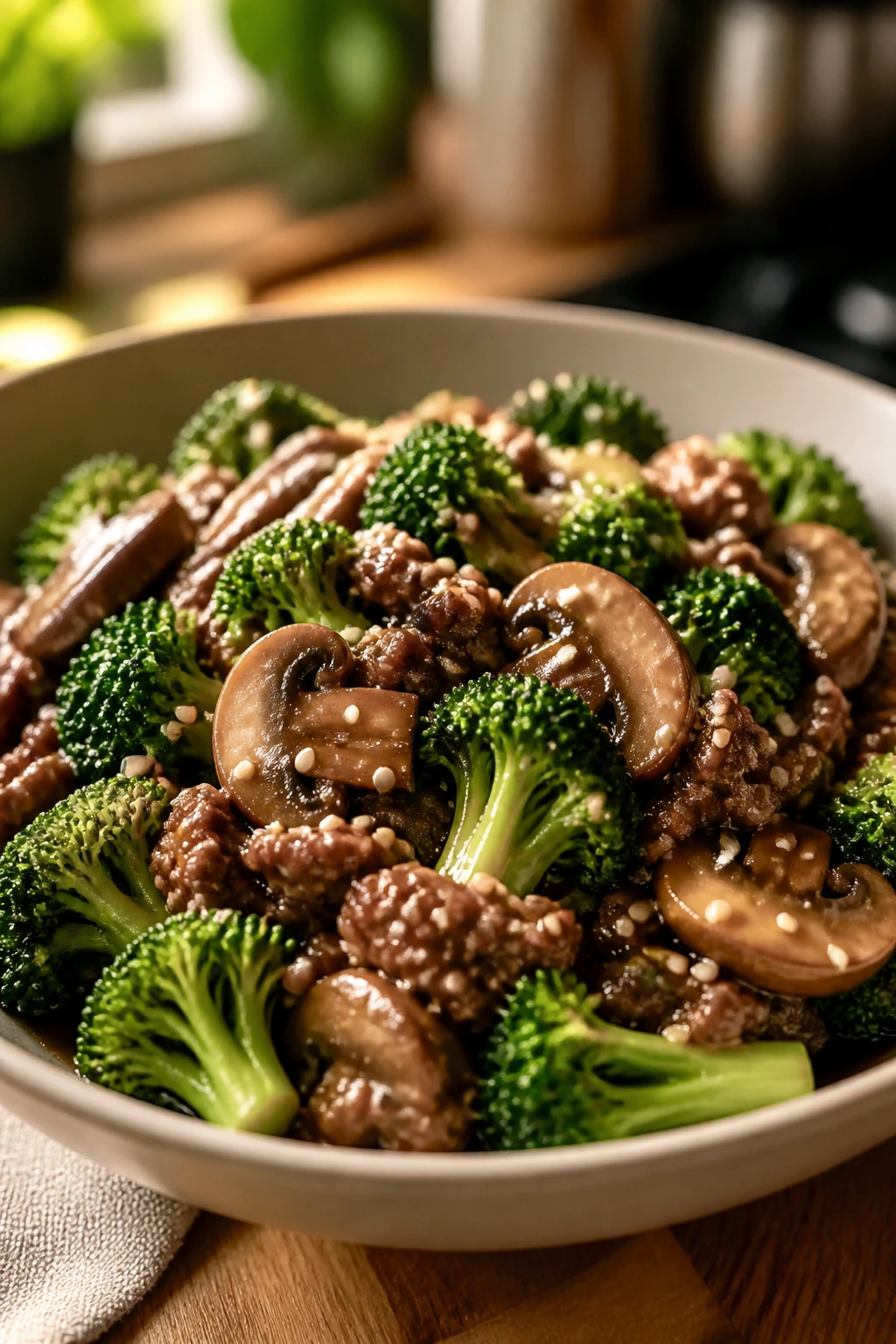
Mushroom Stretch
Add 6 to 8 ounces of sliced cremini mushrooms when the beef goes in. They soak up the sauce and make the dish feel fuller without needing another pound of meat. -
Lower-Carb Lettuce Cups
Serve the beef and broccoli in butter lettuce leaves instead of over rice. I’d cut the brown sugar back to 2 teaspoons here so the filling stays sharp and not overly sweet. -
Sweet-Savory Drift
Replace the oyster sauce with hoisin sauce and increase the brown sugar to 2 teaspoons if you want a sweeter, stickier finish. It moves the dish closer to takeout-style comfort food than strict stir-fry territory. -
Milder Family Version
Skip the chili garlic sauce and finish with a tiny drizzle of sesame oil plus extra scallions. The pan still tastes complete, just less fiery.
I like that every version still feels like the same dinner. You can bend the flavor without losing the structure.
Make-Ahead, Storage, and Reheating
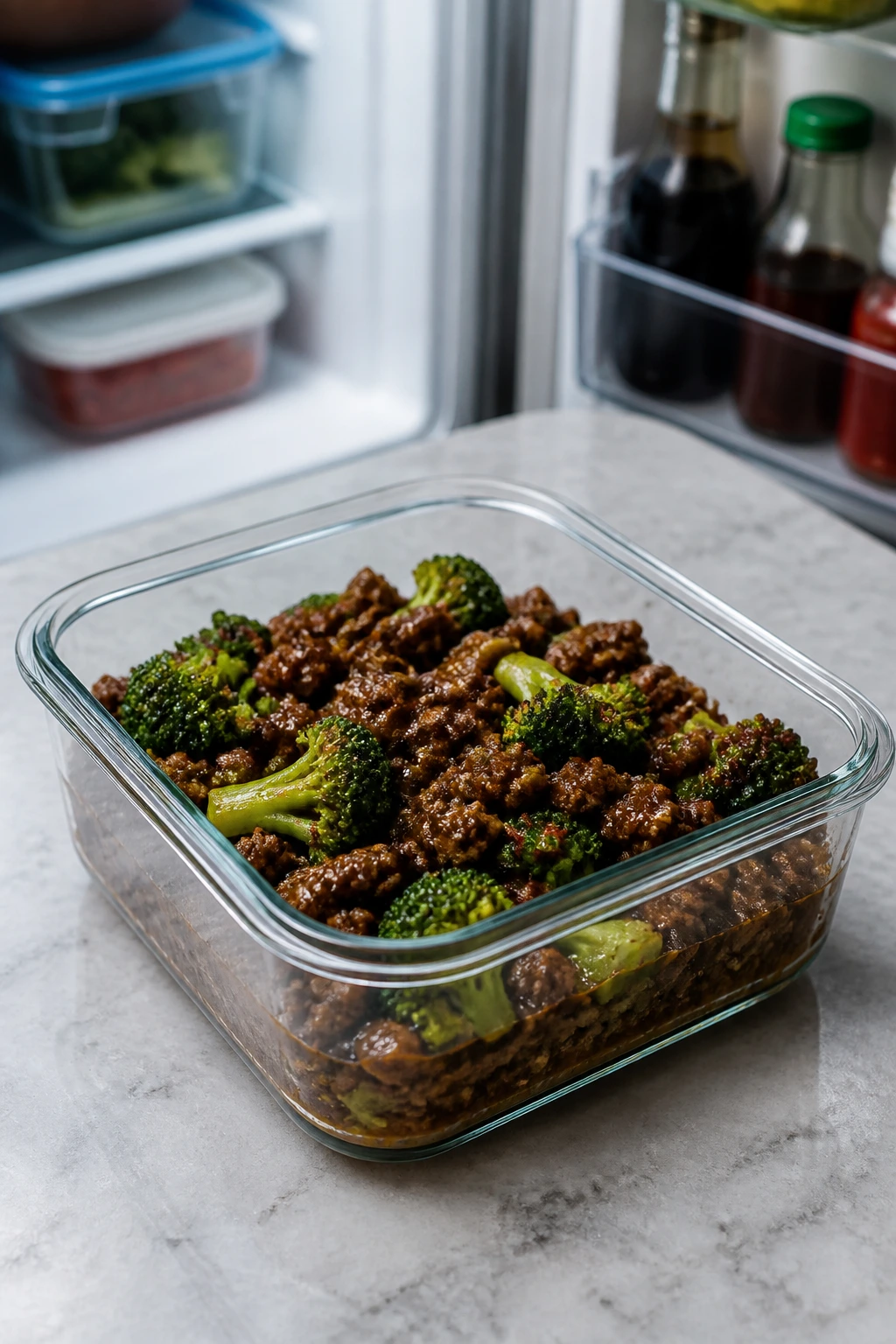
This is one of those dishes that survives leftovers better than people expect, but the broccoli still asks for a little care. The beef holds up nicely. The sauce loosens again. The broccoli softens a touch, which is fine if you don’t overcook it on day one.
Refrigerator
Store leftovers in an airtight container for 3 to 4 days. If possible, keep rice in a separate container so it doesn’t drink up all the sauce overnight. The beef and broccoli are fine together, but the rice gets mushier faster than the main dish.
Freezer
Freeze in a tightly sealed container for up to 2 months. The broccoli will be softer after thawing, so I think this works best for people who don’t mind a gentler vegetable texture. If you know you’re freezing half the batch, undercook the broccoli by about 30 seconds on the first pass.
Reheating
Reheat on the stovetop over medium heat with 1 to 2 tablespoons of water added to the pan. Stir until the sauce loosens and the beef is hot through. The microwave works too; cover the container loosely and heat in 45-second bursts, stirring once or twice so the edges don’t dry out.
Make-Ahead
The sauce can be whisked together up to 1 week ahead and kept in the fridge. You can also cut the broccoli and slice the scallions 1 to 2 days in advance. I would not cook the entire dish too far ahead unless you’re fine with softer broccoli at the end.
One useful trick: if you expect leftovers, stop steaming the broccoli a little early. That one small choice keeps the second-day bowl from turning mushy.
Questions People Ask Before Cooking It
Can I use frozen broccoli instead of fresh?
Yes, but thaw it first and pat it dry with a towel before it goes into the skillet. Frozen broccoli carries a lot of water, and if you dump it in wet, the sauce gets thin and the beef loses its browned edge.
Will ground turkey work here?
It will, and it’s a decent swap if you want a lighter pan. Add the tablespoon of oil, because ground turkey is leaner and can go dry faster than beef. You may also want a tiny extra splash of soy sauce to replace some of the beefy depth.
Do I need oyster sauce?
No, but the flavor is better if you use it. If you leave it out, the sauce tastes sharper and more linear, so a spoonful of hoisin or a little mushroom stir-fry sauce can help replace some of that roundness.
What if my sauce is too thin?
Let it bubble for another minute or two uncovered. Cornstarch thickens as it heats, and the sauce often turns glossy after a short simmer that feels almost too short to matter.
What if my sauce gets too thick?
Add a tablespoon of water and toss the pan again over low heat. The goal is a coating sauce, not paste, so loosen it a little before it clings too hard to the beef.
Can I make this less spicy without losing flavor?
Yes. Drop the chili garlic sauce completely and keep the sesame oil, ginger, and scallions. The dish will still taste bold because the savory base carries more weight than the heat does.
Do I need a wok for this?
No. A wide skillet is often easier, especially if you want the beef to brown evenly. A wok is fine if you already use one well, but the high sides can make it a little harder to see what the broccoli is doing.
Can I double the recipe for meal prep?
You can, but use two skillets or cook the beef in batches so it browns instead of steaming. If you crowd a single pan with twice the food, the texture falls apart fast and you lose the crisp edges that make the dish work.
A Last Note Before You Heat the Skillet
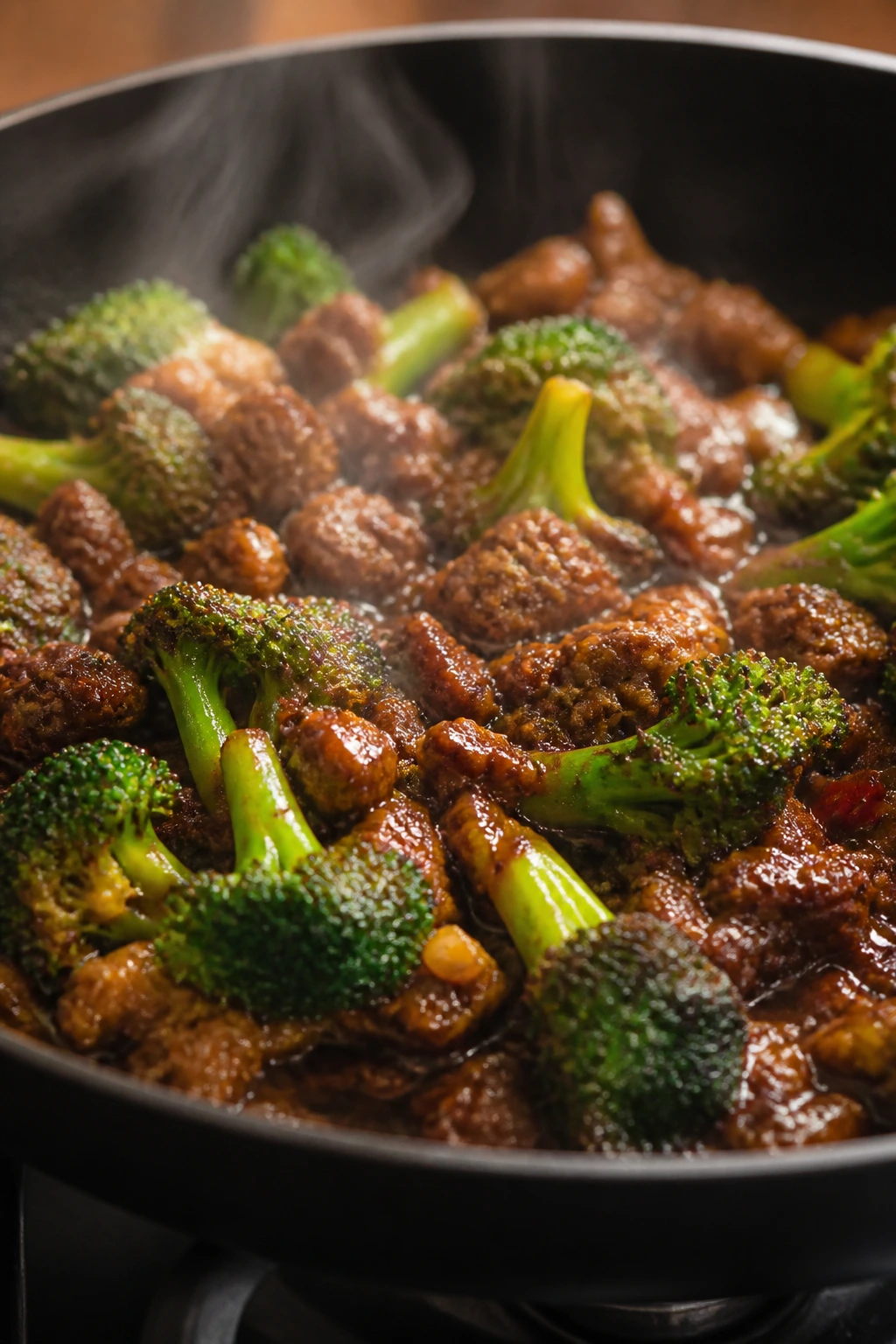
There are fancier ways to make beef and broccoli. Some people slice flank steak, marinate it, and treat the whole thing like a small project. I respect that. I also think there’s room in real life for the version that starts with ground beef, a head of broccoli, and one sauce bowl you can whisk with one hand.
This skillet earns its keep because it gives you the fast, savory, sticky dinner feeling without asking for much ceremony. Keep the broccoli in small florets, brown the beef properly, and don’t let the garlic burn. That’s the whole game, and it’s a good one.
Spicy Asian Ground Beef and Broccoli Better than Takeout — Recipe Card
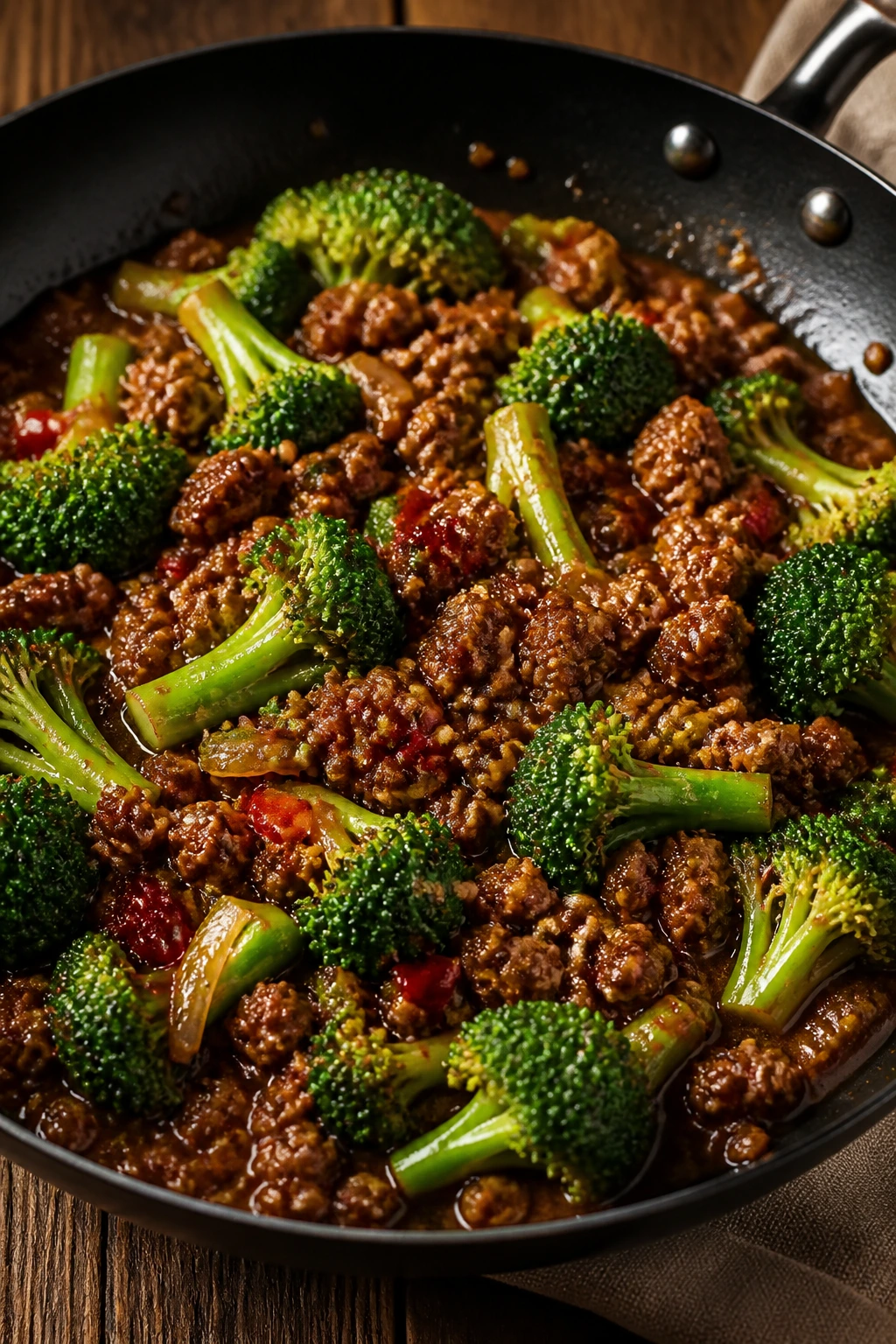
Recipe Name: Spicy Asian Ground Beef and Broccoli Better than Takeout
Description: A fast skillet dinner with browned ground beef, crisp-tender broccoli, and a glossy soy-ginger sauce with a clean hit of heat. It eats like takeout, only fresher and less heavy.
Prep Time: 15 minutes
Cook Time: 15 minutes
Total Time: 30 minutes
Course: Dinner, Main Course
Cuisine: Asian-inspired, Chinese-American
Servings: 4 servings
Calories: About 340 kcal per serving
Ingredients
For the Sauce:
- 1/4 cup low-sodium soy sauce
- 2 tablespoons oyster sauce
- 1 tablespoon rice vinegar
- 1 tablespoon packed light brown sugar
- 1 teaspoon toasted sesame oil
- 1 teaspoon cornstarch
- 1/4 cup water or low-sodium beef broth
- 1 to 2 teaspoons chili garlic sauce or sriracha
For the Stir-Fry:
- 1 tablespoon neutral oil, such as avocado, canola, or grapeseed, if your beef is lean
- 1 pound ground beef, preferably 85/15
- 4 cups broccoli florets, cut into bite-size pieces
- 3 cloves garlic, minced
- 1 tablespoon fresh ginger, grated
- 4 scallions, thinly sliced, whites and greens separated
- 1/4 teaspoon black pepper
For Garnish:
- 1 tablespoon toasted sesame seeds, optional
Instructions
-
Whisk together the soy sauce, oyster sauce, rice vinegar, brown sugar, sesame oil, cornstarch, water or broth, and chili garlic sauce in a small bowl.
-
Heat a 12-inch skillet or wok over medium-high heat. Add the oil if needed, then add the ground beef and cook for 5 to 7 minutes, breaking it up as it browns.
-
Add the broccoli florets and 2 to 3 tablespoons of water. Cover and cook for 2 to 3 minutes, until the broccoli is bright green and crisp-tender.
-
Uncover and add the garlic, ginger, scallion whites, and black pepper. Stir for 30 to 45 seconds until fragrant.
-
Whisk the sauce again, pour it into the skillet, and toss for 1 to 2 minutes until glossy and thickened.
-
Turn off the heat, stir in the scallion greens, and sprinkle with sesame seeds if using.
-
Serve hot over rice or noodles.
Notes: For a thicker glaze, let the sauce bubble uncovered for an extra 30 to 60 seconds. If you like the broccoli firmer, shorten the covered steam by 30 seconds. Leftovers keep in the fridge for 3 to 4 days.