



If you’ve ever opened a takeout carton and found limp peppers, pale chicken, and a sauce that tastes more like syrup than dinner, you already know why Sweet and Sour Asian Stir Fry can go sideways fast. The flavor is supposed to snap. Sharp vinegar. A little sugar. Soy sauce for depth. Chicken that still tastes like chicken, not something steamed in a paper box.
The good version has a loud first bite and a clean finish. The vegetables stay bright, not soggy. The sauce clings in a glossy coat instead of pooling into a sticky puddle at the bottom of the pan. And if there’s pineapple in the mix, it should act like a bright little punctuation mark, not a sugar bomb.
The fix is not complicated, but it does ask for a little discipline. High heat. A hot pan. Ingredients cut before the burner goes on. Sauce whisked ahead of time. That’s the whole game, honestly. Do it right once, and the copycat version starts looking tired.
What Makes This Stir Fry Taste Like the Good Takeout Order
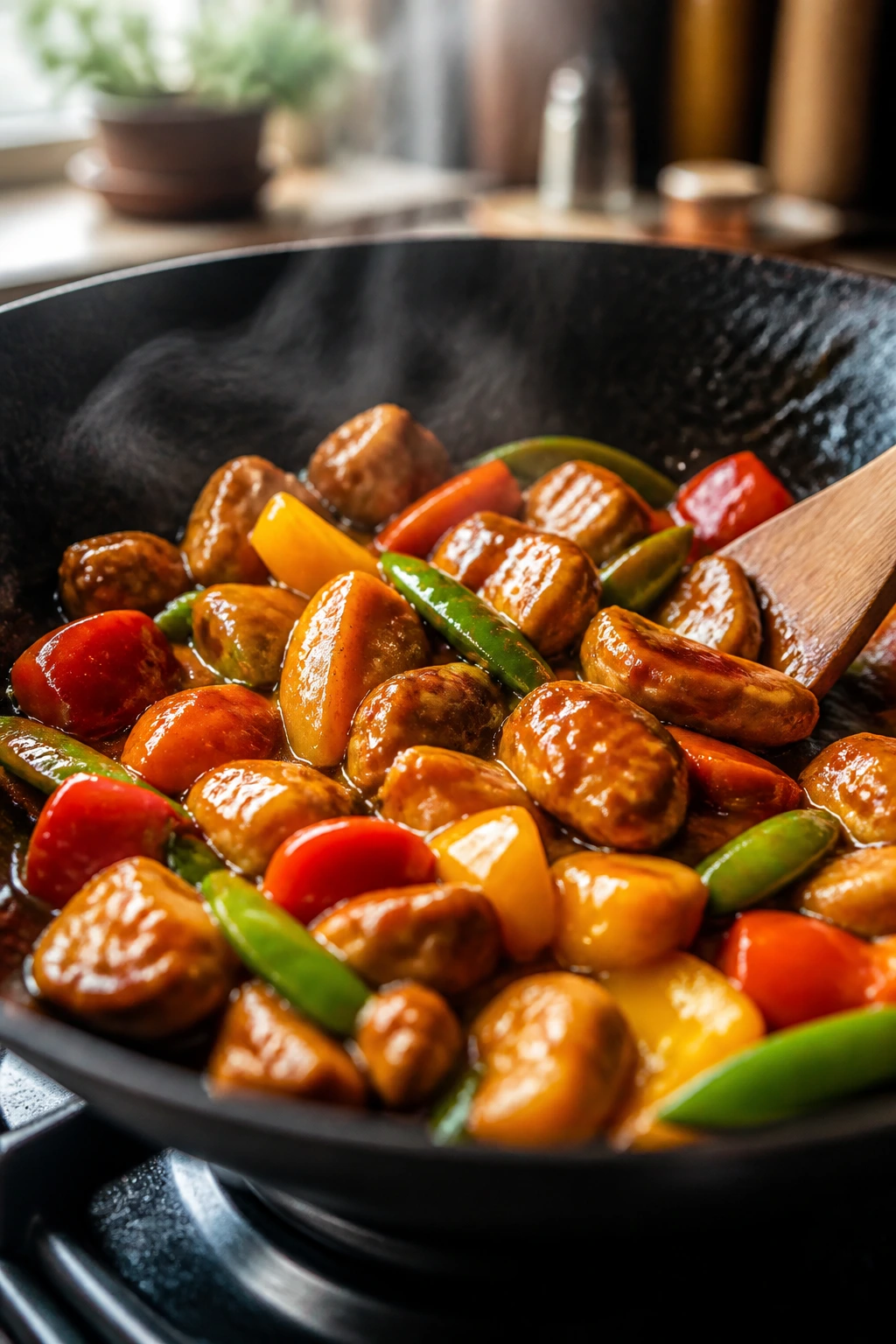
Sweet and sour is one of those sauces that can taste flat if you chase sweetness too hard. The best takeout-style versions have a little bite at the front and a warm, rounded finish after the swallow. That comes from rice vinegar, ketchup, soy sauce, and brown sugar working together instead of one ingredient shouting over the others.
Ketchup is the ingredient people argue about, and I never get why. It gives the sauce body, color, and that familiar Chinese-American takeout flavor profile that hangs onto chicken and vegetables instead of sliding off them. Without it, the sauce can taste thin and acidic. With it, you get something that feels old-school in the best possible way.
The other thing that matters is texture. The sauce should gloss the food, not drown it. Chicken thighs hold up to the heat better than breast meat, peppers keep a little snap, and snap peas bring that crisp crack you miss when everything cooks too long. It’s a small difference on the stove. Big difference on the plate.
Why You’ll Love This Sweet and Sour Asian Stir Fry
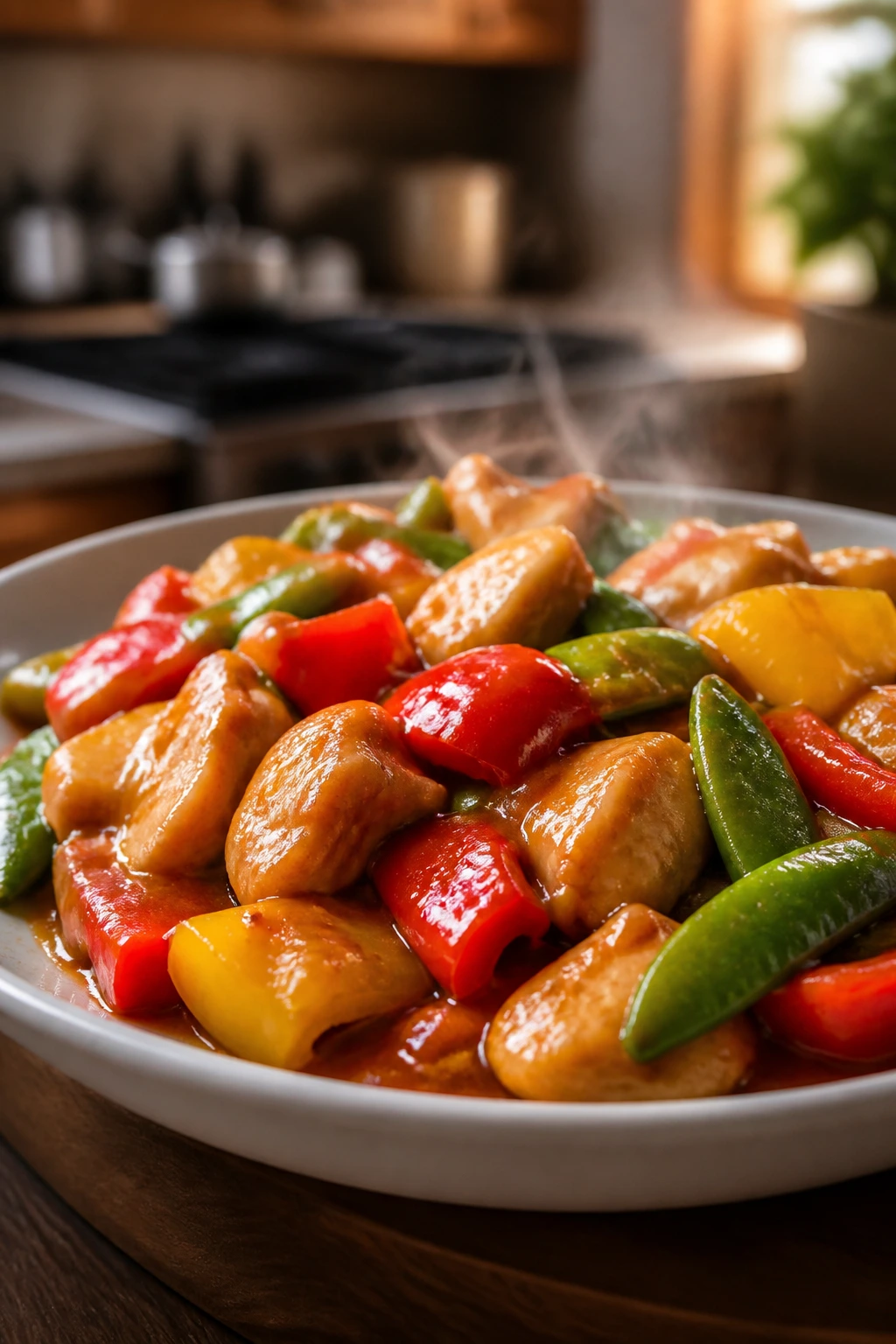
- Fast but not flimsy: You can get dinner on the table in about 35 minutes, but it still tastes like somebody paid attention at the stove.
- The sauce has balance: Rice vinegar keeps the sweetness from turning dull, and soy sauce gives the whole pan a savory base.
- The vegetables still have bite: Bell peppers, onion, and snap peas stay crisp enough to cut through the sticky glaze.
- It works over rice or noodles: The sauce clings to jasmine rice especially well, which is half the reason people love this style of stir fry.
- Leftovers don’t fall apart instantly: The chicken stays tender for a few days, and the flavor gets deeper after a night in the fridge.
- You control the sweetness: A spoon more vinegar or a pinch more sugar changes the whole mood of the dish, which is useful when you’re cooking for real people with opinions.
Timing, Yield, and the Pan Size That Matters
Yield: Serves 4 generous portions
Prep Time: 20 minutes
Cook Time: 15 minutes
Total Time: 35 minutes
Difficulty: Intermediate — the steps are simple, but stir frying moves fast and the pan needs room.
Best Served: Right away, while the sauce is glossy and the vegetables still have a little snap
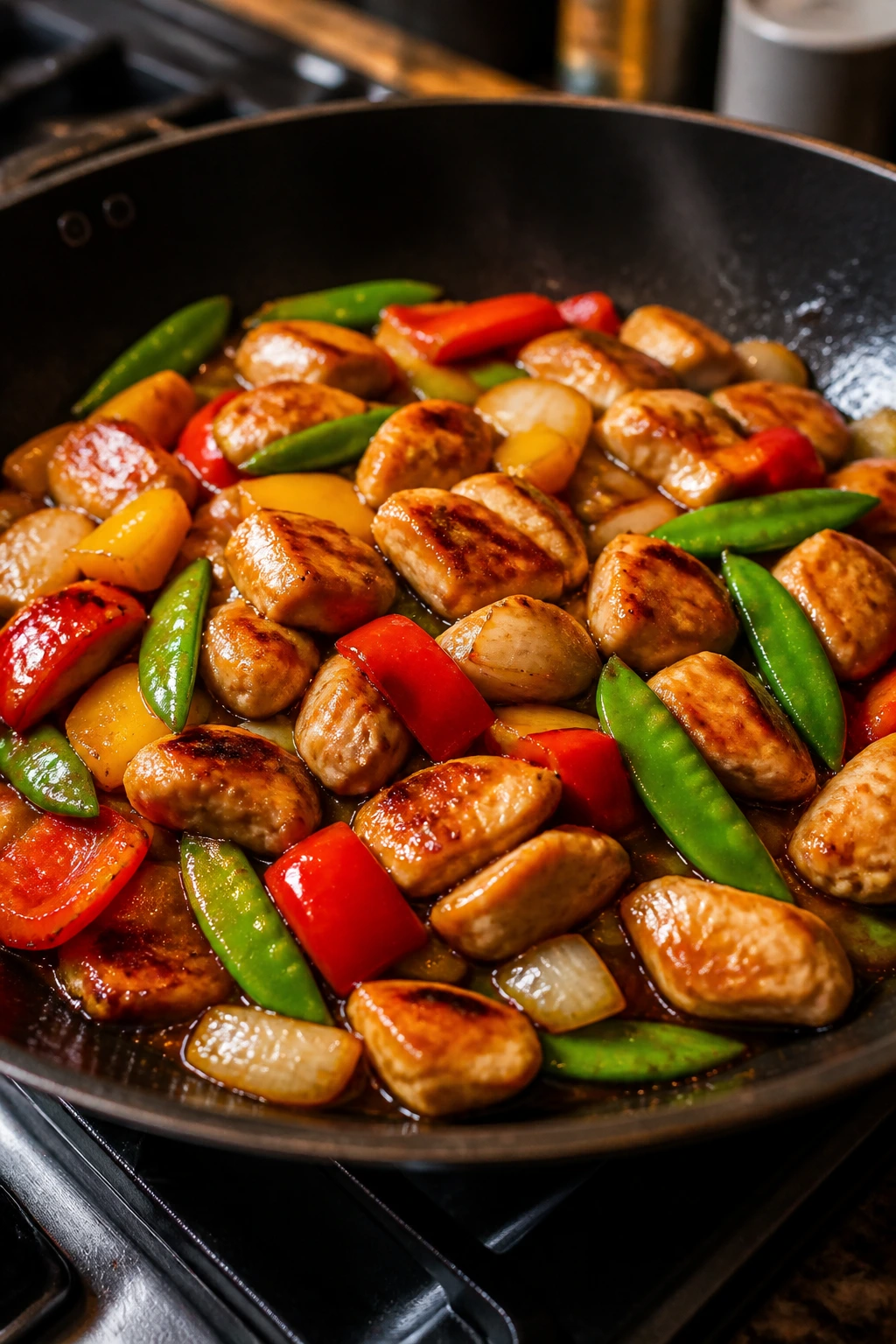
A wide pan matters here. A 12-inch skillet or wok gives the chicken room to brown instead of steaming in its own juices, and that browned edge is part of what keeps the dish from tasting one-note. If your pan is small, cook in batches. No shortcuts. The sauce will forgive you later; the chicken will not.
The Ingredients That Build the Sauce and the Crunch
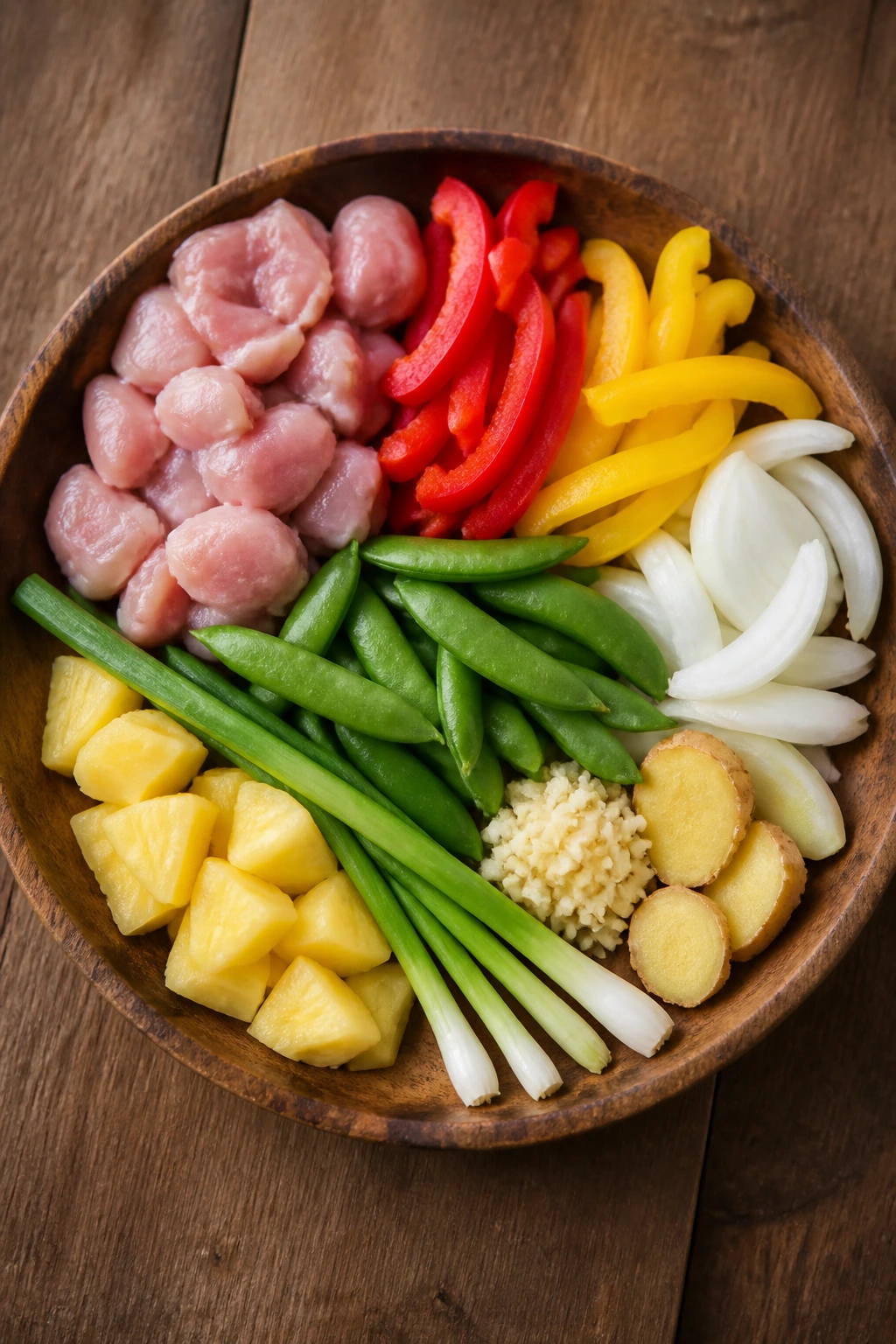
For the Stir Fry
- 1 1/2 pounds boneless, skinless chicken thighs, cut into 1-inch pieces
- 1 teaspoon kosher salt
- 1/2 teaspoon black pepper
- 2 tablespoons cornstarch
- 3 tablespoons neutral oil, divided
- 1 red bell pepper, seeded and sliced into 1/2-inch strips
- 1 yellow bell pepper, seeded and sliced into 1/2-inch strips
- 1 small red onion, cut into 1-inch wedges
- 1 cup snap peas, strings removed
- 1 cup pineapple chunks, drained if canned
- 2 cloves garlic, minced
- 1 teaspoon fresh ginger, grated
- 2 green onions, sliced
- 1 teaspoon toasted sesame oil, optional
For the Sweet and Sour Sauce
- 1/3 cup rice vinegar
- 1/4 cup ketchup
- 3 tablespoons low-sodium soy sauce
- 3 tablespoons packed light brown sugar
- 2 tablespoons pineapple juice
- 1 tablespoon cornstarch
- 1/2 cup water
- 1/4 teaspoon red pepper flakes, optional
How Each Ingredient Pulls Its Weight
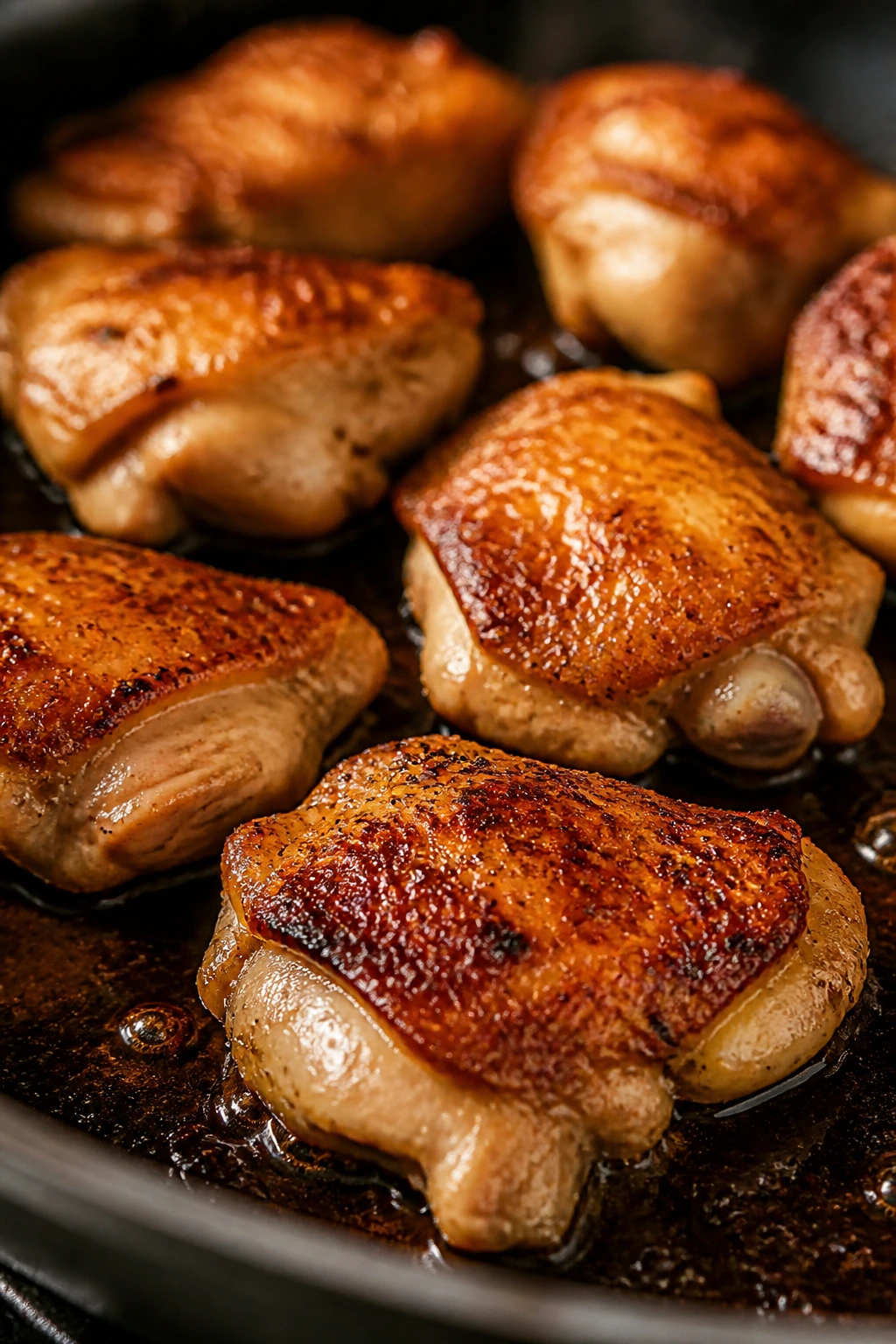
Chicken Thighs: The Forgiving Cut
What to use: 1 1/2 pounds boneless, skinless chicken thighs, cut into 1-inch pieces.
Preparation: Pat them dry before you season them. Dry chicken browns, wet chicken steams, and that difference shows up in the pan within seconds.
Substitutions: Boneless chicken breast works if you cut it into slightly larger pieces and watch the clock. Extra-firm tofu also works if you press it dry and sear it well.
Tips: Thighs stay juicy even if the pan runs a little hot, which is why I prefer them here. They give you a little room to breathe.
The Sweet and Sour Sauce: Where the Flavor Lives
What to use: Rice vinegar, ketchup, soy sauce, brown sugar, pineapple juice, water, cornstarch, and optional red pepper flakes.
Preparation: Whisk the sauce until the cornstarch disappears completely. If you see little white streaks, keep going.
Substitutions: Apple cider vinegar can stand in for rice vinegar in a pinch, though it tastes a touch sharper. Tamari works for soy sauce if you need a gluten-free version.
Tips: Taste the sauce before it goes in the pan. It should seem a little sharp and a little too sweet on its own; the chicken and vegetables will pull it into balance.
Bell Peppers, Onion, Snap Peas, and Pineapple
What to use: One red bell pepper, one yellow bell pepper, one small red onion, 1 cup snap peas, and 1 cup pineapple chunks.
Preparation: Slice everything before you turn on the stove. Stir fry is not the place for reaching across the counter with one hand while garlic burns in the pan.
Substitutions: Broccoli florets, baby corn, or sliced carrots can step in for part of the vegetables. Mango chunks work if you want a different kind of sweetness.
Tips: Keep the pieces large enough to stay distinct. Tiny dice vanish into the sauce and you lose the texture contrast that makes the dish worth making.
Garlic, Ginger, Green Onion, and Sesame Oil
What to use: Two cloves garlic, 1 teaspoon grated ginger, 2 green onions, and 1 teaspoon toasted sesame oil if you want a nutty finish.
Preparation: Grate the ginger fine and mince the garlic small enough that it disappears into the sauce. Slice the green onions thin so they soften quickly without turning limp.
Substitutions: Garlic paste and ginger paste can work, though fresh gives a cleaner bite. Chives can replace green onions if that’s what you’ve got.
Tips: Garlic and ginger cook fast. Once they hit the hot pan, you’ve got maybe 15 seconds before they move from fragrant to bitter.
Cornstarch and Neutral Oil
What to use: 2 tablespoons cornstarch for the chicken, 1 tablespoon cornstarch for the sauce, and 3 tablespoons neutral oil divided.
Preparation: Dust the chicken evenly so every piece gets a thin coating. That coating helps the chicken brown and gives the sauce something to cling to.
Substitutions: Arrowroot can thicken the sauce if that’s your preference, but the finish will be a little clearer and less glossy.
Tips: Use a neutral oil that can handle heat, like avocado, canola, or peanut oil. Olive oil brings the wrong flavor here and can smoke faster than you want.
The Gear That Keeps the Stir Fry Hot
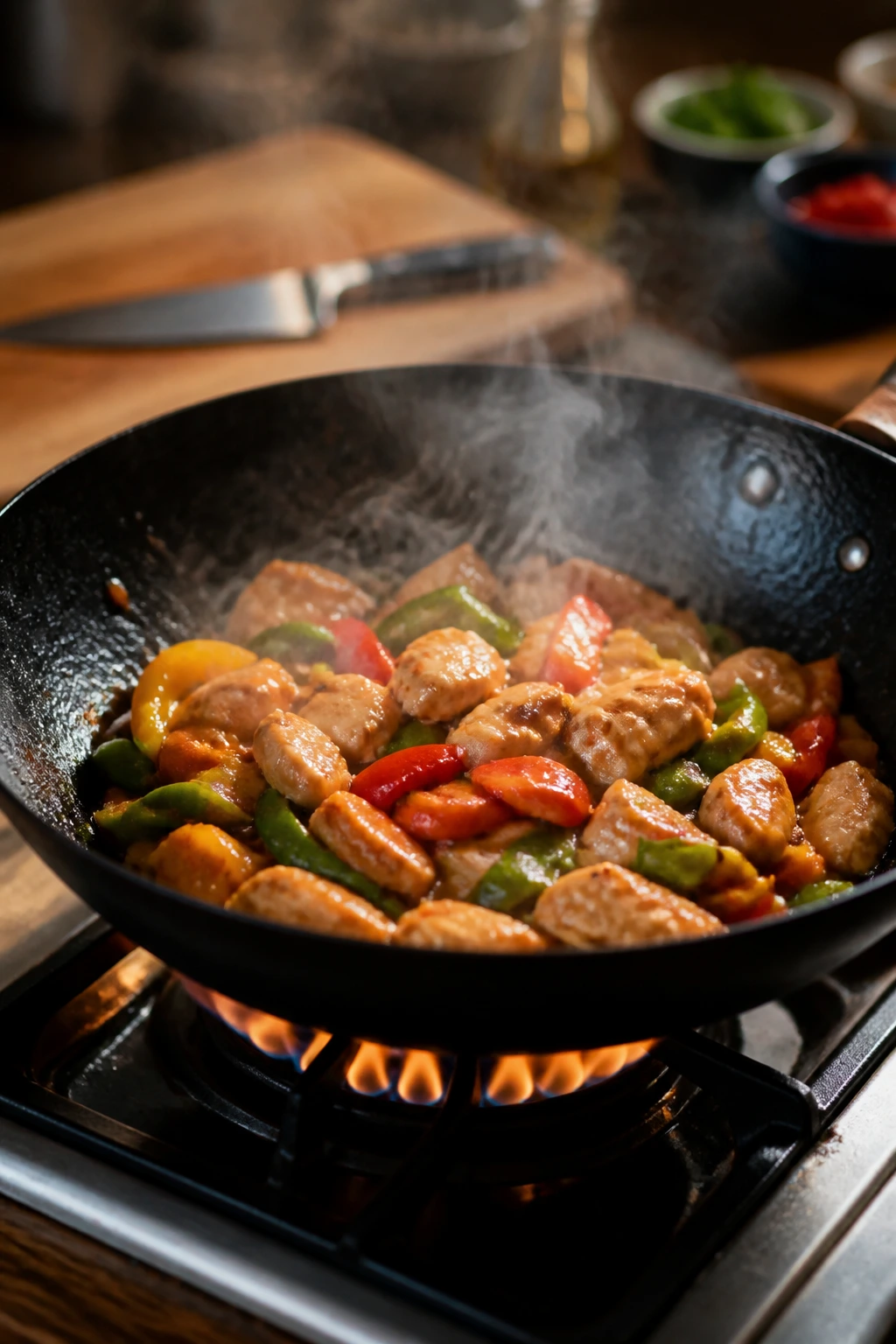
- 12-inch wok or large skillet: A wide cooking surface keeps the chicken and vegetables from crowding each other.
- Sharp chef’s knife: Thin, even cuts cook at the same pace. Uneven pieces are how you get raw onion next to mushy onion.
- Cutting board: A stable board matters more than people think; I like a damp towel under it so it doesn’t skate around.
- Medium mixing bowl: You’ll use it for the sauce and for tossing the chicken with cornstarch.
- Small whisk or fork: The cornstarch needs to disappear into the sauce, not sit at the bottom like chalk.
- Tongs or a flat spatula: Tongs make it easy to turn the chicken without tearing the coating.
- Measuring cups and spoons: The sauce balance depends on actual measurements, not guesses.
- Fine microplane or grater: Handy for the ginger if you want it to melt into the sauce instead of standing out in little threads.
How to Cook the Stir Fry Without Losing the Bite
Prep the Sauce and Coat the Chicken
-
In a medium bowl, whisk together the rice vinegar, ketchup, soy sauce, brown sugar, pineapple juice, water, cornstarch, and red pepper flakes until smooth and no dry cornstarch remains. Set it near the stove.
-
Pat the chicken thighs dry with paper towels, then toss them with the salt, black pepper, and 2 tablespoons cornstarch until every piece is lightly coated. The chicken should look dusted, not pasty. If the coating clumps, shake off the excess.
Sear the Chicken and Build the Vegetables
-
Set a large wok or 12-inch skillet over medium-high heat and add 2 tablespoons of the neutral oil. When the oil shimmers and moves easily across the surface, add half the chicken in a single layer. Let it sit for 2 minutes without stirring so the underside browns, then turn and cook for 2 to 3 minutes more until the pieces are golden on the edges and just cooked through. Transfer to a plate.
-
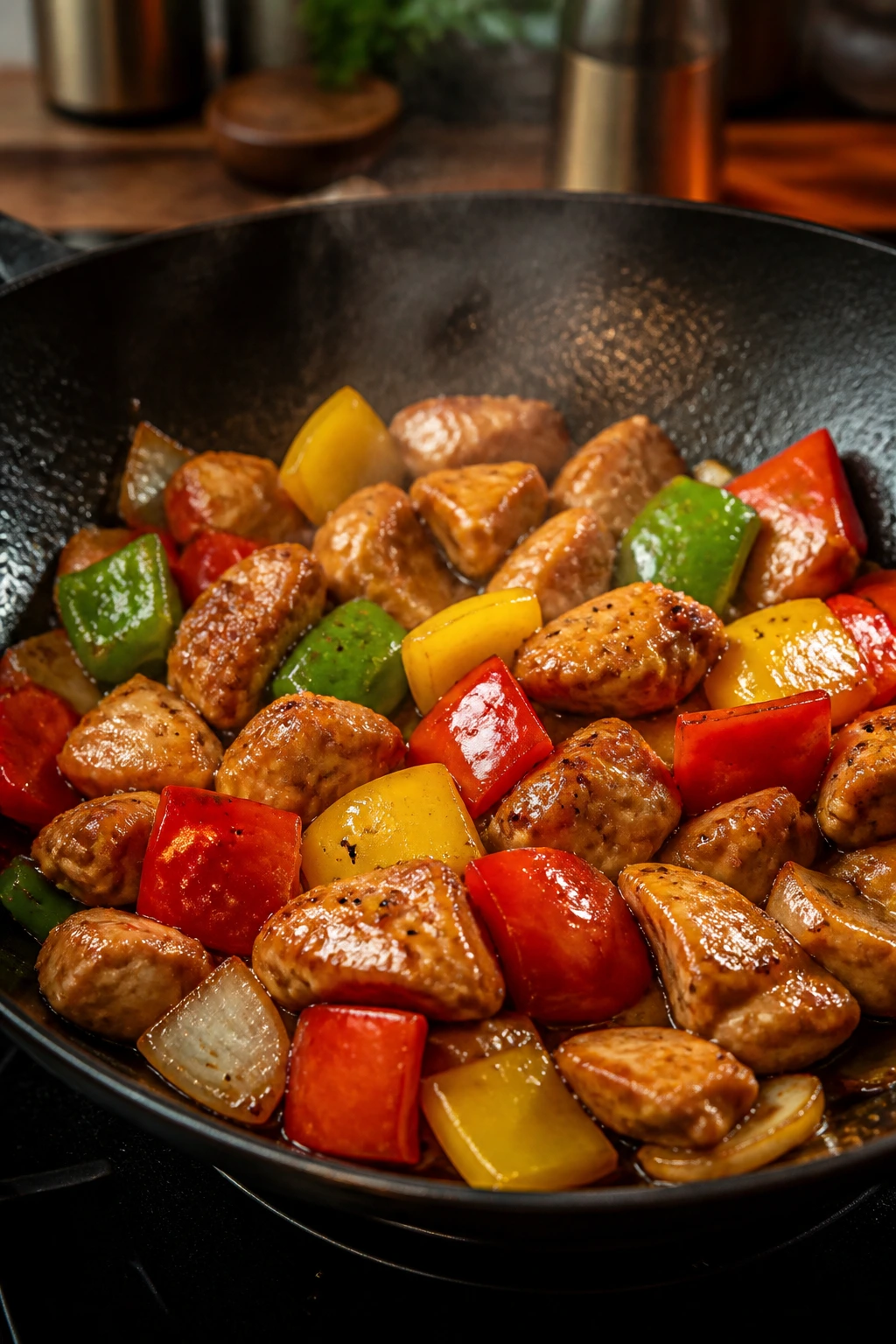
Add the remaining 1 tablespoon neutral oil to the pan. Add the bell peppers and red onion and stir-fry for 2 to 3 minutes until the peppers brighten and the onion starts to soften at the tips but still has a little crunch. Add the snap peas and cook for 45 seconds.
-
Stir in the garlic and ginger and cook for 15 to 20 seconds, just until fragrant. Do not walk away here; garlic goes from sweet to bitter in a blink.
Glaze and Finish
-
Give the sauce one more whisk, then pour it into the pan. Stir constantly as it bubbles and thickens, about 1 to 2 minutes. The sauce should turn glossy and start to coat the vegetables. If it looks too thick, splash in 1 to 2 tablespoons water and stir.
-
Add the pineapple chunks and return the chicken, along with any juices on the plate, to the pan. Toss everything for 1 minute until the sauce clings to the chicken and the pineapple is hot through. The pan should look glossy, not soupy.
-
Turn off the heat and fold in the green onions and toasted sesame oil if you’re using it. Taste one piece of chicken and one pepper. If it needs more brightness, add 1 teaspoon rice vinegar. If it tastes too sharp, add 1 teaspoon brown sugar and toss again. Serve immediately.
How to Plate It So the Sauce Stays Glossy
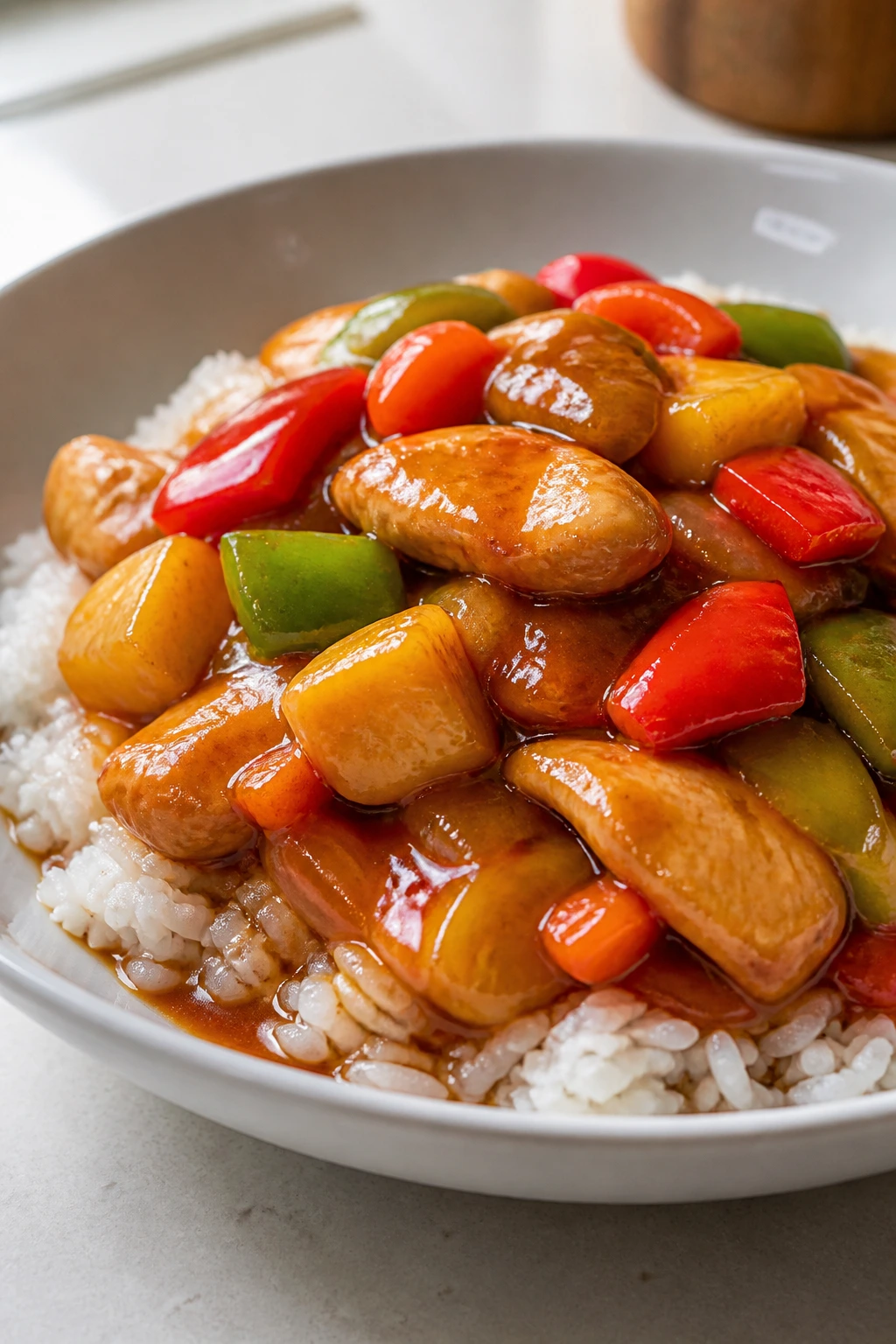
Presentation: Spoon the stir fry over a bed of steamed jasmine rice or noodles, then let the sauce pool a little around the edges instead of burying everything under it. That glossy red-orange sheen is part of the appeal, and a shallow bowl shows it off better than a deep one.
Accompaniments: Plain jasmine rice is the cleanest match, but garlic fried rice, lo mein noodles, or even simple cucumber slices with rice vinegar all work. If you want something green on the side, blanched bok choy or a shredded cabbage salad gives the plate some snap.
Portions: Four servings is the sweet spot if you’re serving it with rice. If this is the whole dinner with no side dish, you’ll probably get three bigger portions out of it. For a larger group, double the vegetables first; the sauce scales cleanly, but the pan still needs room.
Beverage Pairing: Iced jasmine tea is the easy answer. A crisp lager or a cold, dry Riesling handles the sweet-sour contrast well too.
Small Tweaks That Make It Taste Brighter
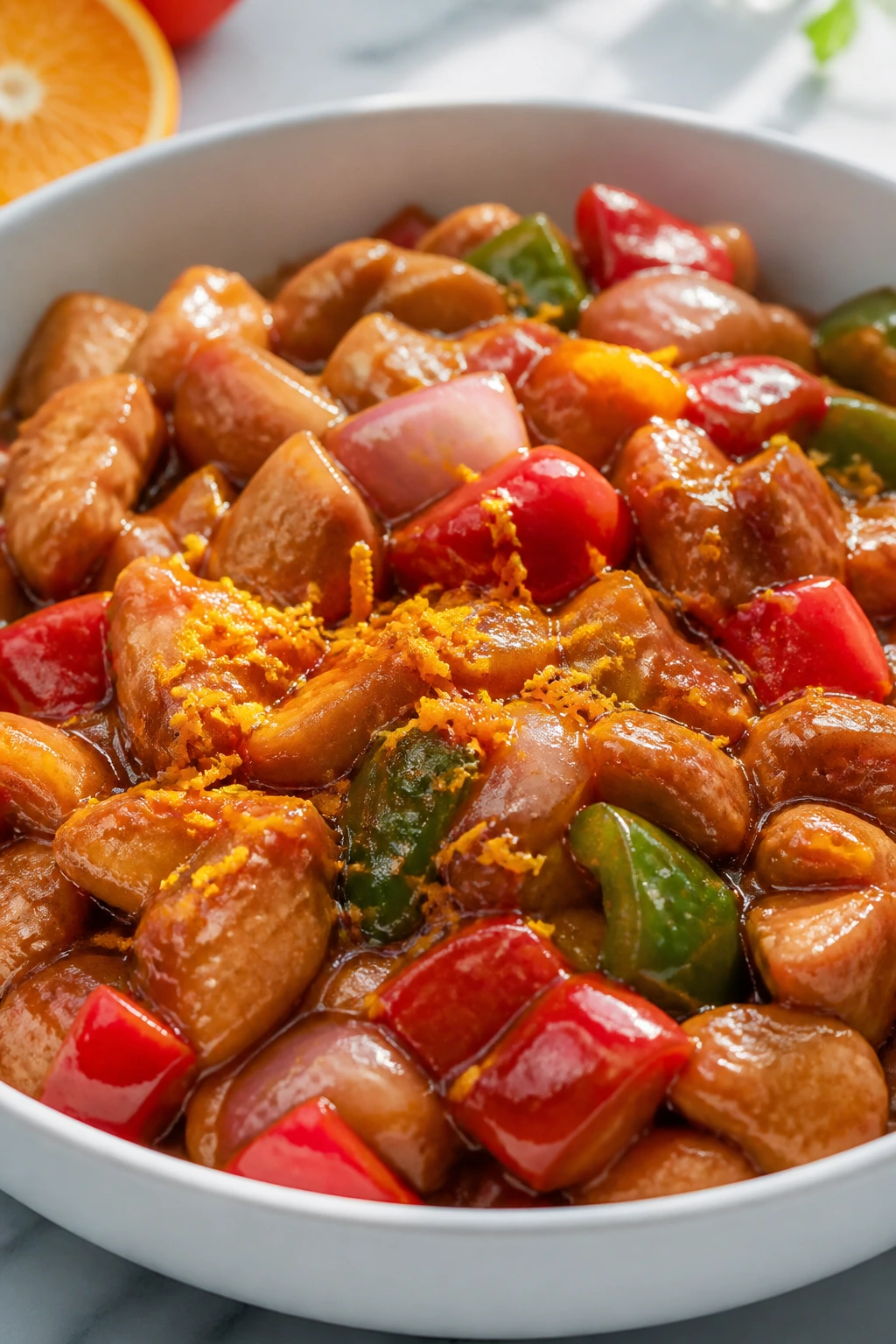
Flavor Enhancement: A little orange zest, about 1 teaspoon, changes the finish in a smart way. It doesn’t turn the dish into orange chicken; it just lifts the sweet part so the vinegar tastes cleaner.
Time-Saver: Make the sauce in a jar and shake it instead of whisking in a bowl. You can also cut the chicken and vegetables a day ahead, then keep them separate in the fridge so the peppers stay dry and crisp.
Texture Trick: Add the pineapple only at the very end if you want it to keep its shape. Letting it sit in the sauce too long makes it soft and a little tired.
Heat Control: If your pan cools when the vegetables go in, stop stirring for a few seconds. That little pause helps them blister at the edges instead of sweating into mush.
Make-It-Yours: A spoonful of chili crisp gives the dish a salty, crunchy edge. If you want a milder plate for kids, leave out the red pepper flakes and serve the chili crisp at the table.
Mistakes That Flatten Sweet and Sour Flavor
-
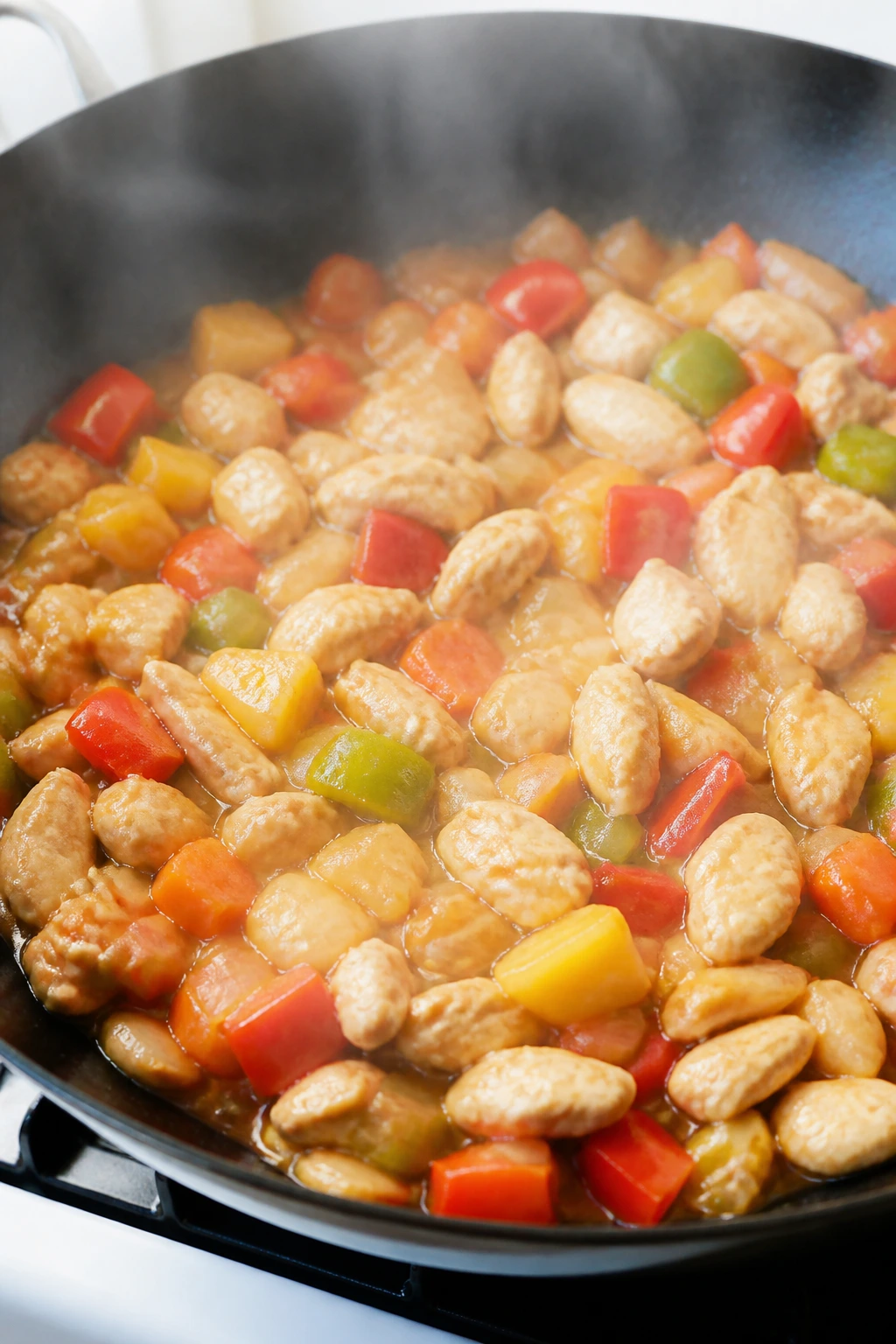
Crowding the pan: If the chicken pieces are packed tight, they release juices and steam instead of browning. The fix is boring but effective: cook in batches and give the pieces room.
-
Adding the sauce too early: Pouring it in before the vegetables are close to done can leave you with soft peppers and a sauce that tastes cooked down too long. Wait until the vegetables still look lively.
-
Using too much cornstarch: A heavy hand turns the sauce into paste. Stick to the measured tablespoon in the sauce and the light coating on the chicken. That’s enough.
-
Skipping the final taste: Sweet and sour lives on balance. If the pan tastes flat, it probably needs a little vinegar, not more sugar. If it tastes harsh, a pinch more brown sugar will round it out.
-
Cooking the garlic until it browns: Burnt garlic gives the whole dish a bitter edge that lingers. Add it near the end, stir fast, and move on.
-
Letting it sit too long before serving: The sauce keeps thickening as it cools. If you wait ten minutes, the chicken still tastes fine, but the vegetables lose their edge and the whole pan gets heavier than it should.
Variations Worth Trying in the Same Pan
Spicy Chili Crisp Version
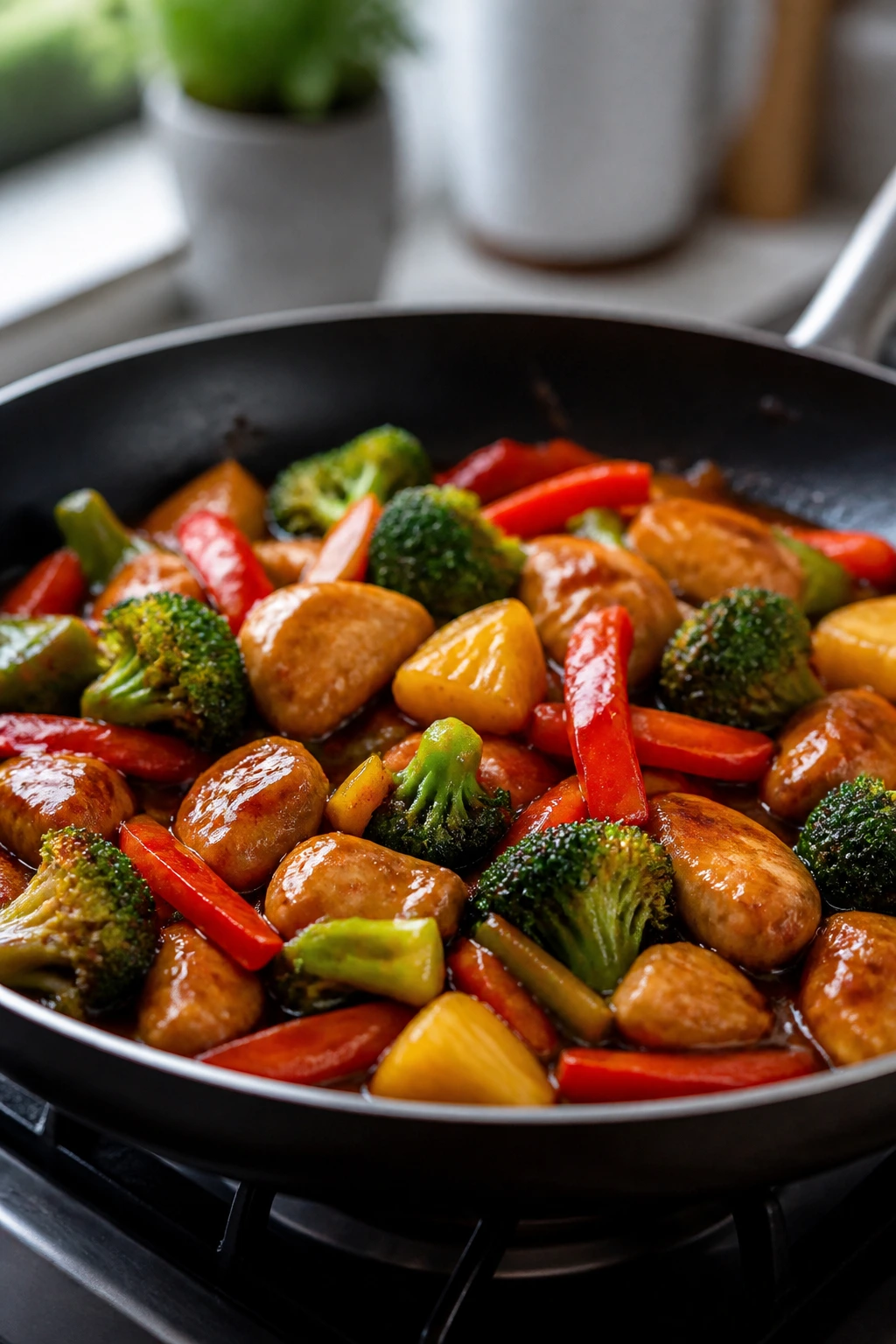
Stir 1 to 2 tablespoons chili crisp into the finished pan after the heat is off. The crunchy bits bring salt, heat, and a little fried garlic flavor that plays nicely with the vinegar. It’s the variation I’d make when I want the dish to feel more adult and less like a nostalgia play.
Pineapple-Forward Version
Use 1 1/2 cups pineapple chunks and cut the brown sugar down to 2 tablespoons. This makes the sauce brighter and slightly less sticky, which is nice if you prefer the fruit to lead the sweetness instead of the ketchup. Fresh pineapple works well here if it’s ripe and juicy.
Tofu and Broccoli Swap
Replace the chicken with 1 1/2 pounds extra-firm tofu, pressed and cut into cubes, and swap the snap peas for 2 cups small broccoli florets. Pan-sear the tofu until it’s golden on most sides before you add the vegetables. The sauce handles the swap without complaint, which is not true of every stir fry.
Shrimp Shortcut
Use 1 1/4 pounds peeled and deveined shrimp and cook them for about 2 minutes per side before pulling them out. Shrimp likes a short, sharp cook, so it’s a good choice if you want dinner faster and don’t mind the delicate texture. Add them back at the very end so they stay plump.
Gluten-Free Bowl
Use tamari instead of soy sauce and check your ketchup label for any sneaky wheat-based thickeners, which are rare but worth spotting. The sauce stays balanced, and nobody at the table will miss the gluten if the pan is hot enough and the vegetables are crisp.
Keeping Leftovers Tender and Reheating Them Right
Fridge and Freezer
Leftovers keep well in an airtight container in the refrigerator for 3 to 4 days. The peppers soften a little each day, which is normal, but the flavor stays good. If you pack it with rice, keep the rice in a separate container so it doesn’t drink up all the sauce.
For the freezer, this dish holds for up to 2 months. The texture changes a bit after thawing, especially the vegetables, so I like freezing the chicken and sauce together only when I know the goal is convenience over crunch. If you have the choice, freeze the chicken mixture and cook fresh vegetables later.
Reheating Without Turning It Mushy
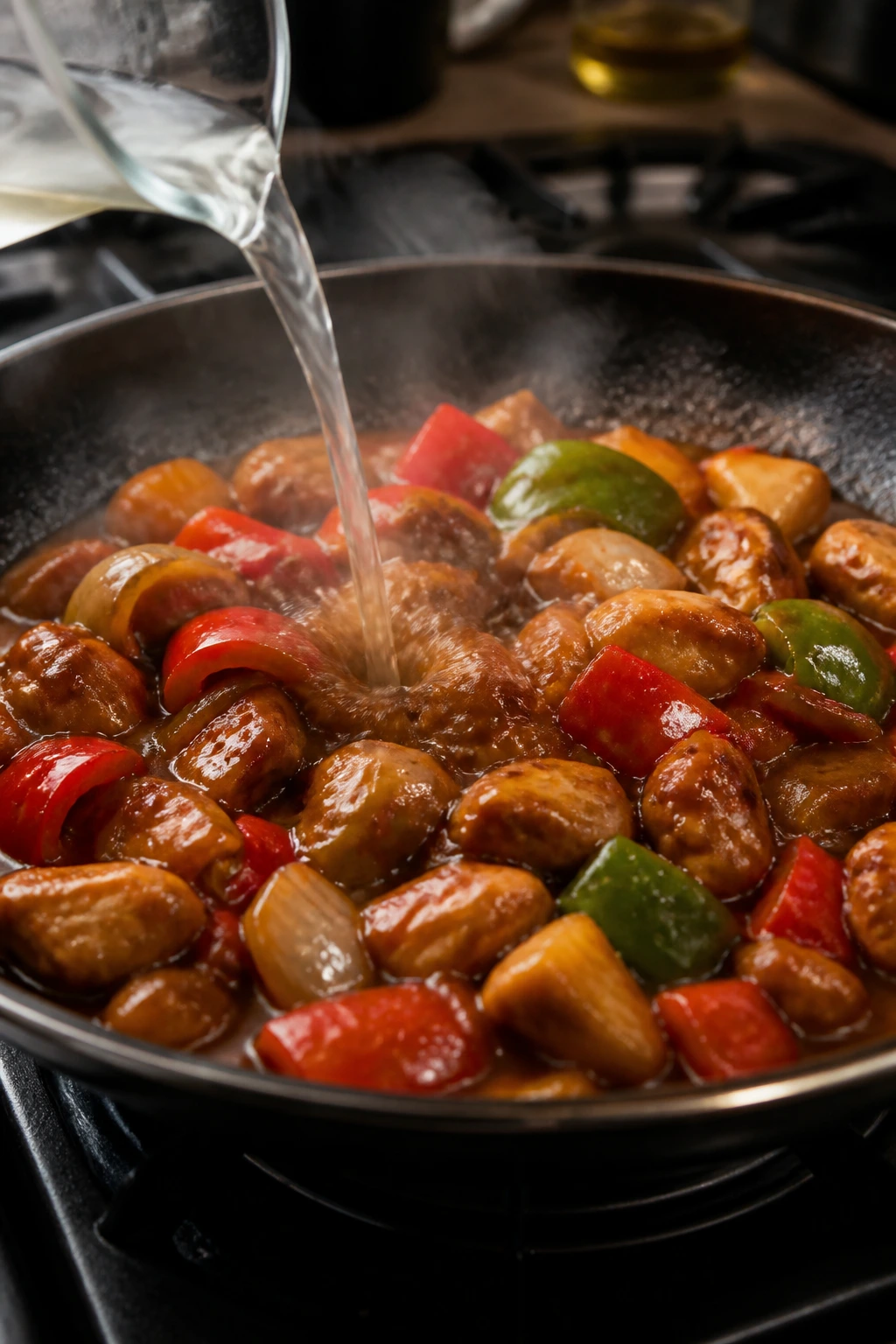
The best reheating method is a skillet over medium heat with 1 to 2 tablespoons water added to loosen the sauce. Stir gently for 3 to 4 minutes until the chicken is hot and the sauce loosens back into a glaze. A lid helps for the first minute, but take it off once everything starts moving again.
The microwave works if that’s the only option. Use a microwave-safe bowl, add a spoonful of water, cover loosely, and heat in 30-second bursts, stirring between each one. That keeps the chicken from tightening up into little rubbery cubes.
Make-Ahead Moves That Save Time
You can whisk the sauce 3 days ahead and keep it in the fridge. The vegetables can be sliced the day before, though I’d leave the pineapple draining until the day you cook so it doesn’t make the container watery. Chicken can be cut and salted the night before, but don’t add the cornstarch coating until right before it hits the pan or it starts to turn tacky.
If you like a cleaner dinner hour, cook the rice ahead too. Reheat it with a damp paper towel on top so it doesn’t dry out, and you’ll have a plate that feels freshly made even if half the work happened earlier.
Questions People Ask Before They Make It

Can I use chicken breast instead of thighs?
Yes, but cut the breast into slightly larger pieces and pull it from the pan as soon as it turns opaque and lightly golden. Chicken breast dries out faster, so it needs more attention than thighs. I’d keep the chicken pieces around 1 1/4 inches if you go that route.
What if I don’t have rice vinegar?
Apple cider vinegar works in the same amount, though the flavor is a little sharper and fruitier. White vinegar can stand in too, but use a small splash less at first and taste the sauce before adding more. Rice vinegar is milder, which is why it’s the easiest fit.
Can I make this without pineapple?
You can, but the sauce will taste less rounded and a little more direct. If you skip it, add another tablespoon of pineapple juice or a few orange segments to bring back some sweetness and acid. Otherwise the dish leans more toward stir-fried chicken in red sauce than sweet and sour.
How do I keep the vegetables crisp?
Use a hot pan, cut the vegetables ahead of time, and don’t cook them past the point where they brighten and start to blister. Bell peppers and snap peas should still have a little resistance when you bite into them. If they’re soft in the pan, they’ll be limp on the plate.
Is this recipe gluten-free?
It can be. Swap the soy sauce for tamari or a certified gluten-free soy sauce, and check the ketchup label if you’re cooking for someone sensitive. The rest of the ingredients are naturally gluten-free in most kitchens.
Can I use frozen vegetables?
Yes, but thaw and pat them dry first so they don’t dump water into the pan. Frozen peppers and snap peas won’t keep the same crunch as fresh, but they still make a decent weeknight shortcut. I’d use them when convenience matters more than texture.
My sauce got too thick. How do I fix it?
Stir in a tablespoon of water at a time over low heat until it loosens and starts moving again. Too-thick sauce usually means the pan was a little hotter than expected or the sauce sat too long before serving. A small splash fixes it fast.
Why This One Stays in the Rotation
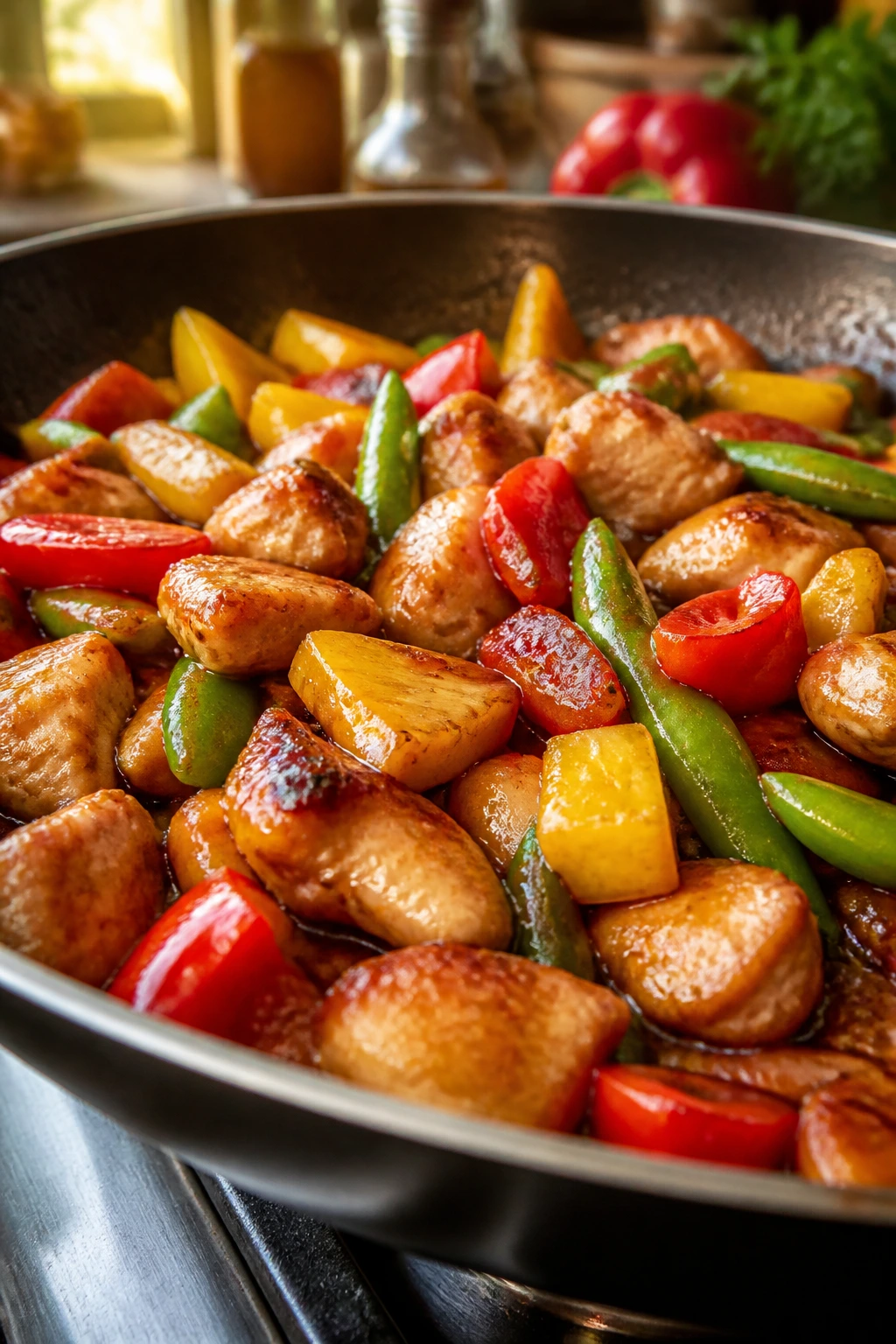
Some stir fries are all speed and no shape. This one has structure. The chicken gets a proper sear, the vegetables keep their bite, and the sauce lands with enough sharpness to make the whole pan wake up instead of just sweetening dinner.
That balance is the point. Not a sauce that floods everything. Not a skillet full of soft vegetables pretending to be lively. Just a pan of glossy, fast-moving food that tastes like someone in the kitchen knew exactly when to stop cooking.
Sweet and Sour Asian Stir Fry — Recipe Card
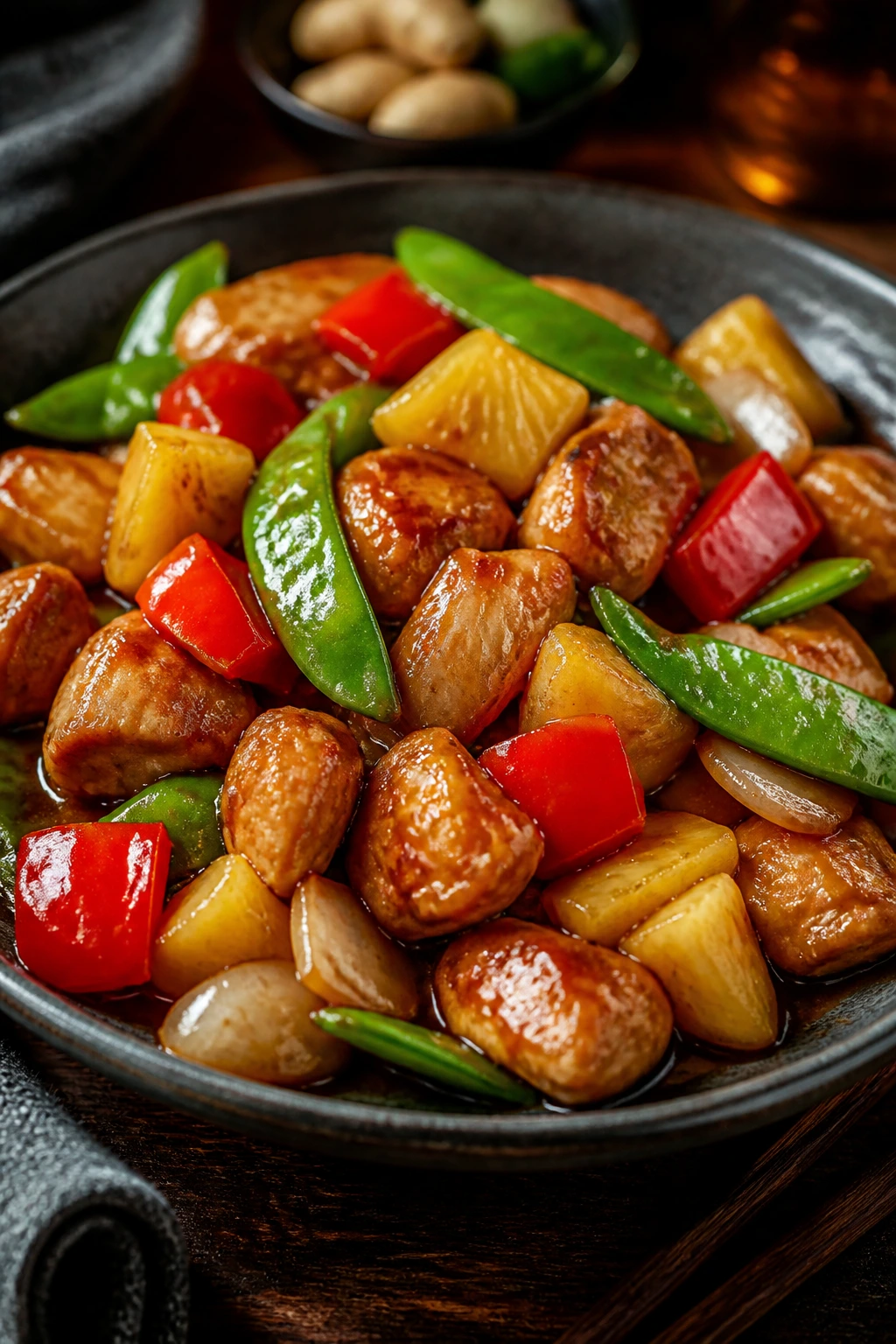
Recipe Name: Sweet and Sour Asian Stir Fry
Description: A glossy, takeout-style stir fry with juicy chicken thighs, crisp bell peppers, snap peas, pineapple, and a balanced sweet-and-sour sauce that clings to every bite.
Prep Time: 20 minutes
Cook Time: 15 minutes
Total Time: 35 minutes
Course: Main Course
Cuisine: Chinese-American Inspired
Servings: 4 servings
Calories: About 420 kcal per serving
Ingredients
For the Stir Fry:
- 1 1/2 pounds boneless, skinless chicken thighs, cut into 1-inch pieces
- 1 teaspoon kosher salt
- 1/2 teaspoon black pepper
- 2 tablespoons cornstarch
- 3 tablespoons neutral oil, divided
- 1 red bell pepper, seeded and sliced into 1/2-inch strips
- 1 yellow bell pepper, seeded and sliced into 1/2-inch strips
- 1 small red onion, cut into 1-inch wedges
- 1 cup snap peas, strings removed
- 1 cup pineapple chunks, drained if canned
- 2 cloves garlic, minced
- 1 teaspoon fresh ginger, grated
- 2 green onions, sliced
- 1 teaspoon toasted sesame oil, optional
For the Sweet and Sour Sauce:
- 1/3 cup rice vinegar
- 1/4 cup ketchup
- 3 tablespoons low-sodium soy sauce
- 3 tablespoons packed light brown sugar
- 2 tablespoons pineapple juice
- 1 tablespoon cornstarch
- 1/2 cup water
- 1/4 teaspoon red pepper flakes, optional
Instructions
- Whisk together the rice vinegar, ketchup, soy sauce, brown sugar, pineapple juice, water, cornstarch, and red pepper flakes until smooth.
- Pat the chicken dry, then toss it with the salt, black pepper, and cornstarch.
- Heat 2 tablespoons oil in a large wok or 12-inch skillet over medium-high heat. Sear half the chicken until browned and just cooked through, 5 to 6 minutes total. Transfer to a plate.
- Add the remaining oil, then stir-fry the bell peppers and onion for 2 to 3 minutes. Add the snap peas and cook for 45 seconds.
- Stir in the garlic and ginger for 15 to 20 seconds.
- Whisk the sauce again, pour it into the pan, and cook until thick and glossy, 1 to 2 minutes. Add the pineapple and chicken, then toss until coated and hot.
- Turn off the heat, fold in the green onions and sesame oil if using, then serve immediately.
Notes: If the sauce tightens up, add 1 to 2 tablespoons water. Taste before serving and adjust with a splash of vinegar for brightness or a pinch of sugar for softness. Best eaten right away over rice.