



Sticky Kung Pao Chicken is one of those dishes that can slide into sloppy fast if the pan is weak, the sauce is thin, or the cook gets nervous and backs off the heat too soon. When it’s right, though, it has a sharp little swagger: lacquered chicken, peanuts with actual crunch, dried chiles that perfume the oil, and a sauce that clings to every piece instead of pooling sadly at the bottom of the bowl. That’s the version worth making at home.
Takeout versions often lean too sweet or too glossy in the wrong way, like they were built to survive a car ride more than to taste alive on the plate. This Sticky Kung Pao Chicken fixes that by treating the sauce like a balance problem, not a sugar dump. You get heat, acid, savoriness, and a sticky finish that stays light enough to coat the chicken without smothering the celery and scallions.
I like thigh meat here because it stays juicy while the wok is hot and a little bossy. Chicken breast can work, but it asks for more attention and gives you less room for error. The sauce also matters more than people think: a few teaspoons too much sugar and it tastes flat, while a good splash of black vinegar brings the whole thing back into focus. That’s the difference between “pretty good stir-fry” and the bowl you keep scraping with a spoon.
Why This Sticky Kung Pao Chicken Beats the Takeout Box
-
Glossy, not gloppy: The sauce thickens in the pan during the final minute, so it wraps around the chicken instead of turning into a syrupy puddle under the rice.
-
Crunch survives the cook: Peanuts go in at the end, which keeps them snappy instead of soft and damp.
-
The heat is adjustable: Dried chiles and Sichuan peppercorns bring a classic stir-fry buzz, but you can trim the number of chiles without wrecking the flavor.
-
Chicken thighs stay forgiving: Thighs handle high heat better than breasts and stay tender even if the wok gets a little too hot for a minute.
-
The sauce tastes layered: Soy, vinegar, Shaoxing wine, honey, and brown sugar each do a different job, so the flavor lands as savory, tangy, and sticky instead of one-note sweet.
-
Dinner moves fast: Once everything is chopped, the actual cooking takes about 10 minutes. That matters on nights when you do not want to stand at the stove forever.
Yield: Serves 4
Prep Time: 20 minutes
Cook Time: 15 minutes
Total Time: 35 minutes
Difficulty: Intermediate — the steps are straightforward, but stir-frying moves quickly and rewards a hot pan.
Chill/Rest Time: 15 minutes for the chicken marinade
Best Served: Right away over steamed jasmine rice
What Makes the Sauce Turn Sticky Instead of Heavy
The sticky part should feel glossy, not thick in a bakery-frosting way. That’s the line a lot of home cooks miss. Kung Pao sauce needs enough starch to cling, but not so much that it turns pasty when it cools for thirty seconds on the plate.
The sauce has three jobs
First, it coats. That means cornstarch, but only a little, and only after it has been whisked into cold liquid. Second, it balances the chicken’s richness with vinegar. Third, it gives the dish a darker, more savory base so the sweet notes don’t take over. Honey and brown sugar help with shine, but neither should dominate the bowl.
I’m picky about the acid here. Rice vinegar makes a brighter pan. Chinkiang black vinegar gives you a deeper, maltier edge that feels closer to the restaurant versions people actually remember. If you can find it, use it. If you can’t, plain rice vinegar still gets the job done, just with a lighter finish.
Heat changes the texture more than sweetness does
A lot of sticky stir-fries fail because the wok is too cool. The sauce hits the pan and needs a moment to go from cloudy to glossy. If the heat is weak, the cornstarch has time to break loose and cling in patches. If the heat is high, the liquid tightens in seconds and coats the chicken cleanly.
That’s why this recipe keeps the wet and the dry in separate bowls until the last minute. It’s not fussiness. It’s control.
The dried chiles matter even if you don’t bite into them
Their job is mostly in the oil. A quick bloom in hot oil wakes up the fragrance and gives the dish that warm, peppery smell that always makes the kitchen feel smaller. You don’t need to eat every chile to taste the point of them.
And yes, the peanuts should stay dry and crunchy. If they soften, the whole dish loses some of its nerve.
The Ingredient List for a Proper Stir-Fry
For the Chicken Marinade:
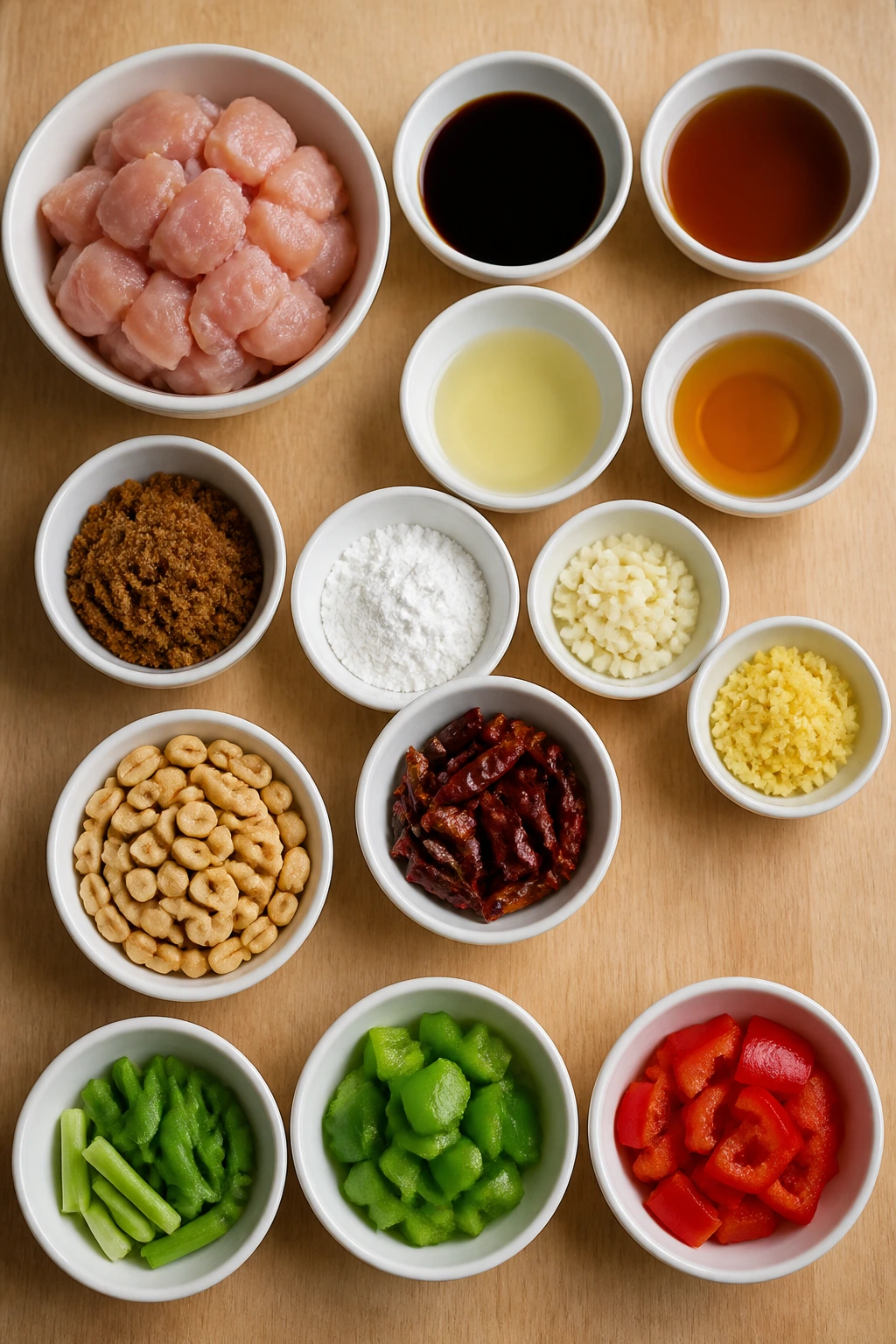
- 1½ pounds boneless, skinless chicken thighs, cut into 1-inch pieces
- 1 tablespoon light soy sauce
- 1 tablespoon Shaoxing wine or dry sherry
- 1 large egg white
- 2 teaspoons cornstarch
- 1 teaspoon neutral oil
- ¼ teaspoon kosher salt
- ¼ teaspoon white pepper
For the Sticky Kung Pao Sauce:
- ⅓ cup low-sodium chicken stock
- 3 tablespoons light soy sauce
- 2 tablespoons Chinkiang black vinegar or unseasoned rice vinegar
- 1½ tablespoons honey
- 1 tablespoon packed light brown sugar
- 1 tablespoon Shaoxing wine
- 2 teaspoons cornstarch
- 1 teaspoon toasted sesame oil
- 1 teaspoon chili garlic sauce or ½ teaspoon red pepper flakes, optional
For the Stir-Fry:
- 2 tablespoons neutral oil, divided
- 10 to 12 dried red chiles, stems removed and halved
- 1 teaspoon Sichuan peppercorns, lightly crushed
- 3 garlic cloves, minced
- 1 tablespoon fresh ginger, minced
- 1 red bell pepper, cut into 1-inch pieces
- 2 celery stalks, sliced ½-inch thick
- 3 scallions, whites and greens separated and cut into 2-inch pieces
- ½ cup roasted unsalted peanuts
To Serve:
- Steamed jasmine rice
- Extra sliced scallions, optional
Why Each Ingredient Matters in the Pan
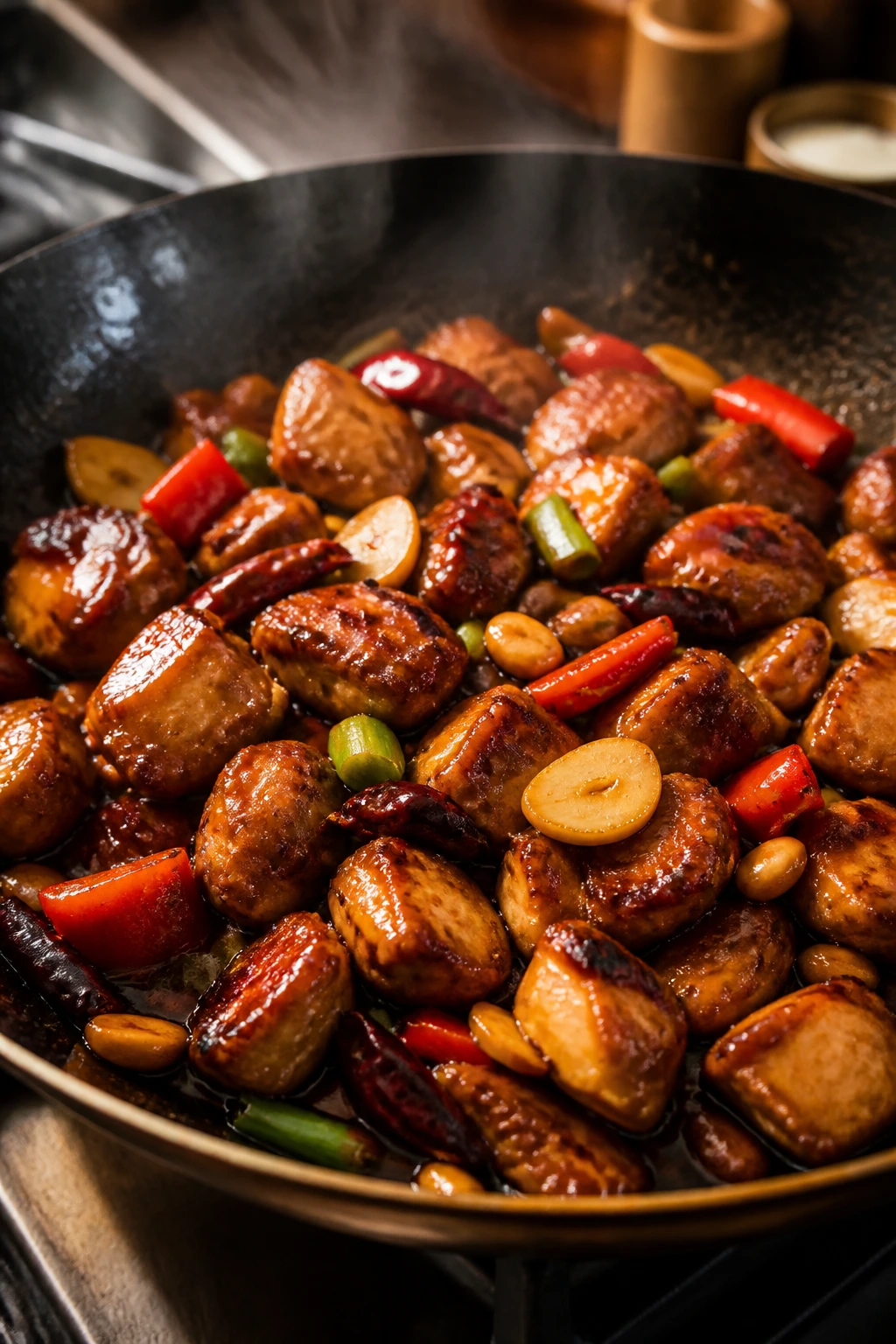
Chicken & Marinade
What to use: 1½ pounds boneless, skinless chicken thighs, cut into 1-inch pieces, plus soy sauce, Shaoxing wine, egg white, cornstarch, oil, salt, and white pepper.
Preparation: Cut the thighs into even pieces so they cook at the same pace. Toss everything together until the chicken looks a little tacky; that tacky coating is a good sign because it helps the sauce grab later.
Substitutions: Chicken breast works if that’s what you have, but it needs a shorter stir-fry time and a little more care. Firm tofu can stand in if you want a vegetarian pan, though you’ll want to press it well first and brown it longer.
Tips: If the chicken looks wet and loose after marinating, add another ½ teaspoon cornstarch. The coating should feel slick, not soupy. That little film is what keeps the chicken tender and helps it pick up the sauce.
Sauce Balance
What to use: Low-sodium chicken stock, light soy sauce, Chinkiang black vinegar or rice vinegar, honey, brown sugar, Shaoxing wine, cornstarch, sesame oil, and a little chili garlic sauce if you want extra heat.
Preparation: Whisk until the cornstarch disappears. No little white streaks. The sauce should look smooth and slightly opaque before it ever hits the wok.
Substitutions: Tamari can replace soy sauce for a gluten-free version. If you don’t have Shaoxing wine, dry sherry is the cleanest swap. Maple syrup can stand in for honey in a pinch, though it gives the dish a slightly different finish.
Tips: Use low-sodium stock. Regular stock plus soy sauce can push the dish into oversalted territory fast, especially once the sauce reduces. The vinegar will soften the edges, but it cannot rescue a salty pan.
Aromatics & Heat
What to use: Dried red chiles, Sichuan peppercorns, garlic, ginger, red bell pepper, celery, and scallions.
Preparation: Halve the chiles so their scent opens up fast, crush the peppercorns lightly, and keep the garlic and ginger minced fine. Scallion whites and greens should be separated; they behave differently in the pan.
Substitutions: If Sichuan peppercorns are hard to find, the dish still works without them. You lose the light numbing tingle, not the whole personality. Bell pepper can be swapped for thin-sliced onion if that’s what’s in the fridge.
Tips: Dry aromatics burn quickly. Once the chiles darken and smell toasted, the next ingredients need to go in right away. If they turn black, the oil turns bitter, and there’s no tidy fix for that.
Crunch & Freshness
What to use: Roasted unsalted peanuts and the green tops of scallions.
Preparation: Keep the peanuts close by and add them at the very end. Slice the scallion greens a little on the bias if you want the finished dish to look less blunt and more lively.
Substitutions: Roasted cashews bring a softer, sweeter crunch. Almonds work too, though they feel more Western on the plate. Salted peanuts are usable; just taste the finished sauce before adding any extra soy.
Tips: Nuts added too early go soft. That’s the whole issue. Kung Pao without crunch is just another brown chicken skillet, and that is not what we’re after.
The Tools That Make Stir-Frying Easier
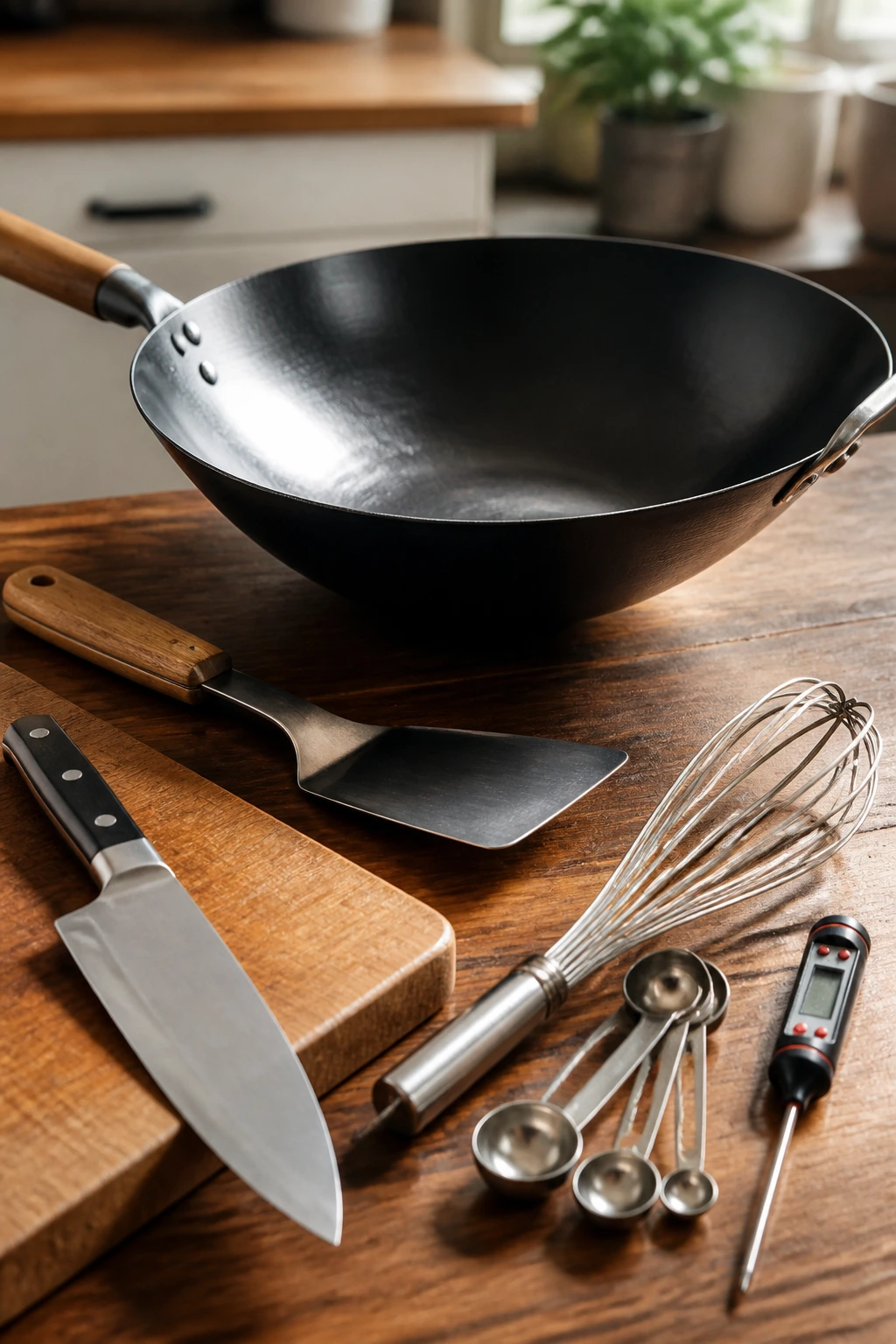
-
14-inch wok or 12-inch heavy skillet: A wok gives you room to toss, but a large stainless skillet works if it gets hot enough and doesn’t crowd the chicken.
-
Mixing bowls: You’ll want one for the marinade and one for the sauce so you aren’t chasing sticky fingers mid-cook.
-
Whisk: A fork can manage the sauce, but a whisk dissolves the cornstarch faster and keeps the liquid smooth.
-
Chef’s knife and cutting board: Small, even cuts matter here. Uneven chicken pieces are the usual reason some bites taste dry and others taste underdone.
-
Spatula or wok turner: Something thin enough to scoop under the chicken and turn it without smashing the pieces.
-
Measuring spoons and cups: Stir-fries move fast. Guessing the vinegar or cornstarch is a good way to miss the balance by a mile.
-
Instant-read thermometer, optional: Useful if you’re nervous about chicken doneness. The thighs should reach 165°F, and they’ll still stay tender if you pull them right there.
How to Cook Sticky Kung Pao Chicken Step by Step
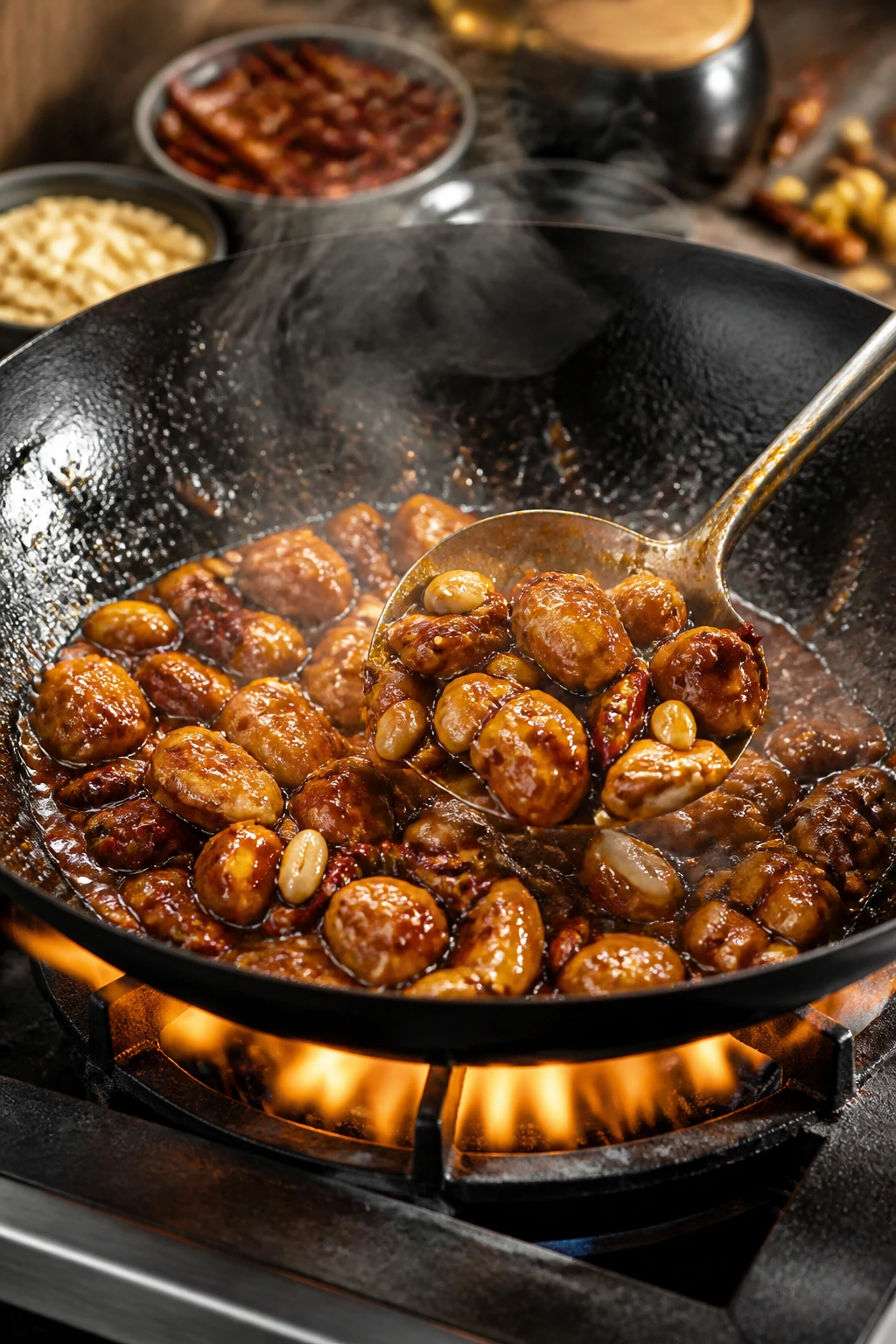
Marinate and Mix
-
Season the chicken: In a medium bowl, combine the chicken thighs, soy sauce, Shaoxing wine, egg white, cornstarch, oil, salt, and white pepper. Toss until every piece looks lightly coated and slightly glossy. Let it sit for 15 minutes while you prep the rest of the ingredients.
-
Whisk the sauce: In a small bowl, whisk together the stock, soy sauce, vinegar, honey, brown sugar, Shaoxing wine, cornstarch, sesame oil, and optional chili garlic sauce until no clumps remain. The liquid should look smooth and a little cloudy, not streaky. Give it one more whisk right before it goes into the pan.
Stir-Fry and Finish
-
Sear the chicken: Heat a wok or large skillet over high heat until it is hot enough that a drop of water skitters and disappears. Add 1 tablespoon of the oil, then add the chicken in a single layer. Let it sit for about 90 seconds before stirring, then cook for another 2 to 3 minutes until the edges are lightly browned and the chicken is about 80 percent cooked. Remove it to a plate. Do not overcrowd the pan or the chicken will steam instead of browning.
-
Bloom the chiles and peppercorns: Add the remaining 1 tablespoon oil to the pan. Drop in the dried chiles and Sichuan peppercorns, then stir for 10 to 15 seconds until they smell toasty and the chiles darken a shade. If they turn black, move fast to the next step or the whole pan will taste bitter.
-
Cook the aromatics and vegetables: Add the garlic, ginger, scallion whites, bell pepper, and celery. Stir-fry for 1 to 2 minutes until the garlic smells sweet, the celery turns bright, and the bell pepper still has some snap. You want crisp-tender, not floppy.
-
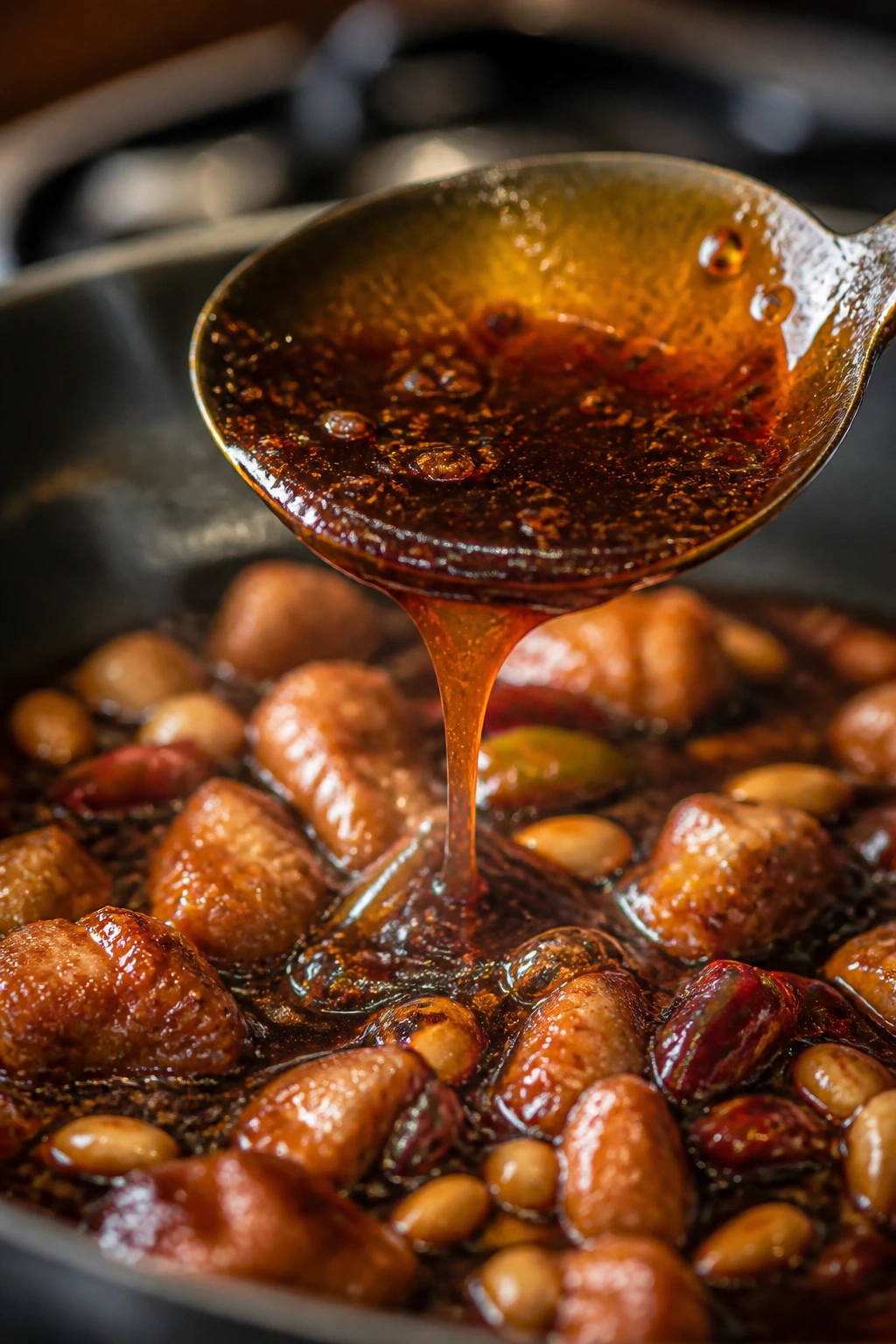
Return the chicken and add the sauce: Slide the chicken and any juices back into the pan. Stir for 30 seconds, then whisk the sauce again and pour it around the edge of the wok. Toss constantly for 30 to 60 seconds until the sauce thickens, turns glossy, and clings to the chicken and vegetables in a thin lacquer. If it gets thicker than you like, add 1 to 2 tablespoons of water and stir.
-
Finish with peanuts and scallions: Add the peanuts and scallion greens. Toss for 15 seconds, just long enough to warm the nuts and soften the raw edge of the scallion tops. Taste and adjust with a small splash of vinegar if it needs brightness, or a pinch of sugar if it tastes too sharp.
-
Serve immediately: Spoon the chicken over steamed jasmine rice while the sauce is still shiny and loose. It will thicken more as it sits, which is fine, but the first few minutes out of the pan are the sweet spot.
How to Serve It So the Plate Looks Finished
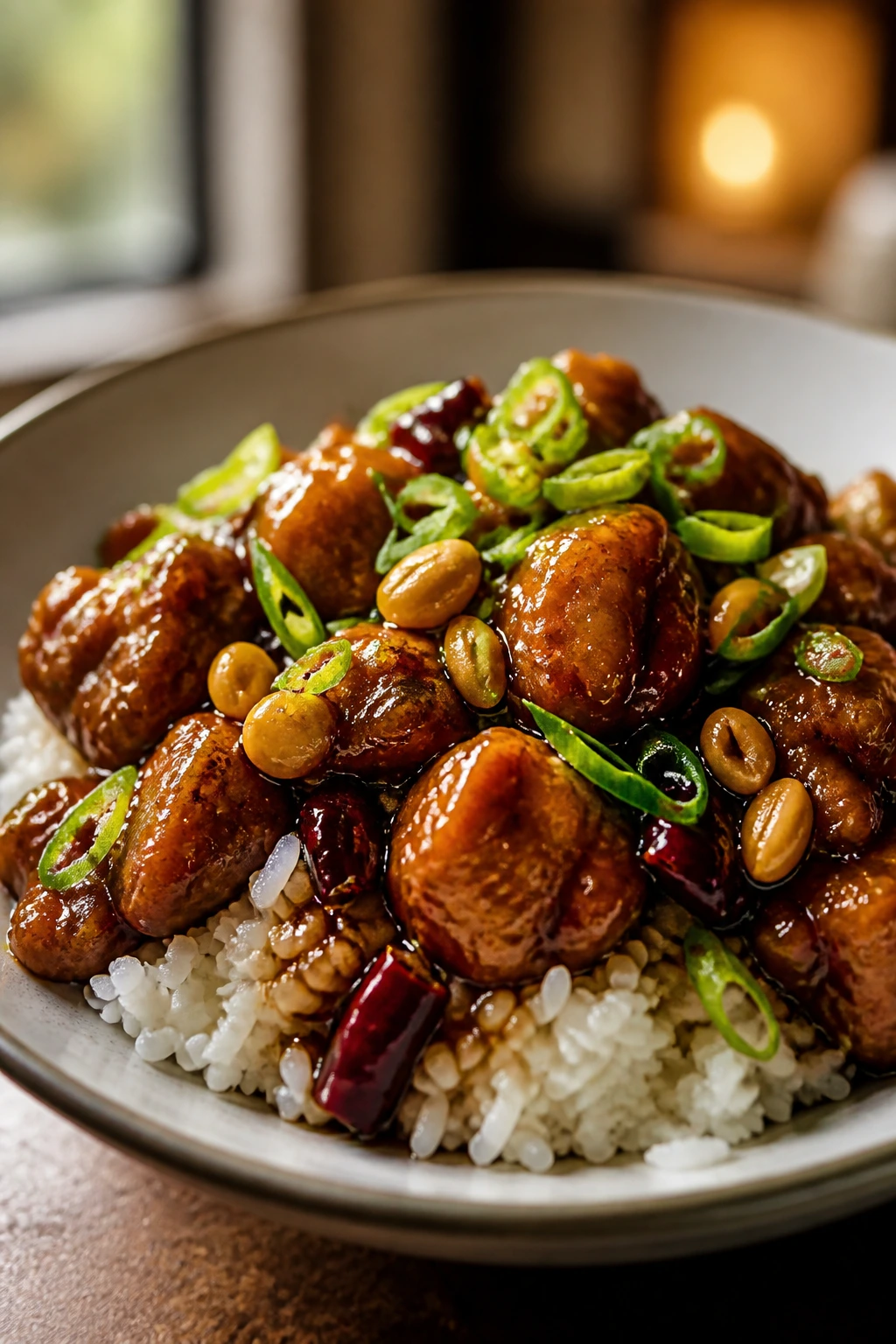
Presentation: Spoon the Sticky Kung Pao Chicken over a mound of jasmine rice in a shallow bowl or on a wide plate. The sauce should slide a little into the rice, not drown it. A few bright scallion greens on top make the dish look fresher than it is, which is useful because this kind of stir-fry can look muddy if you dump it straight from the wok.
Accompaniments: Plain steamed rice is the anchor. If you want a second dish, go with quick cucumber salad, garlicky bok choy, or steamed broccoli with a pinch of salt. Anything too rich fights with the sauce. Anything crisp and clean gives it space.
Portions: Four servings feels right as a main dish with rice. If you’re feeding very hungry people, stretch the table with a vegetable side rather than trying to force the chicken to do more than it should. One cup of the finished stir-fry over 1 to 1½ cups hot rice is a sturdy dinner portion.
Beverage Pairing: Cold lager works. So does unsweetened jasmine tea. If you want wine, an off-dry riesling handles the vinegar and chile heat better than a dry red ever will.
Extra Tips for Deeper Flavor and Faster Dinner
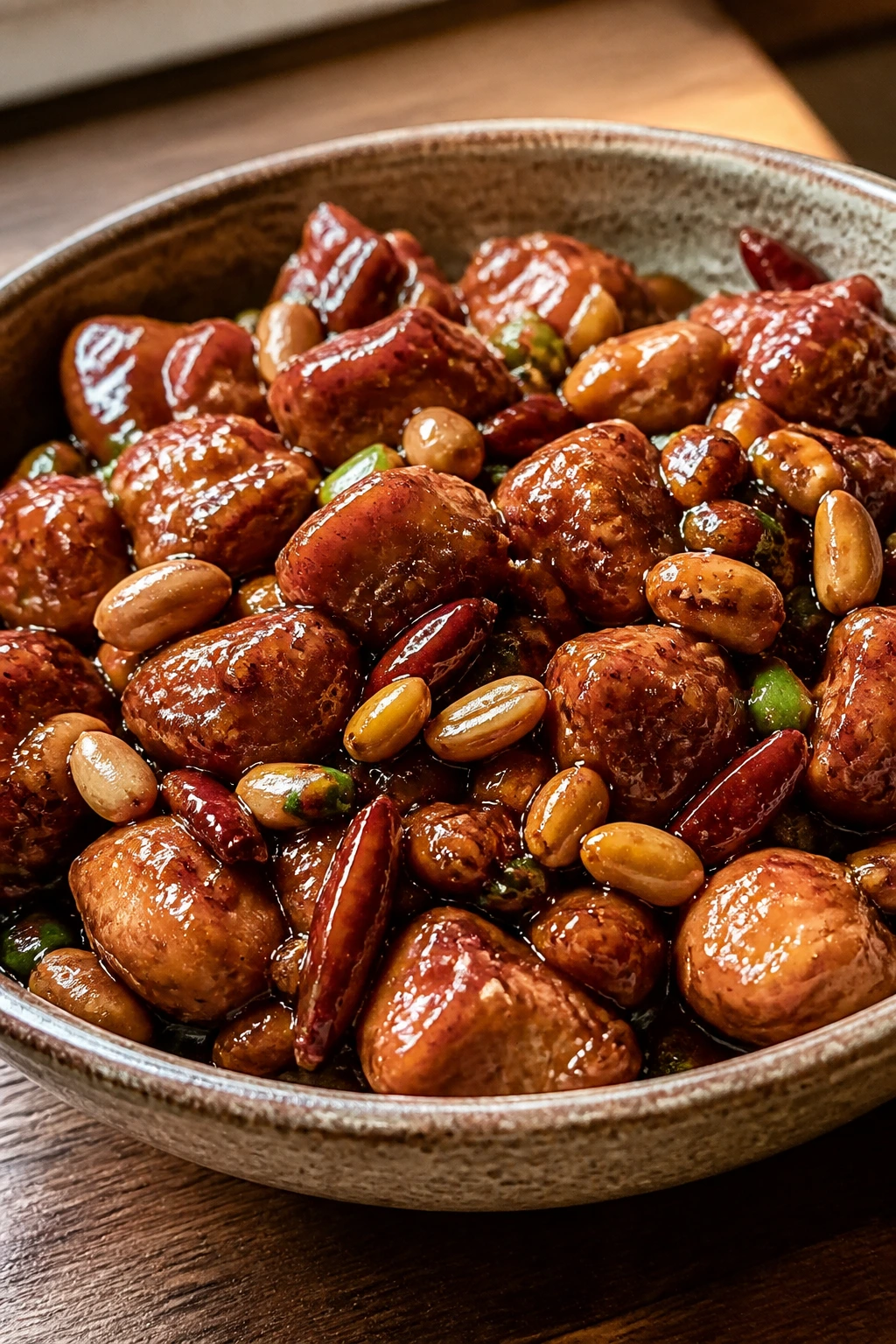
Flavor Enhancement: If you like a deeper savory note, add ½ teaspoon of dark soy sauce to the sauce mix. It darkens the color and gives the glaze a slightly rounder finish without making it taste salty. I also like a final half-teaspoon of toasted sesame oil off the heat, but only after the wok has been turned off; sesame oil burns fast and turns flat if you cook it hard.
Time-Saver: Chop the chicken and vegetables in the morning, then keep them cold and covered. Mix the sauce too. When dinner time rolls around, the whole pan becomes a 10-minute job instead of a scramble with a knife in one hand and a burning wok in the other.
Cost-Saver: Roasted unsalted peanuts from a bag are fine here. You do not need fancy oil-roasted peanuts from a specialty shop. If the peanuts are salted, cut back the soy sauce by about ½ teaspoon and taste before adding any extra at the end.
Make-It-Yours: Want a little more vegetable weight? Add snow peas, mushrooms, or small broccoli florets, but keep the total amount modest so the sauce still coats the chicken rather than disappearing under a pile of produce. If you like more heat, add a spoonful of chili crisp at the table instead of making the sauce itself hotter.
Common Mistakes That Make Kung Pao Chicken Sloppy
-
Crowding the pan: The chicken starts pale and wet, then stays that way. The fix is simple: cook it in a single layer, in batches if needed, so it gets some browning before it leaves the pan. If your skillet is small, a second batch is not a failure. It is the right move.
-
Letting the chiles burn: Bitter oil ruins the whole pan in seconds. The smell changes from toasted and fragrant to sharp and smoky in a bad way. As soon as the dried chiles darken, move straight into the aromatics.
-
Pouring in the sauce too early: If the chicken and vegetables still need cooking, the sauce can over-thicken before the rest of the ingredients are ready. Add it only when the chicken is nearly done and the vegetables are crisp-tender.
-
Forgetting to whisk the sauce again: Cornstarch settles fast. If you skip the second whisk, the first pour can dump a gluey streak into the pan. That streak never fully blends the way you want.
-
Using too much sugar: A sticky stir-fry is not the same thing as candy. If the sauce tastes one-dimensional, a small splash of vinegar fixes it better than more honey. Start with the amounts here, then adjust at the end.
-
Adding peanuts too early: They soak up sauce and lose their bite. The finished dish still tastes fine, but the texture goes soft in a way that cheapens the whole bowl. Add them at the end and keep them there.
Variations That Keep the Pan Interesting
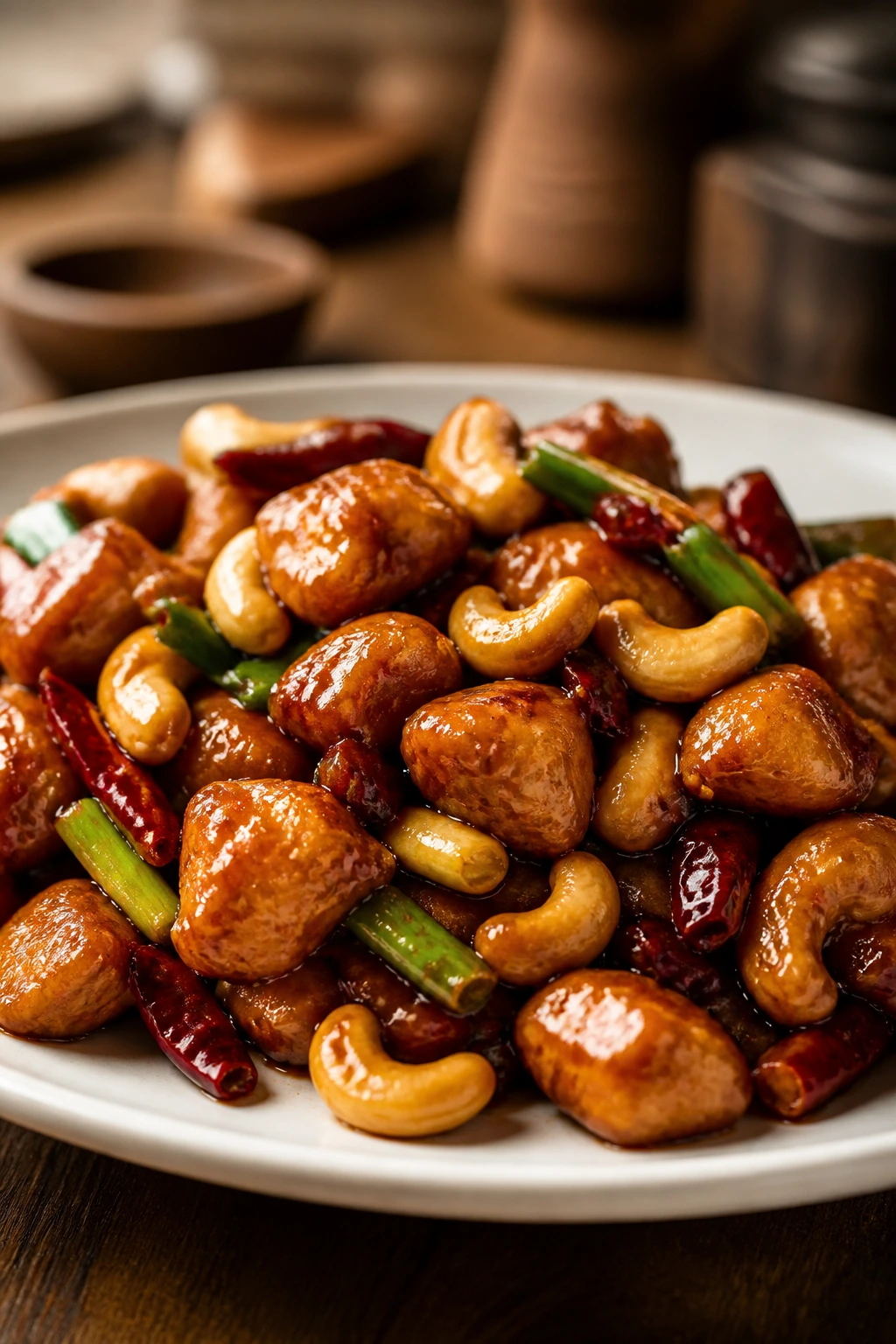
Firecracker Kung Pao: Add one extra dried chile and 1 teaspoon of chili crisp to the finished dish. This version has a sharper kick and a little red-oil sheen on top, which looks dramatic over white rice. I like it on nights when the rest of dinner is plain and the pan needs to carry the meal.
Mild Family Pan: Use 6 to 8 dried chiles, skip the chili garlic sauce, and keep the Sichuan peppercorns to ½ teaspoon. You still get the classic toasted aroma and the peanut crunch, just with less heat sitting on the tongue. This is the one I’d make if kids are eating from the same bowl.
Gluten-Free Swap: Use tamari instead of soy sauce and make sure your Shaoxing substitute is gluten-free dry sherry. Check the chili garlic sauce label if you’re using it, because a few versions sneak wheat into the jar. The texture and flavor stay close if you keep the rest of the recipe the same.
Cashew Crunch Version: Swap roasted peanuts for roasted cashews. The sauce feels a little softer and sweeter, and the nuts read more buttery than earthy. It’s not classic, but it makes sense if you already have cashews in the pantry and need dinner to happen.
Vegetable-Forward Skillet: Add 1 cup of sliced mushrooms or 1 cup of small broccoli florets with the bell pepper and celery. The sauce stretches further and the bowl looks fuller without needing extra chicken. Just keep the vegetables cut small enough that they cook in the same window.
Storing, Reheating, and Making It Ahead
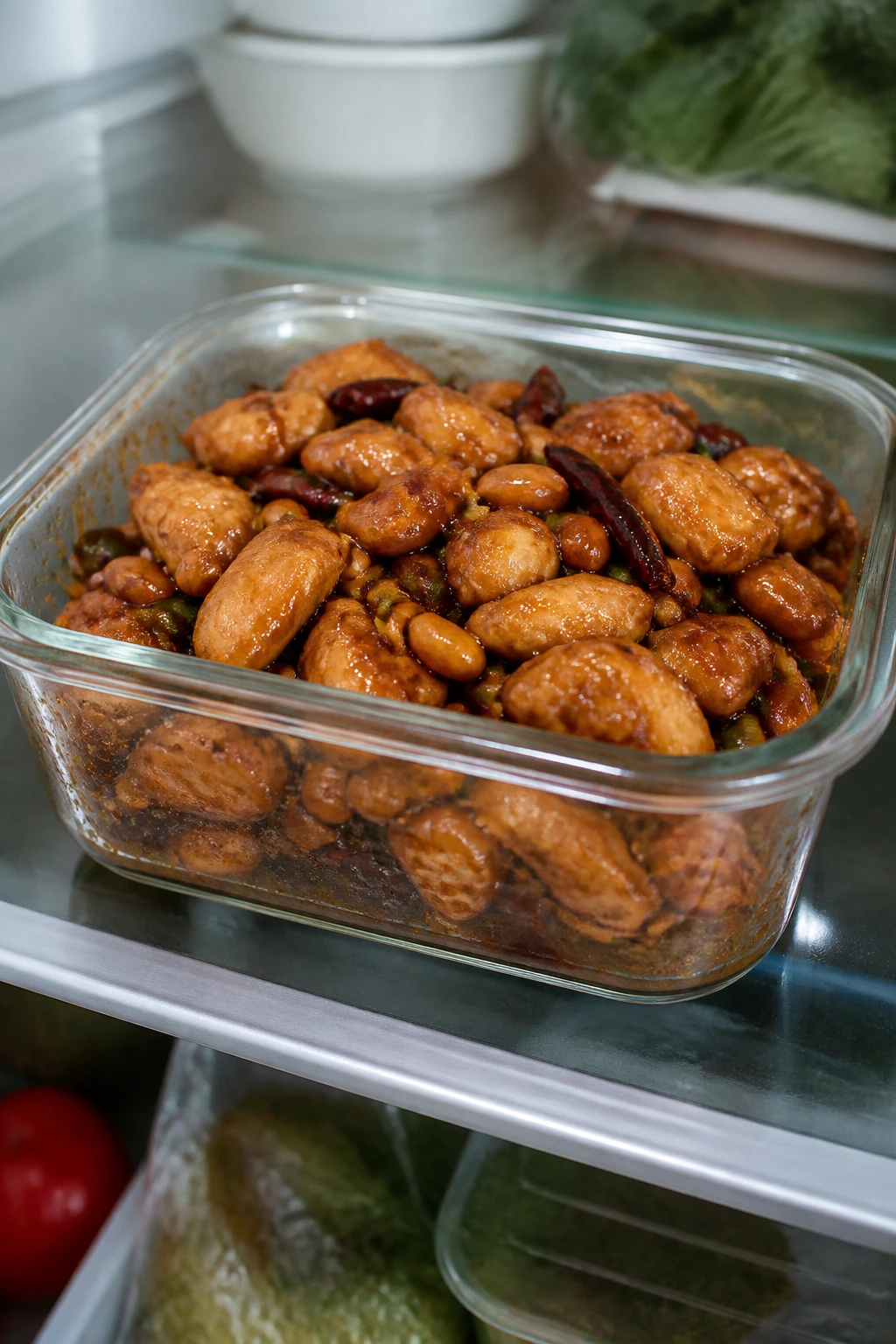
Cooked Sticky Kung Pao Chicken keeps 3 to 4 days in the refrigerator in a sealed container. The sauce thickens as it chills, and the peanuts soften a little, so it is worth giving the leftovers a quick refresh before eating them. Store the rice separately if you can; plain rice holds its texture better than rice mixed with sauce.
For the freezer, pack the chicken and sauce in an airtight container for up to 2 months. The vegetables will lose some snap, and the peanuts will not stay crisp, but the flavor still holds. I would not freeze the rice with it unless you have no choice. Freshly cooked rice reheats better and makes the whole meal feel less tired.
To reheat on the stovetop, put the chicken in a skillet over medium heat with 1 to 2 tablespoons of water. Cover for a minute, then uncover and stir until hot. The small bit of water loosens the glaze without making it soupy. If you microwave it, use short bursts and stir between them so the edges do not dry out before the center warms.
For make-ahead work, the sauce can be mixed up to 3 days ahead, and the chicken can be marinated up to 24 hours ahead. The vegetables can be cut a day ahead as well, but keep the scallion greens separate so they do not wilt. If you know you’ll be reheating leftovers, save a small handful of fresh peanuts and scatter them on after warming. That tiny extra step brings the texture back to life.
Sticky Kung Pao Chicken Questions Home Cooks Ask
Can I use chicken breast instead of thighs?
Yes, but cut the breast into even 1-inch pieces and shorten the sear a bit. Breast meat dries out faster, so pull it as soon as it’s cooked through and the center reaches 165°F. Thighs are still the better choice if you want a more forgiving pan.
What if I can’t find Sichuan peppercorns?
Skip them rather than waiting around for a specialty store. The dish will lose the light numbing finish, but the core flavor still works because the soy, vinegar, chiles, peanuts, and ginger carry the weight. If you do find them later, toast a pinch and use less than you think you need.
How spicy is this recipe?
With 10 to 12 dried chiles, it lands in the lively middle, not the punishing end of the scale. Most of the chile flavor stays in the oil and aroma, while the actual heat depends on how much of the chile you bite into. Use fewer chiles if you want a softer burn, or leave the chili garlic sauce out entirely.
Can I make it without a wok?
Absolutely. A large stainless skillet or cast-iron skillet works as long as it gets hot and gives the chicken room. The only catch is crowding; if the pan is packed, the chicken will steam, so split it into batches if you need to.
Why did my sauce turn too thick?
Usually the heat was high enough to blast the cornstarch into a gel before the chicken and vegetables were fully coated. A tablespoon or two of water loosens it right back up. Add it a little at a time and keep stirring until the sauce goes glossy again.
Can I make this ahead for lunch boxes?
Yes, and it holds up better than a lot of stir-fries. Pack the chicken and rice separately if possible, then combine them after reheating so the rice doesn’t soak up all the sauce overnight. The peanuts will soften some, but the flavor is still strong the next day.
Is this the same as restaurant Kung Pao Chicken?
It’s the home-cook version I’d actually want to eat. Restaurant versions vary a lot: some run sweet, some run hot, and some lean on sauce more than texture. This version keeps the classic peanut-chile-vinegar shape while leaning into a stickier glaze and cleaner balance.
Can I use cashews or almonds instead of peanuts?
Yes, though the flavor changes. Cashews make the dish softer and richer, while almonds add a firmer bite and a slightly drier finish. If peanuts are a problem for anyone at the table, either swap works cleanly.
A Pan Worth Reaching For Again
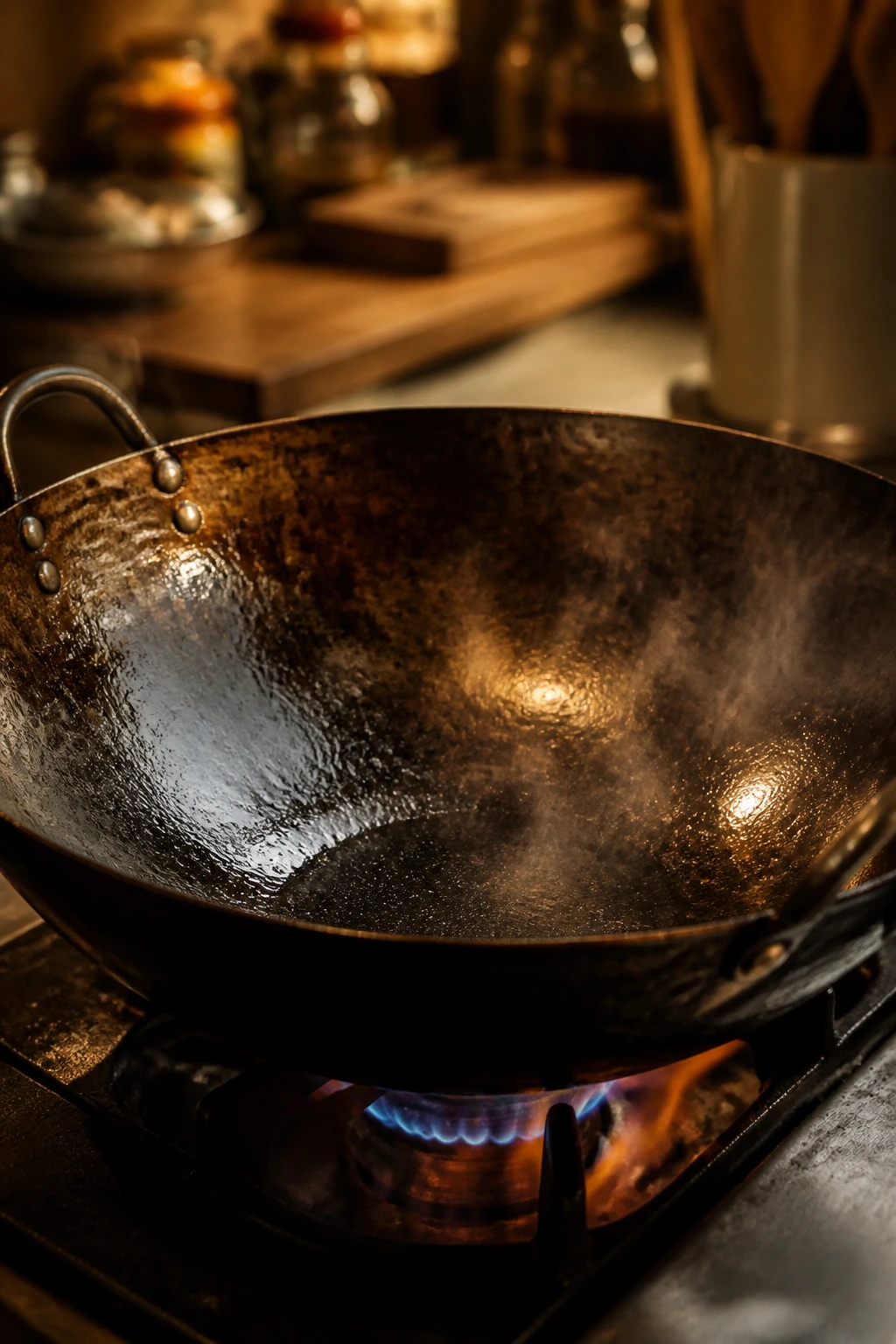
There’s a specific kind of satisfaction in making Sticky Kung Pao Chicken at home: the chiles hit the oil, the garlic goes sweet, the sauce tightens, and all of it happens fast enough that you have to pay attention. That’s part of the appeal. You don’t get to wander off and check your phone; the wok wants you there, and the payoff is a bowl that tastes brighter than the usual takeout version.
Make it once with the proportions here before you start tinkering. After that, it becomes one of those recipes you can shape to the day you’re having — hotter, milder, heavier on peanuts, lighter on sugar, more vegetables, less fuss. Once the sauce starts clinging the way it should, you’ll understand why this one keeps showing up in my own rotation.
Sticky Kung Pao Chicken — Recipe Card
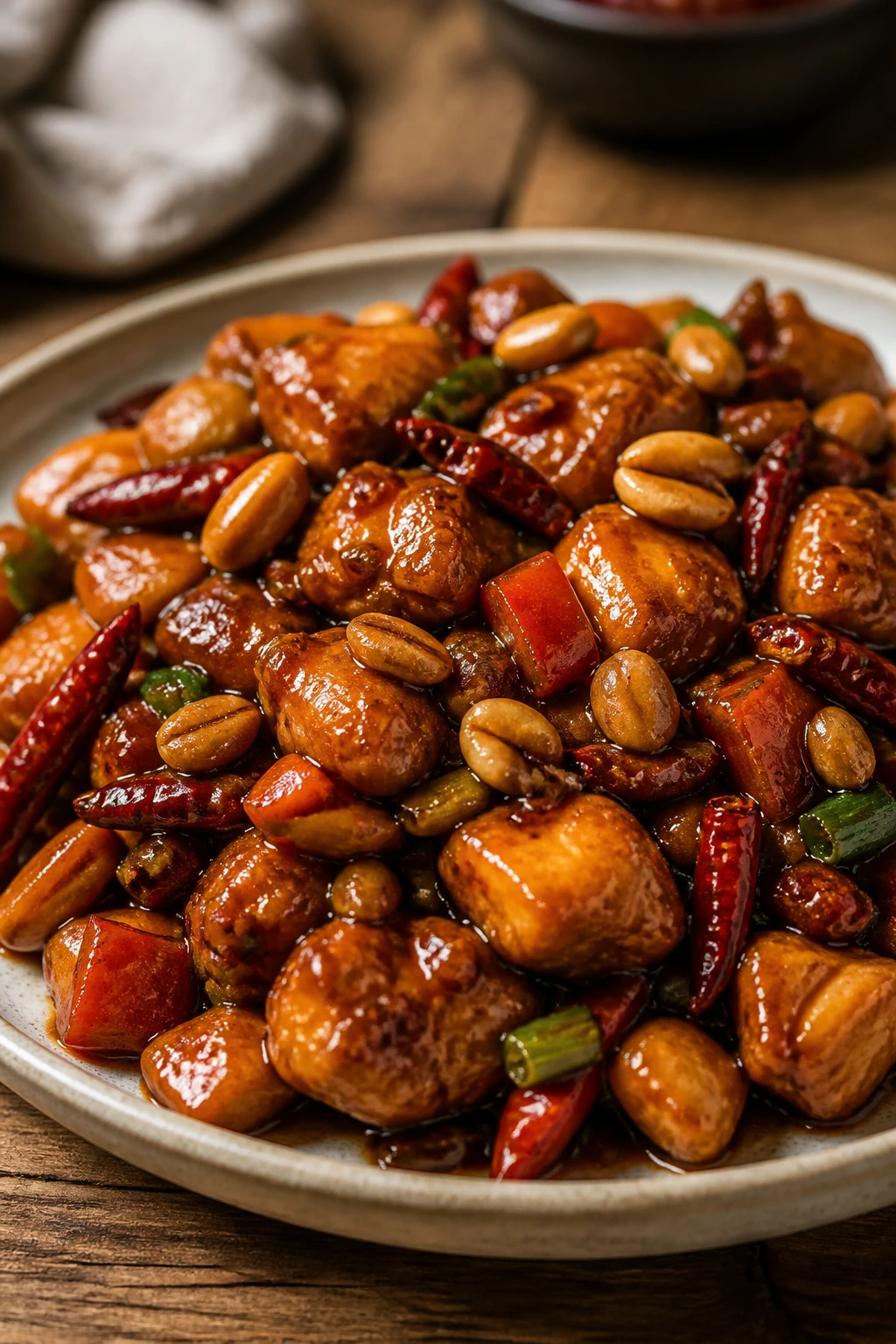
Recipe Name: Sticky Kung Pao Chicken
Description: A glossy, savory-sweet stir-fry with tender chicken thighs, crunchy peanuts, crisp vegetables, and a bold vinegar-chile finish. The sauce clings to every piece instead of pooling in the bowl.
Prep Time: 20 minutes
Cook Time: 15 minutes
Total Time: 35 minutes, plus 15 minutes marinating
Course: Dinner, Main Course
Cuisine: Chinese-Inspired, Sichuan-Inspired
Servings: 4 servings
Calories: About 490 kcal per serving
Ingredients
For the Chicken Marinade:
- 1½ pounds boneless, skinless chicken thighs, cut into 1-inch pieces
- 1 tablespoon light soy sauce
- 1 tablespoon Shaoxing wine or dry sherry
- 1 large egg white
- 2 teaspoons cornstarch
- 1 teaspoon neutral oil
- ¼ teaspoon kosher salt
- ¼ teaspoon white pepper
For the Sticky Kung Pao Sauce:
- ⅓ cup low-sodium chicken stock
- 3 tablespoons light soy sauce
- 2 tablespoons Chinkiang black vinegar or unseasoned rice vinegar
- 1½ tablespoons honey
- 1 tablespoon packed light brown sugar
- 1 tablespoon Shaoxing wine
- 2 teaspoons cornstarch
- 1 teaspoon toasted sesame oil
- 1 teaspoon chili garlic sauce or ½ teaspoon red pepper flakes, optional
For the Stir-Fry:
- 2 tablespoons neutral oil, divided
- 10 to 12 dried red chiles, stems removed and halved
- 1 teaspoon Sichuan peppercorns, lightly crushed
- 3 garlic cloves, minced
- 1 tablespoon fresh ginger, minced
- 1 red bell pepper, cut into 1-inch pieces
- 2 celery stalks, sliced ½-inch thick
- 3 scallions, whites and greens separated and cut into 2-inch lengths
- ½ cup roasted unsalted peanuts
Instructions
-
In a medium bowl, toss the chicken with soy sauce, Shaoxing wine, egg white, cornstarch, oil, salt, and white pepper. Let stand 15 minutes.
-
Whisk the chicken stock, soy sauce, vinegar, honey, brown sugar, Shaoxing wine, cornstarch, sesame oil, and optional chili garlic sauce until smooth.
-
Heat a wok or large skillet over high heat. Add 1 tablespoon oil and sear the chicken in a single layer for 2 to 3 minutes, until lightly browned and mostly cooked. Remove to a plate.
-
Add the remaining oil, dried chiles, and Sichuan peppercorns. Stir 10 to 15 seconds until fragrant.
-
Add garlic, ginger, scallion whites, bell pepper, and celery. Stir-fry 1 to 2 minutes until crisp-tender.
-
Return the chicken and any juices to the pan. Stir, then pour in the sauce and toss 30 to 60 seconds until thick, glossy, and coating the chicken.
-
Add the peanuts and scallion greens. Toss for 15 seconds, then serve hot over rice.
Notes: Use thighs for the juiciest texture; breast meat needs a shorter cook time. If the sauce tightens too fast, add 1 to 2 tablespoons water. Add fresh peanuts on leftovers if you want the crunch back.